Category

AI News & Trends

1402 articles • Page 19 of 94

Sweet Proteins Expand Beyond Lab, Challenge Sugar Dominance

Sweet Proteins Expand Beyond Lab, Challenge Sugar Dominance

Sweet proteins like brazzein, thaumatin, and sweelin are no longer just research projects; they are starting to be used in food, possibly challenging sugar and artificial sweeteners. These proteins can be very expensive compared to sugar, but their extreme sweetness may help close the price gap if production costs drop. Forecasts for market growth are mixed, and early trials by big food brands suggest some industry interest. If prices fall further and regulations stay friendly, sweet proteins might become more common in products, but this is still uncertain. Companies may try different strategies, such as mixing sweet proteins with sugar or other sweeteners, to help them gain acceptance.

US Expands AI Export Controls to Model Weights, Not Just Chips

US Expands AI Export Controls to Model Weights, Not Just Chips

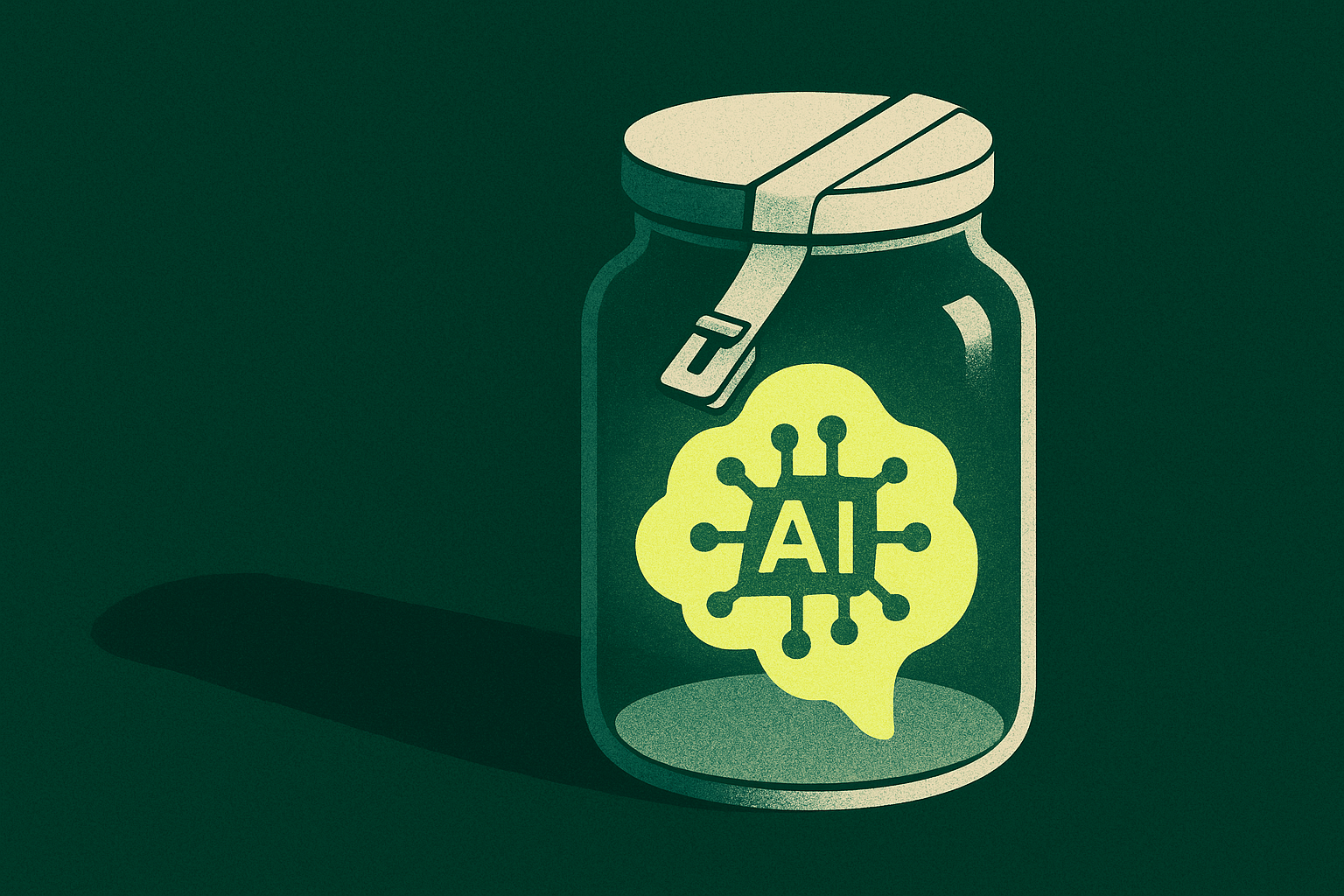
The US has expanded export controls from just computer chips to now include AI model weights, which may be seen as important as missile software. New rules suggest that any powerful closed-weight AI model trained with enough computation needs a license to be sent out of the country. There are three vetting levels for different countries: close allies have fewer restrictions, most other countries face more checks, and adversaries are mostly denied. Labs and companies are advised to track their models, check who can access them, and keep records to follow the law. This may mean a shift toward keeping AI models inside friendly countries' cloud systems.

Z.ai's GLM-5.2 open model benchmarks near Opus, exceeds GPT-5.5

Z.ai's GLM-5.2 open model benchmarks near Opus, exceeds GPT-5.5

Z.ai's GLM-5.2 model may perform almost as well as Claude Opus 4.8 and appears to do better than GPT-5.5 on some coding benchmarks, according to June 2026 reports. The model has open MIT-licensed weights and can handle up to one million tokens, which suggests developers have more control and flexibility. Industry data suggests the choice of model may now depend more on cost and control instead of just accuracy. Adoption of GLM-5.2 may be growing in mid-sized companies, but some large enterprises still seem cautious, especially around compliance and the use of Chinese models. Z.ai's recent funding and public plans indicate they will keep improving the model and may try to close the small gap with Opus in future versions.

Walmart Acquires Vibe.co for $1.4 Billion, Expands CTV Ad Tech

Walmart Acquires Vibe.co for $1.4 Billion, Expands CTV Ad Tech

Walmart has agreed to buy ad-tech company Vibe.co for about $1.4 billion, bringing over 10,000 advertisers and new connected-TV technology to Walmart Connect. This deal may help smaller brands and performance marketers start advertising on streaming TV at lower costs. Walmart says the new platform could connect ads to both in-store and online sales, which might give advertisers better ways to track results. Experts suggest the move could help Walmart compete with larger ad businesses like Amazon, but Walmart's ad group is still much smaller. The final impact of the deal will depend on how well advertisers use the new tools and if they see real sales growth.

US bans Anthropic's Fable 5, Mythos 5 models for export control

US bans Anthropic's Fable 5, Mythos 5 models for export control

In June 2026, the US government treated advanced AI models as controlled munitions, which may have changed how people can use frontier AI systems. Anthropic had to quickly disable its Fable 5 and Mythos 5 models for all users, and only a small group later regained access to Mythos 5. OpenAI faced different rules, needing to let government reviewers check new models before wider release. It appears companies now have to plan for sudden restrictions and follow strict rules about user nationality and model access. These new export controls may freeze or slow down AI model access and have resulted in ongoing negotiations and uncertainty for both companies and researchers.

Mercor Spends More on AI Tokens Than Payroll, Signaling Workforce Change

Mercor Spends More on AI Tokens Than Payroll, Signaling Workforce Change

Some companies, like Mercor, now spend more on AI tokens than on paying their workers, which may mean big changes in how companies plan their staff. Executives and finance teams are starting to compare the cost of using AI agents with the cost of hiring people, and sometimes the numbers appear close. As token costs become easier to track, leaders may use them as a key part of deciding whether to assign a job to a person or to an AI. Human Resources is joining these talks because choosing between humans and agents might change hiring, job roles, and company rules. The best mix of people and AI may keep changing as companies look for the most cost-effective way to get work done.

Gusto launches AI Cofounder: Built product in 10 weeks with Claude Code

Gusto launches AI Cofounder: Built product in 10 weeks with Claude Code

Gusto built a new AI product called Cofounder in just 10 weeks with a small team of five people using Claude Code. Cofounder acts more like an operator than a chatbot and may help small businesses run payroll, flag risks, and find hidden savings, such as overlooked tax credits. The team skipped normal tools and meetings, using real-time Zoom calls and letting the AI write most of the code. Some early signs suggest Cofounder could become a big business, but the final outcome is still uncertain. Experts think this approach might change how other companies build products if they focus on good evaluation and security.

Notion expands AI agents with packaged workflows for non-technical staff

Notion expands AI agents with packaged workflows for non-technical staff

Notion plans to offer packaged AI agent workflows, turning repeated team tasks into easy-to-use templates for non-technical staff. Early reports suggest this may help move agents from experiments to daily work tools. Setup for these agents appears simpler now, and usage data suggests rapid adoption, though the numbers are self-reported. Packaged agents may help teams reduce manual work and save on automation costs, but experts warn that savings depend on careful credit use. Analysts note that while Notion could become a central workspace hub, it may not yet match the complexity of larger enterprise platforms like Microsoft or Salesforce.

New Report Maps Enterprise AI Spend to Maturity

New Report Maps Enterprise AI Spend to Maturity

A new report idea suggests linking enterprise AI maturity to infrastructure spending, using survey data and industry frameworks. Studies from Deloitte and MIT CISR show that companies are at different AI maturity stages, with tech industries scoring higher than healthcare. Most firms seem to prefer hybrid cloud strategies, and spending may shift more towards inference workloads by 2026. The report could include simple charts to help companies compare themselves and may be published in stages, with some content free and some behind a sign-up. The timeline for this report appears to align with budgeting cycles and major industry events.

Token Costs Now Rival Payroll, Forcing New Budgeting Dilemmas

Token Costs Now Rival Payroll, Forcing New Budgeting Dilemmas

Token costs for companies using AI may now be as high as paying employees, leading to new budgeting challenges. Even though the price per token has dropped, total spending on tokens appears to be rising sharply. Some reports suggest digital labor costs can sometimes outpace payroll if not monitored. Experts recommend tracking token use like labor and matching tasks to the cheapest model to avoid overspending. It seems that organizations may need to update their budgeting and hiring plans because AI costs are now close to or equal to human labor costs.

US Government mandates post-quantum crypto migration by 2030

US Government mandates post-quantum crypto migration by 2030

The US government has set deadlines for federal agencies to move to post-quantum cryptography by 2030, and private companies working with them must also follow this schedule. Executive Order 14412 says quantum-safe key systems must be in place by the end of 2030, and digital signatures by the end of 2031. There is concern that attackers may already be saving encrypted data to break later with quantum computers, so early action seems important. Agencies and vendors are required to make detailed plans and test new cryptographic methods soon. Organizations that wait too long may face problems with rushed updates and double maintenance work.

Notion unveils Custom Agents: Build AI with natural language

Notion unveils Custom Agents: Build AI with natural language

Notion has introduced Custom Agents, a feature that may allow people to build AI tools using simple, natural language instead of writing code. Early tests suggest users can describe what they want in plain English, and the system builds an AI agent for them, which they can then adjust further. The new tools aim to make creating AI agents easier, while still giving advanced users options for more complex setups. Reports indicate this could let experts solve their own workflow problems more quickly, and developers might spend more time managing systems than writing basic code. The market for these tools appears crowded, so Notion combines easy setup with options for deeper customization when needed.

Google limits Meta's Gemini access, disrupting AI projects

Google limits Meta's Gemini access, disrupting AI projects

Google has limited Meta's access to its Gemini AI infrastructure, which may have disrupted some of Meta's AI projects. Google says it is "compute constrained," and Meta was only partially approved for more Gemini capacity, leading Meta to slow down some experiments and look for other providers. Reports suggest a wider shortage of AI hardware is causing delays for many companies, and businesses are changing strategies to cope, like signing long-term contracts or adjusting models. The shortage may continue for some time, and both Meta and other big tech firms are increasing spending on hardware and training new data center workers. This situation suggests that access to physical infrastructure could be a key factor in AI development.

Notion expands AI agent platform for SMBs, hitting 1 million agents in 2026

Notion expands AI agent platform for SMBs, hitting 1 million agents in 2026

Notion is making its platform for small and medium businesses (SMBs) more powerful by letting them use AI agents, aiming to lower technical barriers for companies without their own AI teams. Notion says over 1 million agents were built in the first three months after launching Custom Agents in early 2026, which may show strong demand, but does not guarantee lasting success. However, reports suggest about 88 percent of AI agent pilots still fail to become fully used, mostly due to unpredictable results and rising costs. Notion hopes its workflow-focused design could help, but this is based on early opinions, not proven results. Other companies like Taskade, Coda, ClickUp, and Monday.com also offer similar tools for SMBs, but it remains unclear if any can reliably help companies use AI agents in the long term.

OpenAI unveils GPT-5.6 Sol with restricted government access

OpenAI unveils GPT-5.6 Sol with restricted government access

OpenAI launched GPT-5.6 Sol on June 26, 2026, but only about twenty U.S. government-approved partners can use it at first. Most other users, including small businesses and academics, cannot access the model until a later public release, which OpenAI says may happen in the coming weeks. This restriction is described as temporary while security reviews take place, and it may affect how developers plan their projects. Some reports suggest that Sol could be much stronger and more efficient than previous models, but early users cannot confirm these gains yet. OpenAI states it does not want restricted launches to be the usual way forward and plans to release Sol more widely after the review period.