
Notion expands AI agents with packaged workflows for non-technical staff
Serge Bulaev
Notion plans to offer packaged AI agent workflows, turning repeated team tasks into easy-to-use templates for non-technical staff. Early reports suggest this may help move agents from experiments to daily work tools. Setup for these agents appears simpler now, and usage data suggests rapid adoption, though the numbers are self-reported. Packaged agents may help teams reduce manual work and save on automation costs, but experts warn that savings depend on careful credit use. Analysts note that while Notion could become a central workspace hub, it may not yet match the complexity of larger enterprise platforms like Microsoft or Salesforce.

Notion is expanding its platform with packaged AI agent workflows, moving sophisticated automation from experimental projects to daily tools for non-technical staff. By turning common team processes into out-of-the-box templates, Notion enables any user to launch powerful agents in minutes.
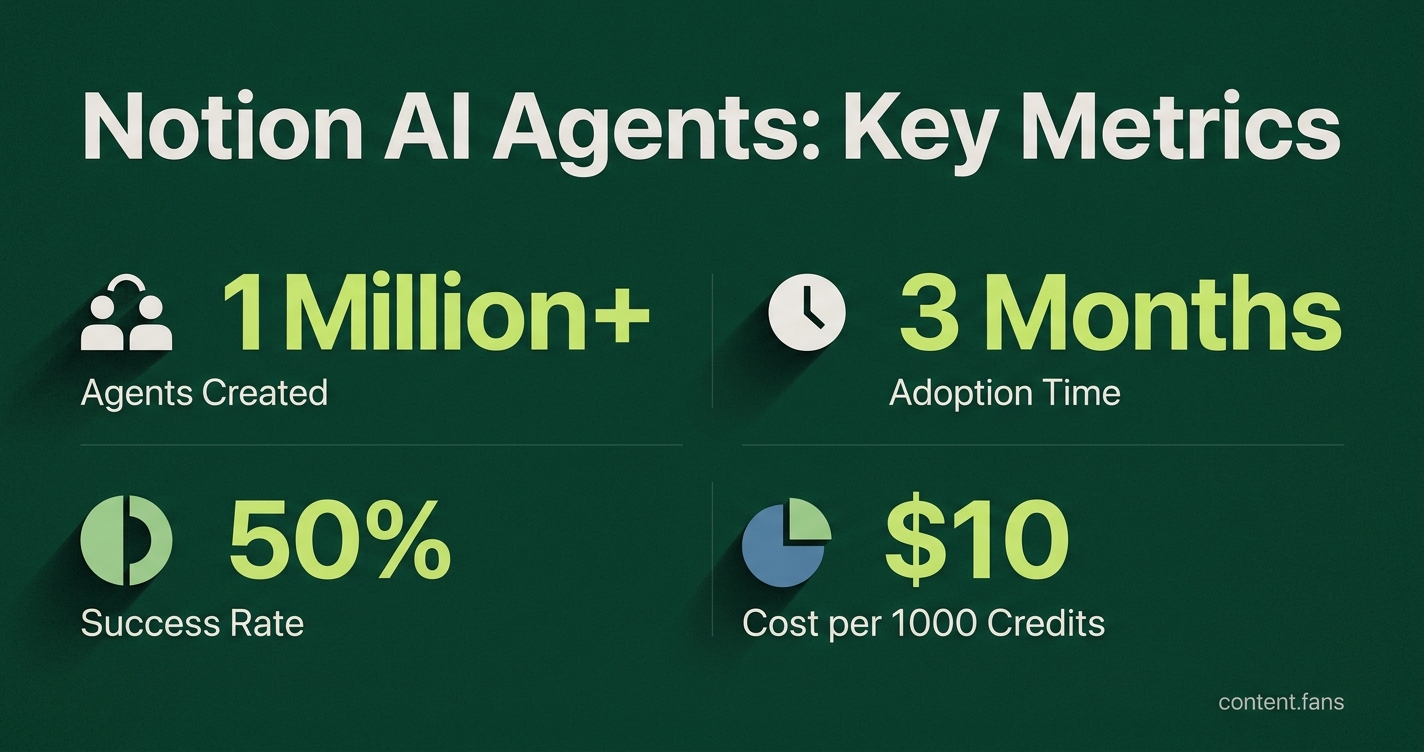
This strategy involves observing popular automations, publishing vetted versions, and offering them as a premium "Custom Agents" add-on. The usage-based model opened on May 4, 2026, with a price of $10 per 1,000 credits using 'Notion Credits' for metered usage.
How packaged agents lower the barrier
Notion's packaged AI agents are pre-built automation templates that allow non-technical teams to deploy workflows without custom coding. These solutions handle repetitive tasks like data entry and performance summaries, functioning as ready-to-use tools that can be configured and launched in minutes directly within the workspace.
By shifting the paradigm from custom development to simple configuration, Notion makes advanced automation accessible to all users. Instead of requiring engineering resources, packaged agents allow teams to automate workflows directly where their work happens.
The market has responded rapidly. Following the general availability of Custom Agents on February 24, 2026, customers created over 1 million agents in just three months. While self-reported, this figure points to significant adoption and experimentation. A practical example is the social media analyst template, an agent that functions like an "intern" by connecting Sprout Social to Notion, summarizing performance, and recommending posts for approval.
Business model and roadmap context
Packaged and Custom Agents are distinct from Notion's standard AI features. While tools for AI rewriting are bundled into existing plans, agents operate on a credit-based system. This model allows customers to scale automation usage on-demand while keeping subscription pricing stable.
Key platform updates have paved the way for this strategy:
- Feb 2026: Schedules and triggers for Custom Agents were introduced.
These milestones expand the types of workflows Notion can package, with analysts expecting an initial focus on automating repetitive tasks like support ticket triage and preparing weekly standups.
Reported benefits for non-technical teams
Available data indicates agents succeed approximately 50% of the time with high failure rates, though teams report productivity benefits when agents handle routine data entry, summarization, and preliminary decision-making, which frees up human staff to focus on approvals and edge cases.
The credit-based model can also deliver cost savings, particularly for small businesses looking to consolidate their tech stack and reduce standalone SaaS subscriptions. However, experts advise that realizing these savings requires careful monitoring of credit consumption, a feature now available in Notion's admin dashboards.
Market positioning against larger suites
With packaged agents, Notion solidifies its role as a central workspace hub. However, it is not yet positioned to compete directly with enterprise "control plane" giants like Microsoft or Salesforce, which offer more complex orchestration capabilities.
Current market analysis identifies Notion primarily as a knowledge management destination. This creates opportunities for strategic partnerships where external AI agent fleets can integrate with Notion as a data source, while more complex automation is executed on other platforms.