
White House approves $9B for AI chips; Anthropic inks NSA deal
Serge Bulaev
The White House has approved $9 billion for advanced AI chips for spy agencies, while Anthropic is working on a secret contract with the NSA. These moves suggest a rising federal interest in using powerful chips and commercial AI models in secret government systems. Some rules around exporting AI chips are getting looser, which may help agencies get better technology, but details on how much is bought and who uses it may stay secret. There are ongoing debates about how to balance secrecy, oversight, and safe use of AI, and it remains unclear if all agencies will follow the same standards as spending increases.

Recent federal actions, including when the White House approves significant funding for AI chips for spy agencies, signal a decisive push to integrate cutting-edge technology into classified networks. This investment runs parallel to a new classified contract between the NSA and AI firm Anthropic, highlighting a growing demand for both high-end silicon and commercial AI models in national security. Though officials privately confirmed substantial funding, analysts connect the spending to broader defense AI budgets, which are experiencing significant growth, indicating intelligence agencies are central to the surging federal demand for AI.
AI Chip Procurement and Shifting Export Policies
The substantial funding initiative is designed to acquire advanced AI accelerators for U.S. intelligence agencies. It coincides with recent export control policy changes, including January 2026 actions that addressed broader semiconductor export policies for domestic government use.
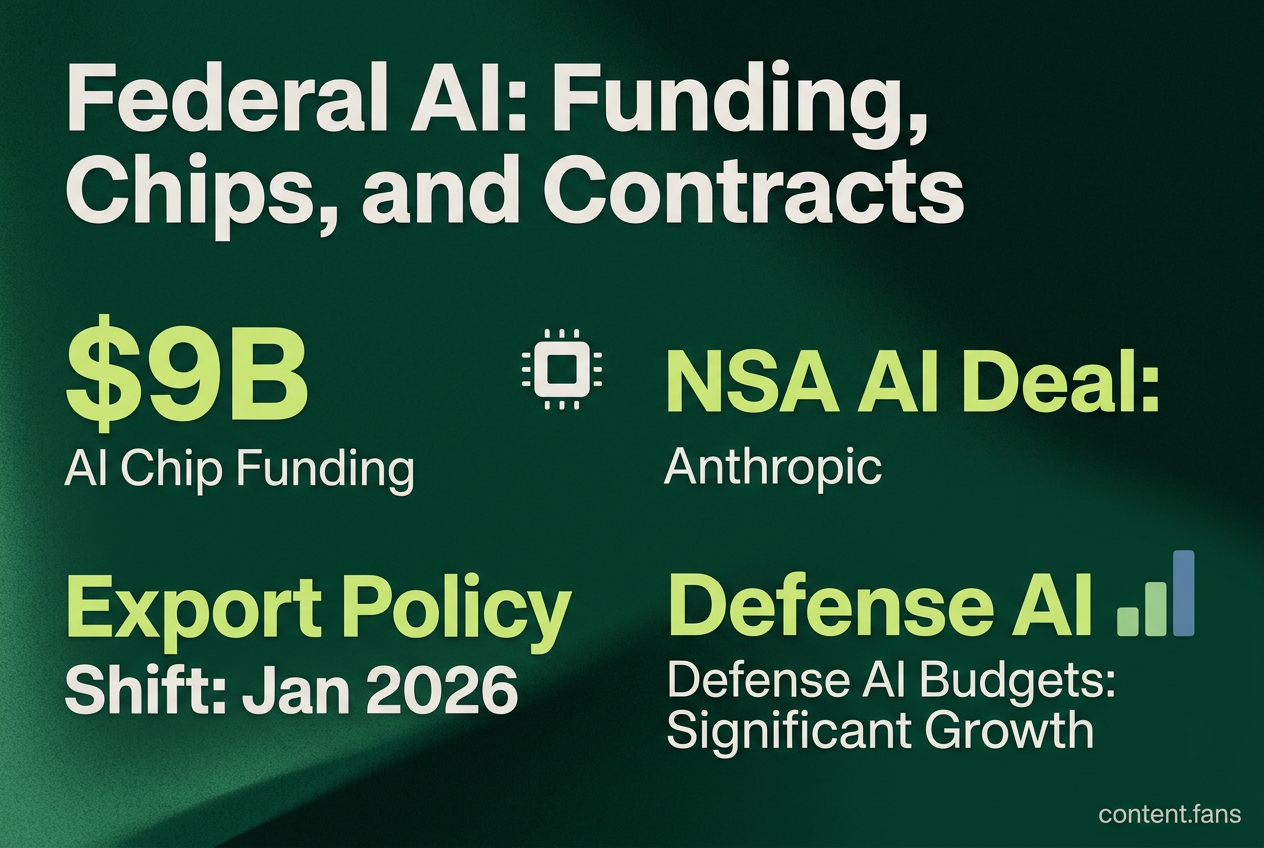
The massive hardware purchase is enabled by recent shifts in U.S. export-control policy. January 2026 sources confirm a Section 232 proclamation and broader semiconductor export policy actions, as detailed in Mayer Brown's summary. Combined with the rescission of the Biden-era AI Diffusion Rule, these changes make it easier for U.S. agencies to acquire cutting-edge accelerators, though the specific quantities and end-users will remain classified, complicating public transparency.
Anthropic Navigates Pentagon Ban for NSA Contract
On the software front, Anthropic's agreement with the NSA demonstrates a complex balancing act. According to Axios coverage, the NSA continued using an Anthropic model despite a Pentagon supply-chain-risk designation. The core of the dispute is over access limits: the Pentagon demanded unrestricted access for "all lawful purposes," but Anthropic refused, citing its strict policies against mass domestic surveillance and autonomous weapons systems.
Balancing Secrecy and Oversight in AI Procurement
As AI adoption in intelligence grows, regulators are scrambling to establish effective governance without compromising secrecy. The White House's America's AI Action Plan, as noted in a Paul Hastings client alert, directs GSA and OMB to create a procurement toolbox but includes specific exemptions for national-security systems. To counter the risk of abuse in such closed environments, policy advocates writing in Just Security have called for an independent, cleared body to audit classified AI applications.
Recent policy memos highlight several key oversight mechanisms:
- Standard contract clauses on data portability and continuous model testing
- Mandatory incident reporting for "high-impact" AI failures
- Internal inventories of every operational AI system, even when details stay classified
- Certifications that exports will not delay domestic end-user needs
The Future of Classified AI Contracts
Current spending and policy trends strongly suggest that intelligence agencies will continue to rely heavily on both private-sector AI models and advanced hardware. The future of classified AI procurement will likely be defined by the interplay between flexible export controls and the ethical guardrails vendors insist upon. As spending accelerates, the critical unresolved issue is whether the government will establish uniform standards for AI use or if the current fragmented approach across different agencies will persist.
What exactly is the substantial White House AI-chip program?
The reported intelligence-agency chip initiative represents a significant federal investment to buy advanced AI chips for federal spy agencies, separate from the broader 2025 White House "America's AI Action Plan" strategy document. Defense agencies are a major driver of federal AI demand, with Defense-related AI spending experiencing rapid growth in recent years.
Procurement guidelines now emphasize:
- Anti-vendor-lock-in clauses (clear data and model portability)
- Continuous monitoring and testing requirements
- Privacy-focused contract language that follows federal law and policy
- Standardized GSA-run "AI-procurement toolbox" rolling out agency-wide
Export-control changes announced by the Bureau of Industry and Security in January 2026 involved broader semiconductor export policy actions, helping keep more leading chips inside U.S. supply chains for government buyers.
How is Anthropic already working with the NSA on classified systems?
Industry reports indicate that the NSA continued using an Anthropic model inside classified networks despite the Pentagon's supply-chain-risk designation. Anthropic became among the first frontier AI labs to deploy on U.S. classified networks, supplying custom models to national laboratories and intelligence teams while publicly refusing:
- Use for mass domestic surveillance
- Integration into fully autonomous weapons
- Any setting that would override constitutional or statutory privacy limits
The NSA deal operates under intelligence-community acquisition channels that operate outside normal DoD contracting rules, explaining why NSA usage can continue while the wider Pentagon restrictions remain in place.
Which agencies get priority access to the new chips?
Public budgets show intelligence agencies buy advanced AI hardware through various channels, so DoD program offices and national-security labs receive priority access. Recent policy changes require chip makers to consider domestic supply needs and avoid delays to U.S. customers, including the intelligence community.
Although individual agencies like CIA, NSA or NGA aren't named in open solicitations, the carve-outs in recent OMB guidance for "national-security systems" let intelligence units access specialized contracts while avoiding the stricter transparency rules applied to civilian agencies.
What oversight exists for secret AI projects?
Because intelligence work is classified, public transparency is limited. Instead, agencies rely on:
- Internal AI-use inventories (not published)
- Mandatory incident-reporting for sensitive applications
- Continuous monitoring clauses written into AI contracts
- Independent oversight bodies cleared to review classified deployments, a reform recommended by Just Security and currently being developed in the Executive Branch
GAO audits can examine whether agencies follow these internal controls, but operational details remain secret. Civil-liberties groups want a "trusted third party" with statutory power to access source code, model weights and audit logs even when programs are top-secret.
Could the same dispute hit other AI vendors?
Yes. Reportedly, Anthropic resisted unrestricted Pentagon use, while Google, OpenAI, xAI, and several other companies entered defense-AI arrangements. Sources mention guardrails against domestic mass surveillance and autonomous weapons in some agreements, though the specific terms vary by vendor.
The administration has emphasized AI chips and models as strategic assets, so future contracts will likely require vendors to choose between accepting national-security restrictions or risking supply-chain-risk designation that could bar them from defense and intelligence work.