
Meta, TikTok, X, YouTube shift algorithms to prioritize original content, deeper engagement
Serge Bulaev
In July 2026, major social media platforms like Meta, TikTok, X, and YouTube changed their algorithms to prefer original content and deeper engagement, such as saves, shares, and long comments. Likes still matter, but may now rank lower than other actions. Meta and YouTube appear to use new systems to detect and limit duplicate or repetitive content. Regulators in the EU and France are watching for rule violations, especially around young users. These changes suggest that creators who focus on authentic stories and encourage private sharing might do better in 2026.

In recent months, Meta, TikTok, X, and YouTube have shifted their algorithms to prioritize original content and deeper engagement, fundamentally altering how creators reach audiences. This report breaks down the critical updates, the new ranking signals that matter most, and the strategic adjustments needed to thrive in a landscape where saves and shares now hold more weight than likes.
Recent Social Media Updates by Platform
Major social media algorithms now favor original content that drives deeper user engagement. Key changes include prioritizing saves, private shares, and long comments over simple likes. Platforms like Meta and YouTube also use new classification systems to detect and demote unoriginal or reposted content, rewarding authentic creators.
Instagram and Facebook
Meta's platforms now prioritize "meaningful interactions." Saves and direct-message shares have reportedly become stronger distribution signals than likes. A new originality classifier flags accounts that frequently repost content, reducing their Explore tab visibility for significant periods.
TikTok
The platform now uses a dual-core model that balances video completion rate with secondary engagement, such as shares and comment replies. TikTok has implemented regular algorithm adjustments for finer control. Videos must now achieve high watch time percentages to enter For You queues.
YouTube
YouTube has separated its Shorts and long-form video algorithms, so a viral Short no longer drives automatic traffic to a channel's longer uploads. This creates stricter content silos, with retention targets for recommendation now requiring substantial viewer engagement.
X (Twitter)
The platform's public recommendation code prioritizes debate-driven metrics like replies and reposts. The strongest positive signal for distribution is rapid engagement shortly after a post is published.
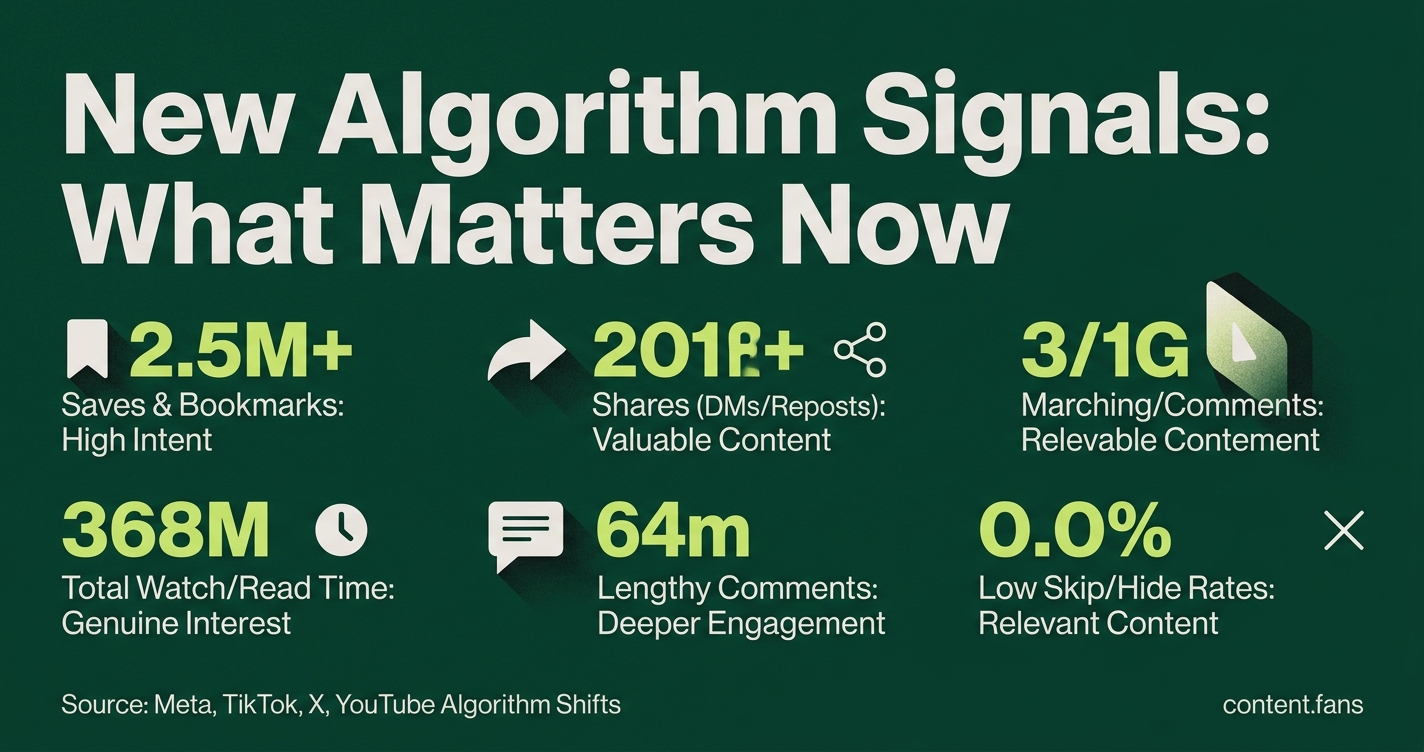
Cross-Platform Ranking Signals That Matter Now
- Saves & Bookmarks: Signals high user intent to revisit the content.
- Shares (DMs & Reposts): Indicates content valuable enough to be passed on.
- Total Watch/Read Time: Demonstrates genuine audience interest and retention.
- Lengthy, Topic-Driven Comments: Valued more than generic, short replies.
- Low Skip or Hide Rates: Shows content is relevant and meets user expectations.
Recent Feature Developments
Recent developments have focused on tools that help explain the emphasis on new engagement patterns. Instagram has been testing Creator Assistant, an in-app AI chat for performance analytics, and Instants, a companion app for temporary posts. Meta is also piloting a Forum app for Facebook Groups and testing a premium tier, Instagram Plus, which offers enhanced features including longer story lifespans.
Policy and Enforcement Highlights
Platforms are backing these algorithm shifts with new enforcement actions. Meta has deployed a video "fingerprint" system to identify original uploads and demote duplicates. Separately, Facebook is testing a User True Interest Survey to let viewers give explicit negative feedback on Reels.
YouTube leadership has stated that repetitive, AI-generated videos are ineligible for monetization. Similarly, LinkedIn plans to demote low-value AI posts while developing its Crosscheck information verification tool.
Regulatory pressure is also a factor. The EU has warned Meta regarding under-13 user accounts, threatening significant fines, while France is debating raising the social media age requirement.
Strategic Takeaways for Creators
These combined shifts signal a clear directive for creators: prioritize authentic storytelling and create content that encourages private sharing and discussion. By respecting new policies on originality and focusing on quality over quantity, creators can achieve more stable and meaningful reach in the evolving social media landscape.