
Talon.One Unveils Protocol for AI Agent-Driven E-commerce Incentives
Serge Bulaev
Talon.One has introduced a new protocol called Unified Incentives Protocol (UIP) to help e-commerce brands prepare for shopping done by AI agents. By 2030, Bain & Company suggests that 15% to 25% of U.S. online sales may involve AI agents in some way. Brands are being advised to make their product data, incentives, and measurement systems easy for AI agents to use and understand. The company suggests that loyalty programs and fast, machine-readable catalogs may help brands connect with both shoppers and AI agents. Experts believe that high-quality, consistent product data and new ways of measuring sales will be important as more shopping moves to AI.

The rise of AI agent-driven e-commerce is forcing brands to rethink their technical foundations. With AI agents projected by Bain & Company to handle 15% to 25% of U.S. e-commerce sales by 2030 - a market worth up to $500 billion - marketers must act quickly. The challenge is ensuring that product catalogs, promotional incentives, and performance measurement are structured for algorithms, not just human shoppers.
Agentic AI expected to handle end-to-end shopping - brands must become agent-ready
Becoming agent-ready means adapting a brand's digital infrastructure so autonomous AI agents can discover, evaluate, and purchase products. This involves structuring product data for machine readability, centralizing incentives for consistency, ensuring fast API responses, and creating new attribution models for agent-driven sales conversions.
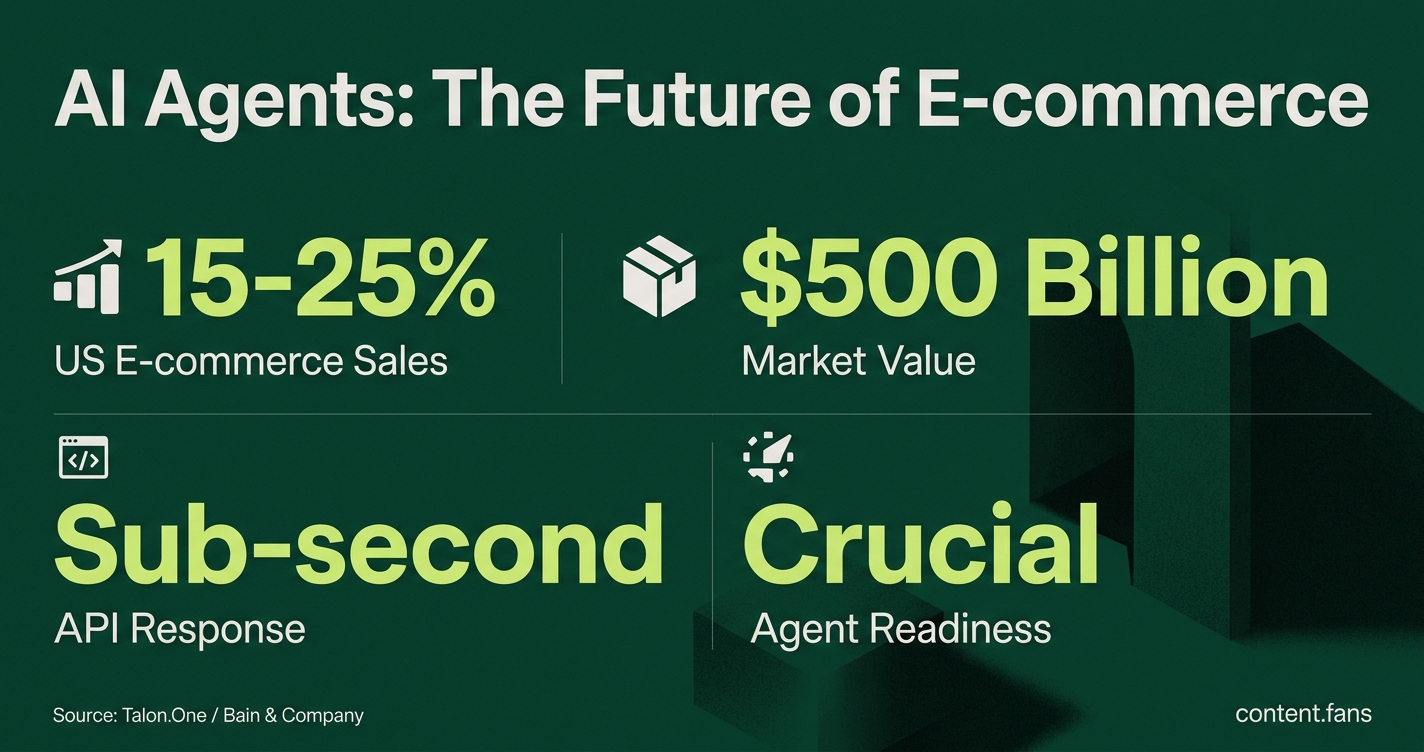
To guide this transition, Talon.One's playbook advises marketers to audit their tech stack for agent-readiness, focusing on API performance, data integrity, and incentive structures. In response, Talon.One introduced the Unified Incentives Protocol (UIP), a platform-agnostic standard for exposing promotions to AI agents for real-time evaluation, as detailed in its Business Wire release. Key adaptation areas for retail teams include:
- Machine-Readable Metadata: Standardizing attributes, live inventory, and policy details.
- Centralized Incentives: Ensuring all channels reflect the same promotional rules.
- Agent-Aware Measurement: Capturing attribution from agent-driven conversions.
- High-Performance APIs: Supporting sub-second response times for agent queries.
What an agent-ready catalog looks like
An agent-ready catalog shifts from visual, page-centric merchandising to data-centric infrastructure. Industry guidance from sources like Effinity and McKinsey highlights the need for richer, structured data for every product, including semantic metadata and authenticated APIs for secure offer comparison. This means operational data - such as live stock status, delivery estimates, and warranty details - becomes as critical as marketing titles and images. Advanced tools, like those from Microsoft, are already using AI to automate catalog enrichment by extracting attributes from images, which drastically reduces manual data entry.
Incentives, loyalty, and identity in an agentic world
In an agentic world, loyalty programs become a crucial bridge connecting a brand's customers to their shopping agents. Talon.One suggests using exclusive benefits and perks to incentivize shoppers to link their identities to agents, creating a trusted data channel for autonomous purchases. The Unified Incentives Protocol (UIP) is central to this strategy, standardizing how promotion logic is exposed to agents. This allows them to independently discover and apply discounts or loyalty rewards, though high-speed API performance is essential to prevent agents from abandoning slow-responding systems.
Measurement and governance pressures
Data governance and quality are becoming critical factors for visibility in an agentic ecosystem. Experts warn that inconsistent metadata or outdated inventory can cause AI agents to disregard or penalize a brand's offers. Consequently, Product Information Management (PIM) systems require more rigorous validation and data provenance controls. Marketers also face the challenge of evolving attribution models to accurately track sales that start with an agent conversation and end in a headless checkout.
As Bain predicts AI will influence most online shopping by 2030, the time to prepare is now. Building a foundation of structured data, unified incentives, and high-performance APIs will empower autonomous agents to discover, evaluate, and transact with confidence, securing a brand's place in the future of commerce.
What is agentic commerce and why does it matter for e-commerce brands?
Agentic commerce describes purchases initiated, influenced, or completed by AI agents - autonomous systems that act on behalf of a consumer. According to a Bain & Company forecast, this is the next retail revolution, with AI projected to impact most online shopping by 2030. With $300 to $500 billion in U.S. revenue at stake (15-25% of e-commerce), brands must adapt or risk becoming invisible in an era of AI-mediated discovery.
What does it mean to become "agent-ready"?
Becoming "agent-ready" involves technical and strategic adaptations to allow AI agents to interact seamlessly with your brand. Talon.One highlights four key audit dimensions: API accessibility, response time, data completeness, and incentive fragmentation. In practice, this requires:
- Machine-Readable Metadata: Exposing product data in structured formats.
- Conversational Optimization: Ensuring AI can parse and compare your products.
- Modern Attribution: Tracking sales mediated by agents, not just browser sessions.
- Unified Incentives: Offering consistent promotional rules across all channels.
How is Talon.One specifically addressing agentic commerce?
Talon.One is addressing agentic commerce directly with its Unified Incentives Protocol (UIP), launched in January 2026. This platform-agnostic standard enables businesses to expose promotion and loyalty logic in a way AI agents can understand and use. UIP standardizes how incentives are interpreted, allowing agents to discover and apply discounts in real time on behalf of consumers, moving promotional intelligence beyond the traditional checkout page.
What catalog and data model changes are required?
The rise of agentic AI requires transforming product catalogs from human-focused merchandising pages into machine-readable data infrastructure. This fundamental change requires several key structural shifts:
| Traditional Approach | Agent-Ready Approach |
|---|---|
| Page-centric product detail | Entity-centric data graph (product, offer, policy, inventory, shipping) |
| Marketing descriptions | Structured attributes with schema markup |
| Static product feeds | Real-time APIs with availability and policy data |
| Visual merchandising | Semantic and behavioral metadata for agent parsing |
Microsoft's 2026 catalog enrichment capabilities demonstrate this direction: AI agents now extract product attributes from images, enrich them with social insights, and automate onboarding, categorization, and error resolution.
Why should marketers prioritize this transition now?
Prioritizing this transition now creates a significant competitive advantage. Brands that make their data and incentives AI-accessible today will be more discoverable and favorably evaluated by shopping agents tomorrow. The preparation window is short. As noted in Bain's research, the infrastructure decisions made now will define a brand's competitive position as agentic commerce reshapes consumer behavior for the next decade.