
Proteomic organ clocks expand biological age testing by 2026
Serge Bulaev
Biological age tests, like proteomic organ clocks, may soon help doctors spot early signs of organ decline, which normal age does not show. These tests measure changes in blood proteins and might predict risks for diseases like cancer or heart problems more accurately than just knowing someone's age. Costs for these tests appear to be falling, and yearly screening could become possible, but there are hurdles such as lack of standard approval, payment issues, and data privacy concerns. Hospitals seem to be using these tools in research, but full use in regular care may take more time and depend on more evidence and policy changes. Progress in using biological age for health decisions appears likely, but it may happen slowly and in steps.

Proteomic organ clocks are scientifically validated for predicting disease and mortality risk but are not yet routine clinical standards in 2026; they serve as triage/context tools rather than definitive diagnostic drivers. By measuring thousands of blood proteins, these tests can more accurately predict risks for diseases like cancer and heart problems. As costs fall, yearly screening could become routine, but significant hurdles in regulation, reimbursement, and data integration must be overcome.
The Shift from Chronological to Biological Age
Medicine is moving beyond counting birthdays to measure true biological wear. As prominent cardiologist Eric Topol argues, people of the same chronological age often have vastly different rates of aging. Relying on date of birth can blind clinicians to organ-specific decline that advanced biological clocks can detect years earlier.
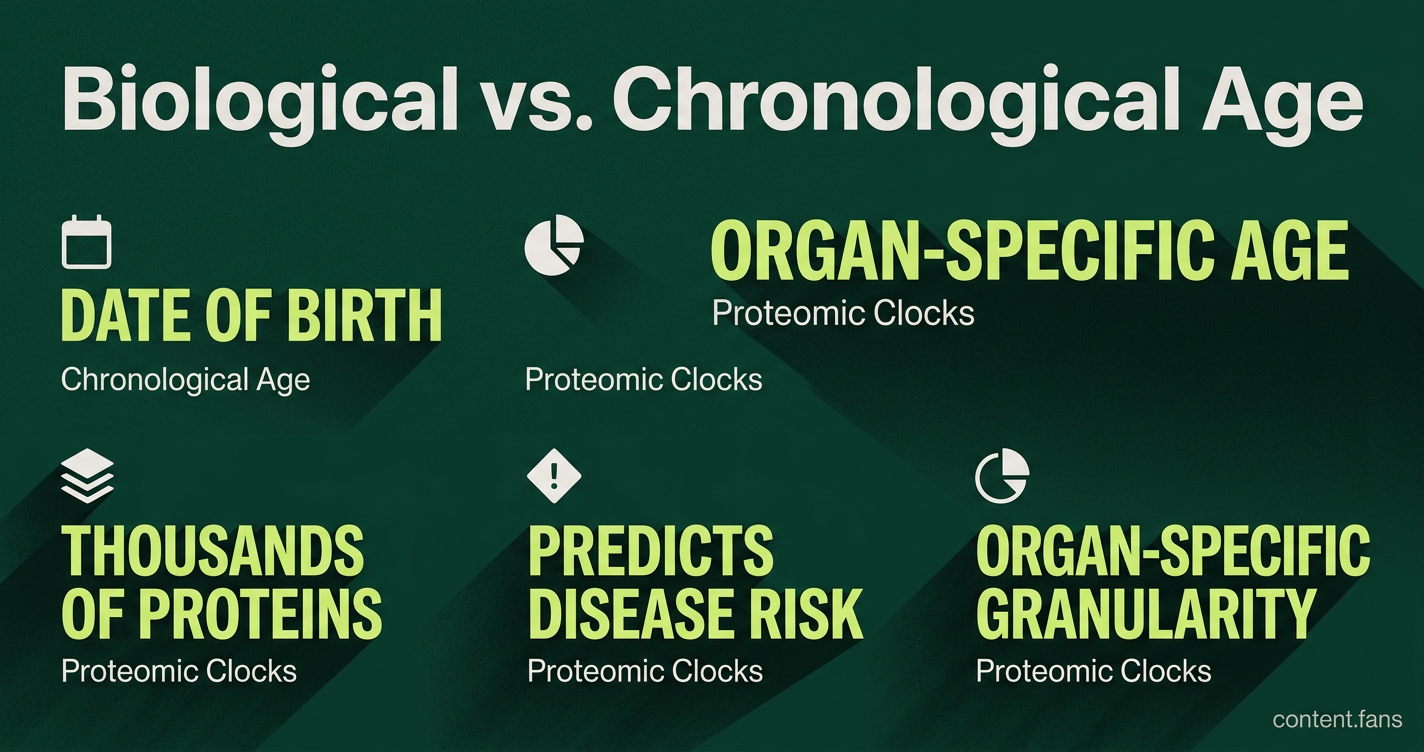
Proteomic organ clocks analyze thousands of blood proteins to create a specific biological age for individual organs, such as the heart, brain, or kidneys. This allows clinicians to see if a specific organ is aging faster than the rest of the body, signaling potential health risks before symptoms appear.
How Proteomic Clocks Provide Deeper Health Insights
Researchers have linked a significant gap between biological and chronological age to the earlier onset of cancer and cardiovascular events. While second-generation methylation clocks can predict mortality, proteomic organ clocks offer organ-specific granularity. A patient could have a healthy overall biological age of 50 but an accelerated heart clock hinting at silent atherosclerosis. This detailed view represents an emerging approach to precision medicine, where integrated data from tests, wearables, and EHRs may help predict health outcomes.
These emerging tests analyze thousands of blood proteins to reveal whether specific organs are aging faster than the body as a whole What New Biological Age 'Clocks' Say about Longevity, according to Eric Topol. Key categories include:
- Epigenetic (DNA methylation) clocks: Provide a body-wide age estimate; some, like GrimAge, are used to predict mortality.
- Proteomic organ clocks: Analyze up to 11,000 plasma proteins to map the biological age of the heart, brain, liver, and other organs.
- Immune system pace: Tracks immune aging, which may signal future dementia risk.
Clinicians in pilot programs use a three-step workflow: establish a baseline age, intervene with targeted lifestyle or therapeutic changes, and then retest in 6 to 12 months to measure progress.
Policy and Reimbursement Roadblocks to Widespread Adoption
Despite strong clinical interest, widespread adoption faces major hurdles. Many major US payers do not currently reimburse biological age testing. Analysts point to four primary barriers:
- Validation: No single testing protocol has been endorsed as a standard by regulatory bodies like the FDA or CMS.
- Margin Pressure: According to industry reports, payers are focused on cost containment, making them hesitant to cover new diagnostic categories.
- Regulatory Uncertainty: Ongoing legislative changes to healthcare funding leave little bandwidth for considering novel diagnostics.
- Data Integration: Health systems struggle with the technical challenges and cybersecurity concerns of integrating complex biomarker data into existing EHRs Assessing the Health Care Environment for 2026: Key Signals for the Field.
While some industry observers suggest biological age metrics could eventually be incorporated into population health payment models, the path forward appears incremental. For now, hospitals continue to monitor biological age in research settings, suggesting that progress will be paced by evidence, equity, and financial realities.