
OpenAI Unveils Opt-In Memory for ChatGPT Superapp
Serge Bulaev
OpenAI is introducing an opt-in memory feature for its upcoming ChatGPT superapp, which may give users more control over what the app remembers. By default, the app does not store long-term memory unless users turn it on, and people can delete or manage what is saved. Temporary chats and chat history can be erased, and a new privacy filter might help keep personal information private. These changes suggest OpenAI is trying to address privacy concerns, but it is not yet clear if this will be enough to satisfy all privacy advocates or regulators.

OpenAI is implementing an opt-in memory for its ChatGPT superapp, a decisive move placing user control at the forefront of AI personalization. This privacy-first approach ensures that the agentic assistant does not retain long-term memory by default, directly addressing growing concerns over passive data collection by AI.
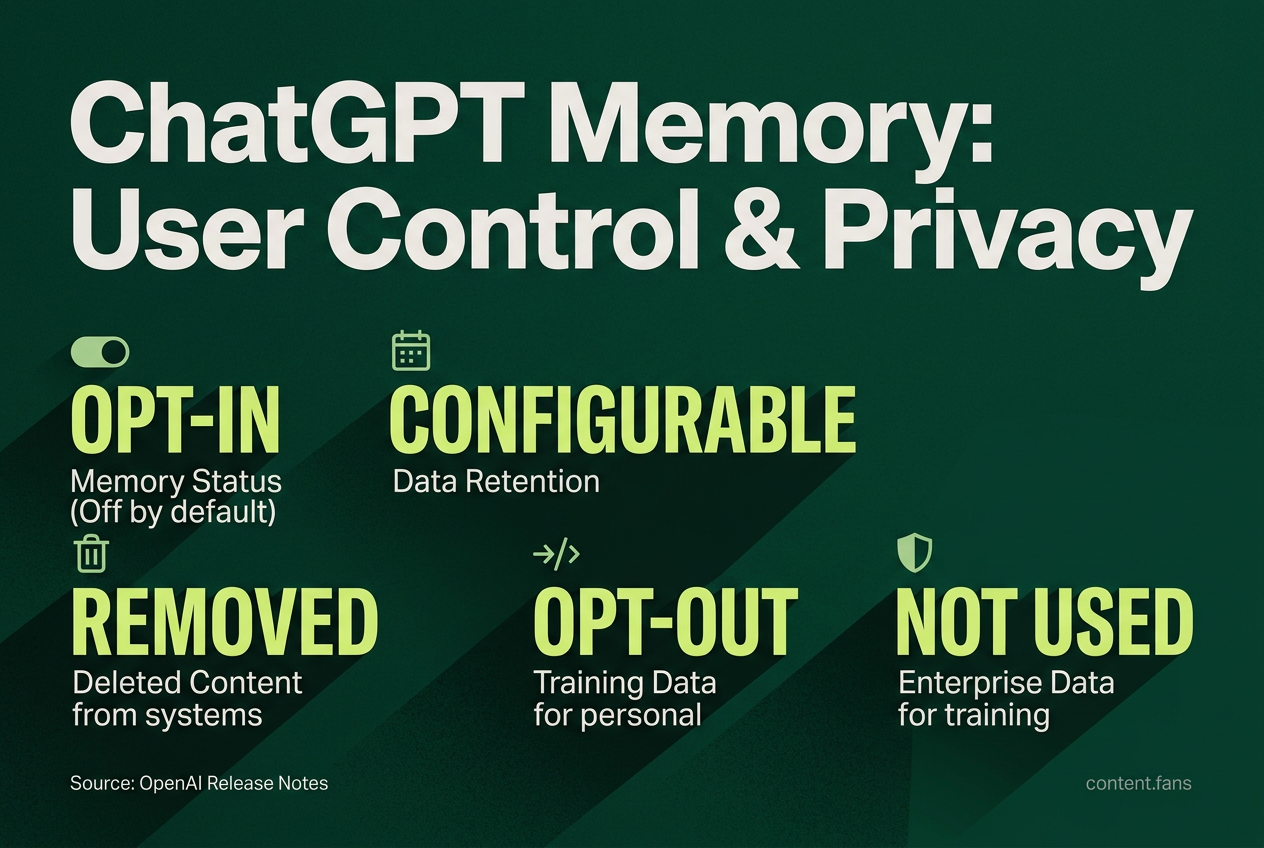
According to the company's "superapp" roadmap detailed in the ChatGPT Release Notes, chat history can contribute to memory if 'reference past chats' is enabled, which is often on by default for users with prior memory enabled. Users must explicitly disable memory or the 'reference past chats' option to prevent chat history from contributing. The framework allows users to delete saved memories, disable the feature, or use Temporary Chats that are automatically purged. A corresponding privacy policy update stipulates that deleted content is removed from OpenAI's systems, barring security reviews. These safeguards establish a clear template for privacy in the AI sector.
How the Opt-In Memory Switch Works
OpenAI's new memory feature for ChatGPT is an opt-in system, meaning it is off by default. When enabled, users can explicitly tell the AI what to remember. These memories are stored as short text snippets that can be reviewed, edited, or deleted at any time through user settings.
When a user instructs ChatGPT to remember a detail, such as a scheduling preference, the app saves a concise text key, not the entire conversation. Users can manage these keys under Settings > Personalization > Memory Controls. The Release Notes confirm that memory items are not used for advertising, and model training on personal data remains opt-out. For conversations not saved to memory, users can delete individual chats or their entire history. An additional on-device Privacy Filter can also redact personally identifiable information before it leaves a user's device.
Security Layers for Agentic Actions
The opt-in memory is fortified by several defensive features:
- Lockdown Mode: Disables browsing, agent functions, and downloads to minimize the attack surface during sensitive tasks.
- Active Sessions: Provides a dashboard to review and remotely log out of devices.
- Advanced Account Security: Replaces passwords with more secure passkeys or hardware keys to mitigate account takeovers.
For enterprise clients, OpenAI guarantees that corporate data does not train its models and offers configurable data retention periods, affirming that organizations maintain ownership and control of their data.
A Growing Industry Trend Toward Local-First Design
OpenAI's strategy mirrors a broader industry shift toward local-first processing and consent-driven data flows. Research indicates many new agentic assistants are separating confidential modes from research modes, ensuring sensitive data remains on-device unless explicitly authorized for cloud access. This model often includes human-in-the-loop verification for high-stakes actions like financial transactions, reflecting a maturation of AI design that has learned from early security exploits.
By defaulting to forgetfulness, OpenAI is positioning long-term personalization as a deliberate user choice rather than a baseline assumption. This model challenges the status quo, offering a concrete blueprint for building AI assistants that respect user privacy from the ground up. While its reception by regulators and privacy advocates is still forthcoming, the pattern is clear: empower users to teach their assistants what is worth remembering.