
OpenAI, Anthropic Drive Half of Cloud Providers' $2 Trillion Backlog
Serge Bulaev
Recent analysis suggests that about half of the $2 trillion backlog at large cloud providers may come from just two AI companies, OpenAI and Anthropic. These firms seem to have very large contracts, such as Anthropic's possible $200 billion deal with Google Cloud, though these numbers remain unverified. Experts warn that this heavy reliance on a few customers could be risky if their needs change. The strong growth in backlog might not reflect broad demand, since it appears concentrated among a small number of buyers. Investors are paying close attention, but there may be added risks if the AI business models shift.

Recent analysis suggests that OpenAI and Anthropic drive a significant portion of cloud providers' massive backlog, a concentration reshaping how investors interpret hyperscaler growth metrics. Industry reports indicate that contracts with the two leading AI labs could account for a substantial share of the total remaining performance obligations (RPOs) disclosed by major cloud platforms.
According to industry reports, Anthropic has committed to a substantial multi-year spending agreement with Google Cloud link. While Reuters could not independently verify specific figures and both companies declined to comment, a deal of this magnitude would represent a significant portion of Google's entire disclosed backlog.
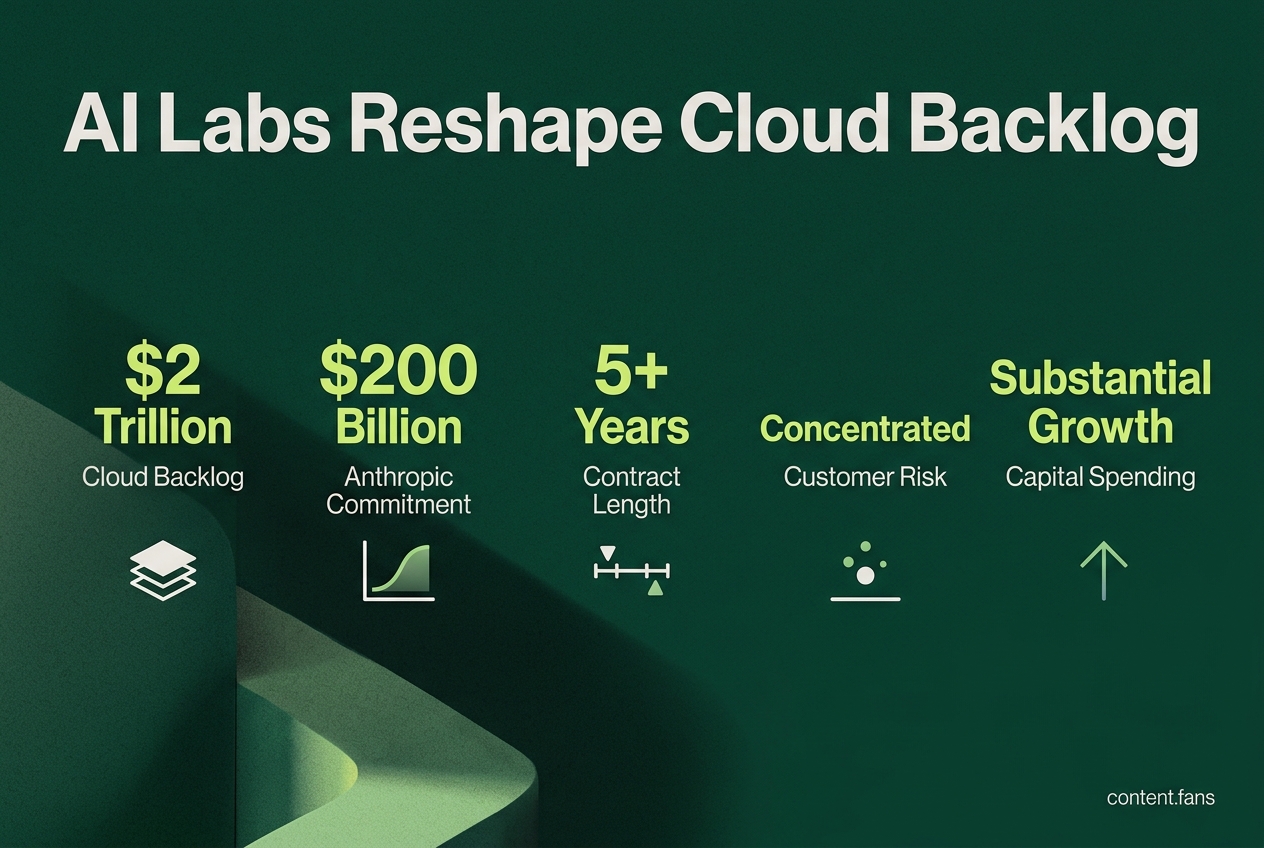
What today's hyperscaler backlogs look like
This intense concentration means a substantial portion of the cloud market's future revenue is tied to the success of just two AI companies. A significant decrease in demand from OpenAI or Anthropic could drastically alter the financial outlook for major cloud providers like Google, Microsoft, and AWS.
This backlog, representing revenue already contracted but not yet recognized, has grown substantially according to industry analysis. Cloud providers are reporting significant growth in their remaining performance obligations, with explosive, AI-fueled growth evident across major platforms.
Consequently, analysts caution that headline backlog figures may overstate broad enterprise demand. If a substantial portion of the total backlog comes from Anthropic and OpenAI buying GPU capacity, the revenue base is far less diversified than the top-line numbers suggest.
Why concentration matters
- Customer Risk: Analysts from MUFG Americas highlighted Oracle's "more concentrated customer risk" due to its significant reliance on commitments from OpenAI.
- Capital Intensity: Providers are racing to meet AI demand, with data center capital expenditures growing substantially according to industry reports. This spending occurs amid ongoing power and semiconductor constraints.
- Execution Pressure: Hyperscalers face immense pressure to convert these massive contracts into revenue "with virtually no margin for execution error," as noted by CoStar, as markets re-evaluate their performance.
Reading backlog numbers with care
Backlog figures remain a useful demand signal, but several nuances require careful consideration:
- Timing Gaps: Commitments often span five or more years, which can obscure near-term volatility or shifts in demand.
- Shared Workloads: Leading AI labs like Anthropic use multiple clouds (e.g., Google Cloud and AWS), meaning a slowdown from a single customer could impact several providers simultaneously.
- Unverified Data: Key figures, such as Anthropic's reported commitment, remain unconfirmed by the companies involved, warranting cautious interpretation.
Snapshot: Recent reported backlogs
| Provider | Reported backlog | Year-over-year growth |
|---|---|---|
| Microsoft | ~$392B cloud backlog or $625B total RPO | 51% YoY |
| Oracle | Significant growth reported | Substantial increase |
| Google Cloud | Growing substantially | Strong growth |
| AWS | Backlog not officially reported | Figure from unverified comparison article |
Microsoft's figures are from official earnings reports. Other specific figures are unverifiable from official sources. It is critical to note that official filings do not disclose single-customer exposure, making estimates of customer concentration speculative working theories.
The market reacted positively to reports of Anthropic's deal with Google, with Alphabet shares rising in after-hours trading. While this reflects investor enthusiasm for AI's long-term spending potential, experts warn this same concentration amplifies downside risk should the economics of AI model training and inference change.
Ultimately, the backlog debate reveals the core tension of the current AI boom: cloud providers are securing record-breaking contracts, but their financial futures are increasingly tied to a handful of AI pioneers whose own business models are still taking shape.