
Micron hits $1 trillion valuation on surging AI memory demand
Serge Bulaev
Micron Technology reached a $1 trillion market value in May 2026, which may be due to strong demand for memory chips used in artificial intelligence. The company's stock price appears to have jumped sharply in one year, with trading data and investor reports suggesting this rise is linked to AI-related memory needs. Industry analysts say that supply for memory chips like DRAM and NAND might not grow as fast as demand from AI data centers, which could keep prices high into 2027. Experts also warn that only a few big companies provide these memory products, so smaller buyers may face longer waits and higher costs. Overall, the numbers suggest that memory chips could stay expensive, and companies may need to plan earlier and be flexible when buying them.

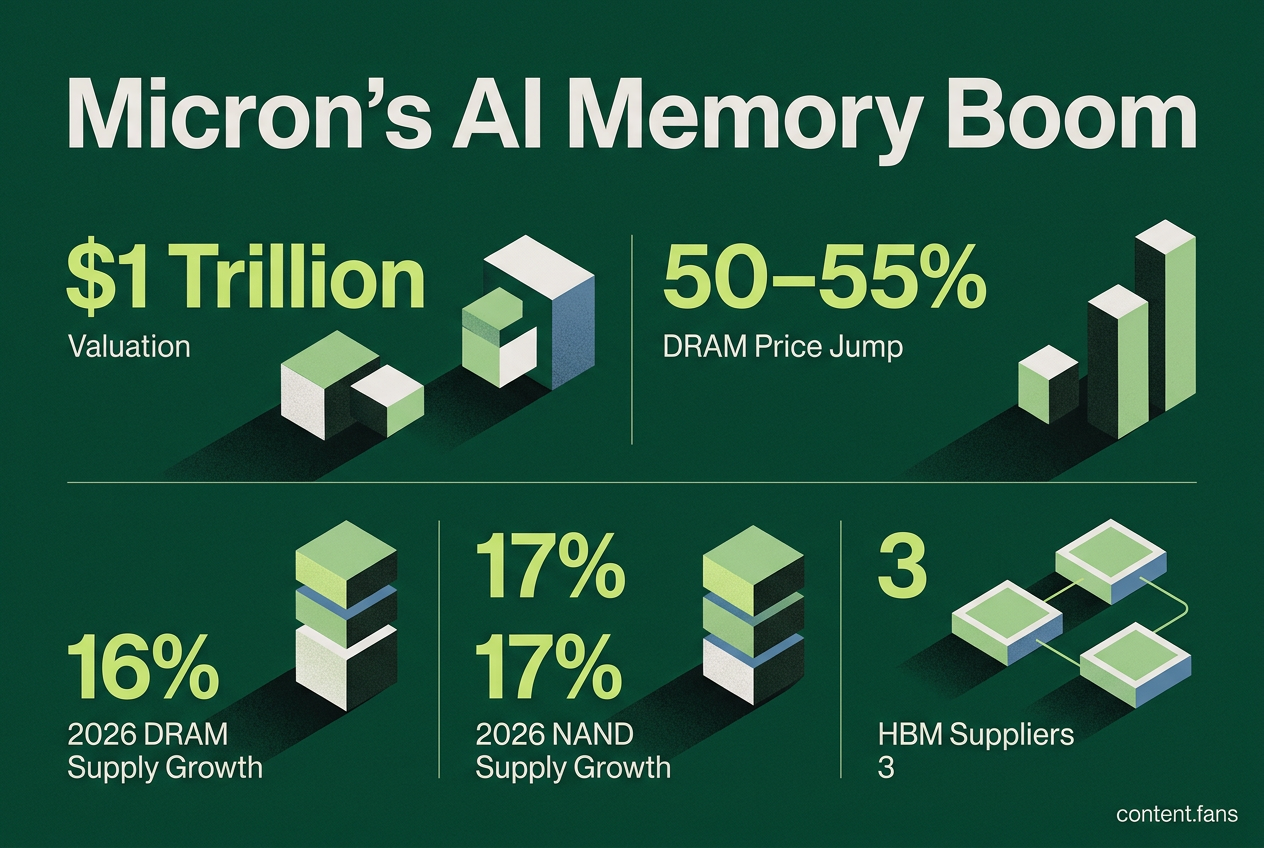
Micron Technology has hit a $1 trillion valuation, a landmark achievement driven by surging AI memory demand from data centers. Micron reached $1 trillion in market value in May 2026, representing a significant increase from previous valuations, though the exact one-year change is not verified by available sources. This valuation surge is directly linked to the unprecedented appetite for high-performance memory chips essential for artificial intelligence workloads.
A valuation leap in historical context
The primary driver for Micron's valuation surge is the explosive demand for high-bandwidth memory (HBM) and DDR5 chips, which are critical for AI servers. This structural market shift has created a supply-demand imbalance, pushing memory prices and the company's stock to record levels.
Micron's ascent into the trillion-dollar club reflects a dramatic share price increase over the past year. According to industry reports, the stock experienced substantial gains in late May 2026, delivering significant returns to investors. Market reports highlighted key moments in this rally, including notable single-day jumps attributed to strong revenue and HBM sales performance. Industry analysis indicates Micron has emerged as a leading performer among major semiconductor companies during this period.
AI servers lift DRAM and NAND pricing
The valuation surge is rooted in a fundamental structural change within the memory market. Analysts project that while 2026 DRAM and NAND supply will grow by only 16% and 17% respectively, demand from AI data centers will far outpace this, keeping the market tight into 2027 IDC blog. Manufacturers are reallocating production to high-bandwidth memory (HBM) and DDR5 components for AI hardware, constricting supply for PC and smartphone markets. This supply crunch is reflected in pricing, with recent reports indicating DRAM contract prices have jumped 50-55%, highlighting how quickly AI infrastructure demand can consume available memory.
Concentration risk within the memory supply chain
This AI-driven boom also introduces significant concentration risk. The high-bandwidth memory market is now dominated by three main suppliers - Samsung, SK Hynix, and Micron - and a small number of hyperscale customers. Industry experts warn that memory suppliers are prioritizing these large AI clients, which extends lead times and increases costs for smaller buyers. This reallocation leaves traditional PC and mobile device manufacturers vulnerable to component price volatility, while major AI initiatives depend critically on memory availability.
Key supply chain pinch points for 2026 include:
- Limited HBM packaging capacity, which constrains the output of finished modules.
- Priority allocation agreements that favor hyperscalers over other buyers.
- Extended qualification cycles required for new DRAM process technologies.
- Logistics bottlenecks for advanced substrates and other materials.
What the numbers could imply
The widening gap between constrained memory supply and exponential AI-driven demand suggests that elevated pricing will likely persist into 2027. For investors, Micron's high valuation multiple signals a market shift: premium memory is now viewed as a strategic asset, not a commodity. For enterprise technology buyers, this new reality mandates proactive procurement strategies and more flexible system architectures to navigate sustained market tightness.