
Brands expand green logistics in 2026, cutting Scope 3 emissions
Serge Bulaev
In 2026, consumer goods companies are changing their shipping and packaging to be more eco-friendly because of new rules and rising environmental concerns. Many brands may focus on lowering their Scope 3 emissions, using smarter packaging, and choosing greener transportation like electric trucks and trains. Industry experts say that packaging, tracking data, and using new digital tools appear to be important for these changes. Some companies are reported to use biodegradable packaging and real-time data to check their emissions. These efforts suggest sustainable shipping is becoming a regular business practice as more rules and customer demands push companies to act.

In 2026, brands are expanding green logistics to cut Scope 3 emissions, a strategic overhaul driven by new regulations and rising consumer expectations. Consumer goods companies are concentrating on smarter packaging, greener transport, and data-driven accountability to shrink their environmental footprint, turning distribution into a primary arena for sustainability.
Lower-carbon transport takes priority
Fleet decarbonization is a primary focus for brands transitioning to lower-carbon transport. Industry reports indicate that companies are prioritizing ground shipping and electric vehicles to meet long-term net-zero targets. Similarly, PepsiCo's pep+ framework optimizes delivery routes, while Schneider Electric and DHL are piloting a multi-modal model blending rail, sea, and road transport to halve supplier emissions.
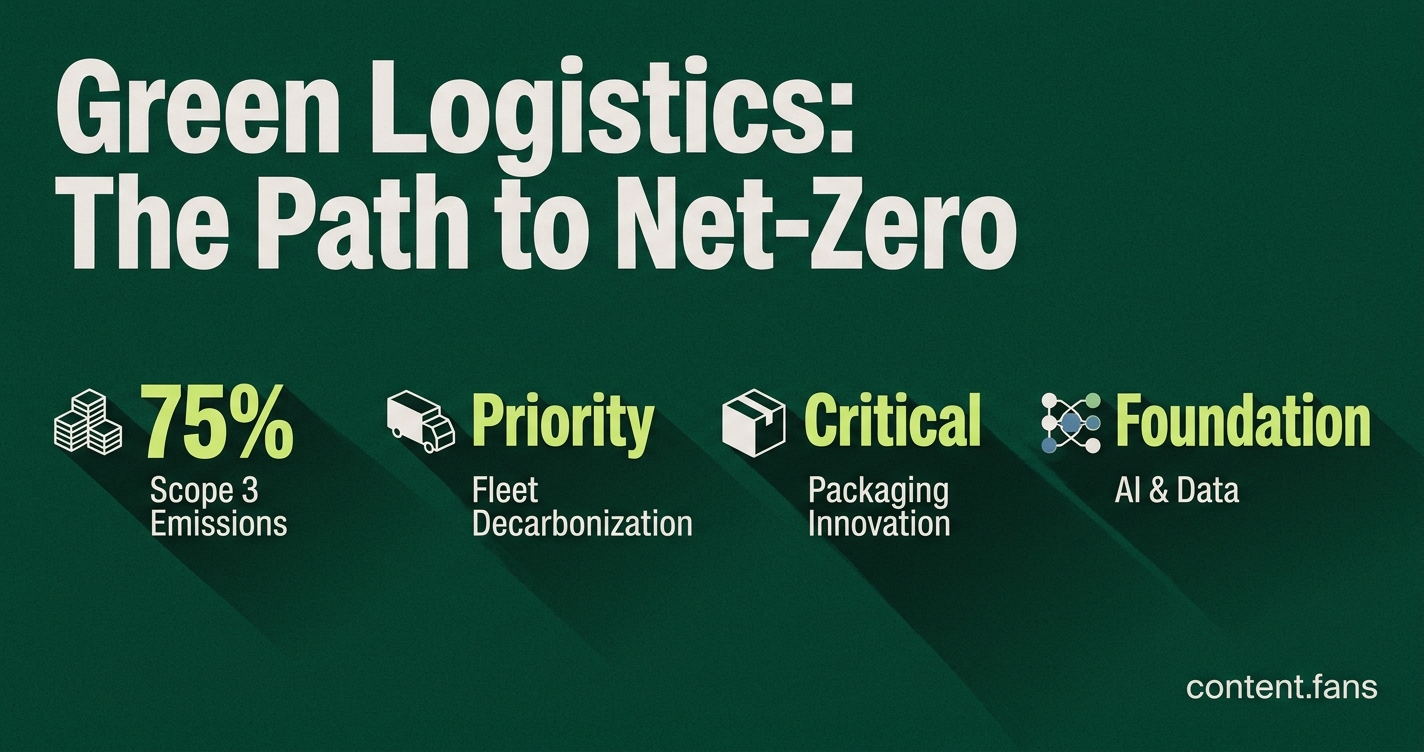
Brands are implementing green logistics by decarbonizing their fleets with electric vehicles and multi-modal shipping, adopting circular and smart packaging solutions, and leveraging AI for real-time emissions tracking. These initiatives target Scope 3 emissions, which represent the majority of a consumer goods company's carbon footprint.
Analysts note that since Scope 3 emissions typically account for approximately 75% of a company's total greenhouse gas inventory on average across industries, brands are compelled to use digital dashboards to track carrier data and verify emission reductions.
Circular and smart packaging gains speed
Packaging innovations are a critical component of green logistics. Industry reports suggest growing adoption of biodegradable materials like mycelium and PLA, complemented by smart tags that guide consumer recycling. Demonstrating this trend, olive-oil producer Deoleo achieved its recycled plastic goals ahead of schedule, while Walmart is enhancing supply chain transparency by tracing cotton through the U.S. Cotton Trust Protocol.
Data, AI and real-time accountability
Data and AI provide the foundation for accountability in green logistics. Brands are embedding AI and IoT sensors to manage warehouses and fleets, with industry leaders like Unilever, IKEA, and Walmart requiring logistics partners to provide real-time emissions data. This push for transparency is reinforced by stringent regulations, such as the UK's Digital Markets, Competition and Consumers Act 2024, which imposes severe fines for misleading sustainability claims, and Brazil's Plastic Decree, mandating reverse logistics systems.
Emerging trends to watch
- Zero-emission freight corridors powered by renewable energy contracts.
- Digital product passports offering end-to-end traceability per EU producer-responsibility rules.
- Retail resale programs shifting from pilot scale to profitable inventory streams as circular commerce laws spread across Latin America.
These converging trends - from consumer demand and investor pressure to new legal obligations - signal that sustainable distribution is no longer experimental. It has become a standard operating practice and a critical component of modern business strategy.
What are the main green logistics initiatives consumer goods brands are implementing in 2026?
Consumer goods brands are advancing sustainable logistics initiatives through three core strategies: electric and low-carbon transport, circular and smart packaging systems, and AI-orchestrated fulfillment optimization.
Major brands are shifting shipments from air to ground transport and expanding electric delivery vehicle fleets. eBay has committed to net-zero by 2045 with a 27.5% Scope 3 reduction in downstream transportation by 2030 and a 90% value chain reduction by 2045, validated by SBTi, while PepsiCo is optimizing routes and increasing EV usage through its pep+ framework. On the packaging front, next-generation biodegradable materials made from mycelium, seaweed, and PLA are entering mainstream use, alongside smart packaging with QR and NFC sensors that guide proper disposal. AI and IoT technologies are being deployed for real-time carbon measurement and zero-waste inventory management, with companies like Unilever, IKEA, and Walmart requiring logistics partners to measure and reduce emissions through digital tools.
How are brands specifically reducing Scope 3 emissions through distribution changes?
Scope 3 emissions reduction has become the central priority for supply chain decarbonization, with brands targeting the significant portion of emissions that occur outside their direct operations.
Key approaches include multi-modal shipping models that combine transport methods for optimal efficiency, regenerative sourcing programs that create carbon sinks upstream, and local fulfillment networks that minimize last-mile distances. Schneider Electric exemplifies this through its Zero Carbon Project, which aims to cut supplier emissions by half before 2030 while pioneering sustainable shipping with DHL. Nestlé is investing in regenerative agriculture for coffee and cocoa supply chains, and Walmart has joined the U.S. Cotton Trust Protocol to enable field-level traceability that reduces water and energy use throughout production.
What role does consumer demand play in driving these logistics transformations?
Consumer environmental expectations have transformed sustainability from a "nice-to-have" into a purchasing standard and core operational necessity, though this creates significant pressure on brands.
Industry reports indicate that a significant majority of companies rate consumer sustainability demands as critical, yet consumers simultaneously refuse to pay premiums for eco-friendly products - creating what analysts call a "cost-pressure paradox." This has forced supply chains to deliver transparency, traceability, and accountability without price increases. The stakes are heightened by strict anti-greenwashing regulations: under the UK's Digital Markets, Competition and Consumers Act 2024, companies face fines up to 10% of global turnover for misleading environmental claims. By 2026, sustainability metrics are becoming standard practice for CFOs, with a growing portion of total debt capital markets funding directed toward ESG initiatives.
What new regulations are shaping green logistics in 2026?
Several major regulatory frameworks are accelerating sustainable distribution adoption globally:
| Regulation | Key Requirements | Impact on Logistics |
|---|---|---|
| Brazil's Plastic Decree | Mandatory reverse logistics systems for plastic packaging; recycled content targets | Forces brands to build collection and recycling infrastructure |
| EU Producer Responsibility Scheme | Documentation of packaging recovery or payment to Producer Responsibility Organisations (PRO) | Requires traceability systems |
| Mexico & Global Circular Economy Laws | Bans on single-use plastics | Pushes brands to scale circular commerce as core business models |
These regulations are transforming resale and upcycling from experimental programs into economically viable operations, with luxury brands creating closed-loop systems to reuse materials at scale.
Which brands are leading with measurable results in sustainable distribution?
Several brands have achieved concrete milestones that demonstrate the viability of green logistics:
- Deoleo reached its recycled plastic targets ahead of schedule, achieving significant improvements in recycled PET packaging and plastic waste reduction
- eBay has developed climate transition plans embedding sustainability requirements directly into carrier partnerships
- Schneider Electric launched supplier emissions reduction programs while pioneering multi-modal shipping with DHL
- PepsiCo is improving supply chain efficiency through advanced logistics systems that reduce fuel consumption via optimized routes and increased EV deployment
These results reflect a broader industry shift where sustainability has moved from voluntary initiative to competitive necessity, with brands increasingly obtaining assurance on sustainability disclosures to strengthen stakeholder trust and manage regulatory risk.