
House approves KIDS Act, bans AI chatbots without disclosures
Serge Bulaev
The House has passed the KIDS Act, which would require clear notices when users interact with AI chatbots, mandate age checks for adult sites, and have the FTC register data brokers who collect or sell information about minors. The Senate is reviewing a similar but different bill called KOSA, and there are debates over who should enforce the rules and how strict they should be. Some experts say changes in the House bill might weaken mental-health protections but also limit speech restrictions. Lawmakers still need to agree on key details, and the final law may affect national rules for children's online safety.

The House of Representatives has passed the KIDS Act, a significant piece of legislation that could ban undisclosed AI chatbots and tighten online safety rules for minors. A parallel proposal in the Senate, the Kids Online Safety Act (KOSA), is now drawing comparisons that will shape the next stage of legislative debate.
What the House-approved KIDS Act would do
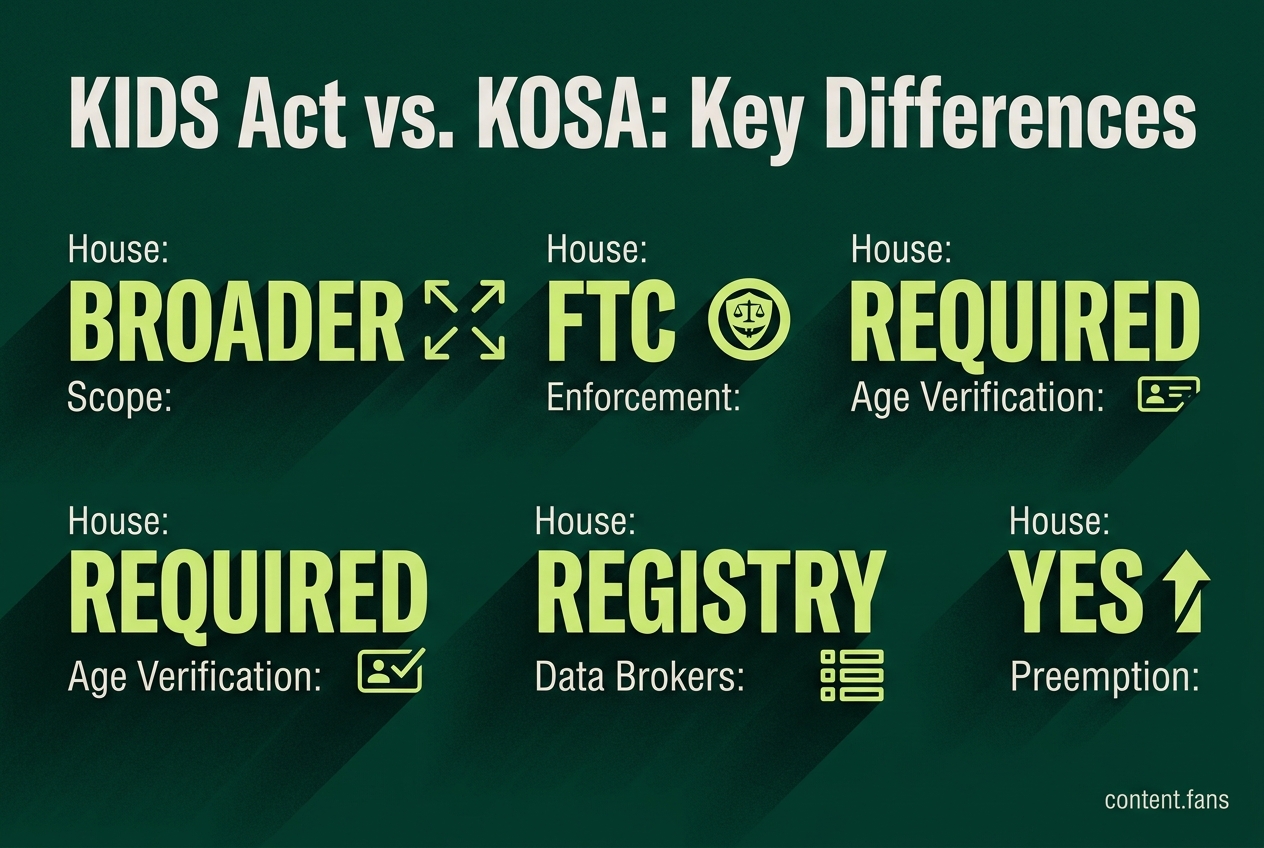
The KIDS Act is a comprehensive bill aimed at protecting minors online. It requires AI chatbots to disclose their identity, mandates age verification for mature content, and creates a federal registry for data brokers handling information on individuals under 18. The law would be enforced by the FTC.
Key provisions of the bill include:
- Requiring any online service that deploys AI chatbots to display a clear notice that users are interacting with software.
- Mandating age verification before adults can access pornography sites.
- Ordering the Federal Trade Commission to establish a registry for data brokers that collect or sell information on anyone under 18.
Proponents position the bill as a consolidated vehicle combining several earlier online safety proposals.
How it differs from the Senate version
A major point of contention is how the House's KIDS Act compares to the Senate's original Kids Online Safety Act (KOSA).
| Feature | KIDS Act (House) | KOSA (original Senate) |
|---|---|---|
| Scope | Social media plus AI chatbots and broader web services | Social media and gaming platforms only |
| Harm standard | "Reasonable policies" to address listed harms | Strict duty of care to prevent specific harms |
| Enforcement | Federal Trade Commission | State attorneys general |
| Age verification | Required to enter mature sites | Explicitly not required |
| State preemption | Preempts conflicting state laws | Keeps state authority intact |
Analysts observe the House version removes the original "duty of care" standard, which critics had called vague. This revision might reduce broad censorship of legal speech but could also dilute protections for youth mental health.
Status in the Senate
The Senate is reviewing a merged legislative package that incorporates a modified KOSA into the KIDS Act framework. Chamber leaders hope for a swift vote. However, state attorneys general are pushing back, urging lawmakers to remove a broad federal preemption clause that they contend would undermine existing state-level child protection laws.
Spotlight on data brokers
The bill's language specifically targets data brokers, mandating that any firm earning over half its revenue from personal data sales must register with the FTC. These brokers would also have to disclose the types of youth data they collect and sell. Industry groups have signaled opposition to the registry requirements, indicating a potential lobbying battle during legislative negotiations.
What happens next
Should the Senate pass its version with age verification and federal preemption, a conference committee will need to resolve key differences. The debate is expected to focus on three central questions:
- Who should police violations - the FTC or the states?
- How strict should the knowledge threshold be when a platform knows it is interacting with teens?
- Will mandatory age verification requirements survive free-speech scrutiny?
The answers will determine whether Congress can enact the first national rules governing AI chatbots and data brokers in the context of children's online safety.