
Google unveils Gemini Omni, new AI search, and smart glasses
Serge Bulaev
Google introduced Gemini Omni, new AI-based search features, and smart glasses that may change how people use the internet. The new search is described as more conversational, possibly making results feel like live help instead of just lists of links. Smart glasses, which may give hands-free, context-aware help, are shipping in audio form soon and could reach millions of users by 2026, though adoption appears early. Google also said it will use special watermarks and content credentials to help people trust AI-generated answers. It is not clear yet how fast people might switch to these new ways of searching or how well smart glasses will work for everyone.

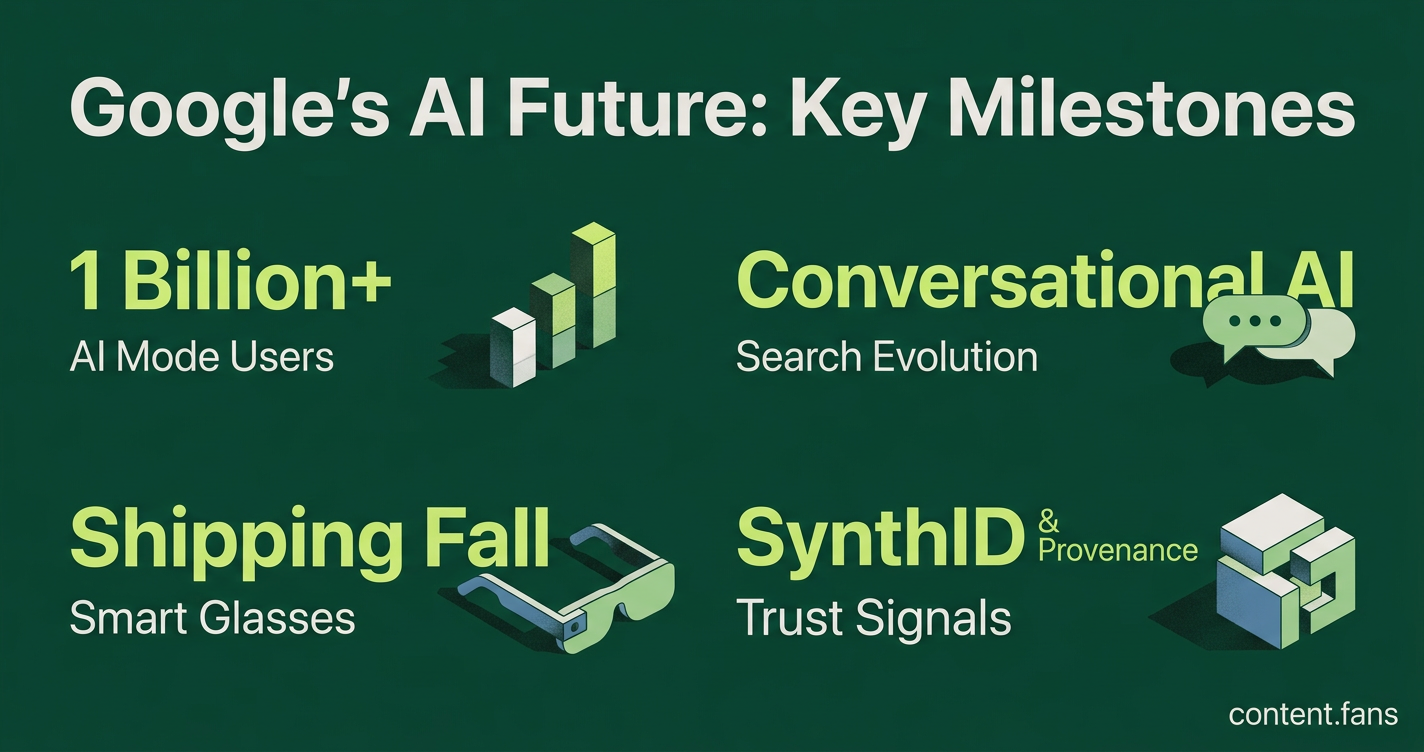
Google's latest I/O keynote signaled a monumental shift for the internet, introducing Gemini Omni, a transformative new AI search experience, and ambient smart glasses. The company is reframing search as a conversational assistant, moving beyond traditional blue links. Google says AI Mode in Search has surpassed 1 billion monthly users and is being expanded with deeper integration through cameras, voice, and wearable devices.
This evolution is driven by core technical innovations like multimodal engines and agentic UI generation, which will fundamentally change how brands and consumers connect online. This analysis synthesizes confirmed details from Google and early expert commentary to outline the future of digital interaction.
Gemini Omni: The "Any-to-Any" Multimodal Engine
Google is evolving its search engine from a list of links into a conversational, AI-powered assistant. Using the Gemini Omni model, this new interface allows users to search with text, voice, or visuals and receive synthesized, direct answers instead of navigating to other pages for information.
The End of Blue Links: Search as a Conversational Assistant
Google's announcements confirm that search results are becoming less like static documents and more like interactive, live services. The keynote framed Search as an agentic assistant that can generate its own UI, pulling information and executing tasks. This could mark the end of search as we know it, replacing the familiar scroll of blue links with dynamic, multimodal answers.
Smart Glasses: Integrating AI into Your Field of View
Smart glasses featured prominently as the next frontier for search. Google described audio-only frames shipping this fall that whisper answers, alongside display variants that project glanceable information. By pairing these wearables with Gemini Omni, Google is positioning hands-free, context-aware assistance as a natural extension of mobile search. Industry reports suggest AI glasses could see meaningful, if early, market adoption in the coming years.
Building Trust with SynthID and Provenance Signals
To address concerns about synthetic media, Google reiterated its commitment to SynthID watermarking and content credentials. With growing usage of the detector, these trust signals will soon appear in Search and Chrome, suggesting that provenance indicators will become a default feature for AI-generated multimodal answers.
How Brands Should Prepare for the New Wave of Search
For brands, discoverability will now depend on clarity and structure across voice, visual, and spatial channels. Businesses must prepare by ensuring product databases can export machine-readable actions for AI agents, creating 3D assets for spatial overlays, and aligning voice summaries with on-page messaging. As AR try-ons and voice-first hardware reshape the customer journey, success will hinge on a presence that is context-aware and interactive.
While this transition promises a more integrated and helpful internet, its mass adoption depends on solving key challenges for smart glasses, including battery life, design appeal, and privacy norms. Ongoing real-world use will ultimately determine how quickly these new habits replace the familiar web search experience.
What is Gemini Omni and how does it change Google Search?
Gemini Omni is Google's new "any input → any output" multimodal model that can create content from any combination of text, images, video, or audio. It combines Gemini's intelligence with generative media models to turn any reference into a single, cohesive output. This represents a fundamental shift from traditional keyword-based search to multimodal, context-aware interactions where users can search using voice, images, or live camera feeds and receive generated answers rather than just links.
How will smart glasses transform search behavior?
Google's new intelligent eyewear includes audio glasses that offer spoken help and display glasses that show information when you need it, both powered by Gemini. These devices make search ambient and situational - users can ask context-sensitive questions about what they're looking at and receive answers in their ear or in front of their eyes. This transforms search from a destination activity into a continuous assistant layer integrated into daily life.
What makes this the potential "end of web search" as we know it?
Google is fundamentally restructuring search through AI-first, multimodal interfaces. Instead of blue links, users now get agentic interfaces that synthesize answers, complete tasks, and even build dynamic layouts on the fly. With features like AI Mode connecting to Gmail, Photos, and Calendar, search is evolving from a web index into a multimodal control layer over personal data and applications.
What challenges do smart glasses face for mainstream adoption?
Despite the promise, smart glasses face significant barriers:
- High cost: Premium models cost over $1,500, making them prohibitive for mass adoption
- Battery life: Limited power performance, especially when using camera and video functions
- Design concerns: Many devices still look bulky or conspicuous, affecting social acceptance
- Privacy issues: Built-in cameras and microphones create concerns about unauthorized recording
- Technical maturity: Display technology, chips, and integration still need refinement for seamless experience
How should brands adapt to these new interaction models?
Brands must rethink discoverability for spatial and voice-first interfaces. In 2026, discovery is shifting from search-and-scroll to point, ask, and interact. This requires:
- Context-aware content optimized for camera-based and visual search
- Conversational content with clear, spoken-friendly answers
- 3D and AR assets for spatial experiences
- Real-time, location-sensitive information
- Multimodal content strategies that work across voice, vision, and environment-based interactions