
CEPI Unveils AI Engine to Accelerate Pandemic Vaccine Development
Serge Bulaev
CEPI is developing an AI tool called the Pandemic Preparedness Engine to help predict and respond to pandemics faster. The system is still being built and may work like a digital assistant for vaccine researchers by quickly analyzing data and suggesting vaccine designs. Early reports suggest it could help spot new outbreaks in real time and propose vaccine targets within hours. However, there may be ongoing challenges, like data bias and limited regulatory guidelines, and the goal of making a vaccine within 100 days appears difficult to reach right now.

The Coalition for Epidemic Preparedness Innovations (CEPI) is developing an AI-powered Pandemic Preparedness Engine to accelerate vaccine development and help prevent future pandemics. This initiative, central to CEPI's 100 Days Mission, aims to create a virtual assistant for scientists, dramatically shortening the path from threat detection to a clinical-stage vaccine.
Anatomy of the "ChatGPT for Vaccine Developers"
The engine integrates diverse data - from genomic surveillance to manufacturing plans - into a secure platform. Using generative AI, it analyzes this information to identify pandemic threats and propose optimal vaccine antigen designs in hours, a process that traditionally takes months of manual research and analysis.
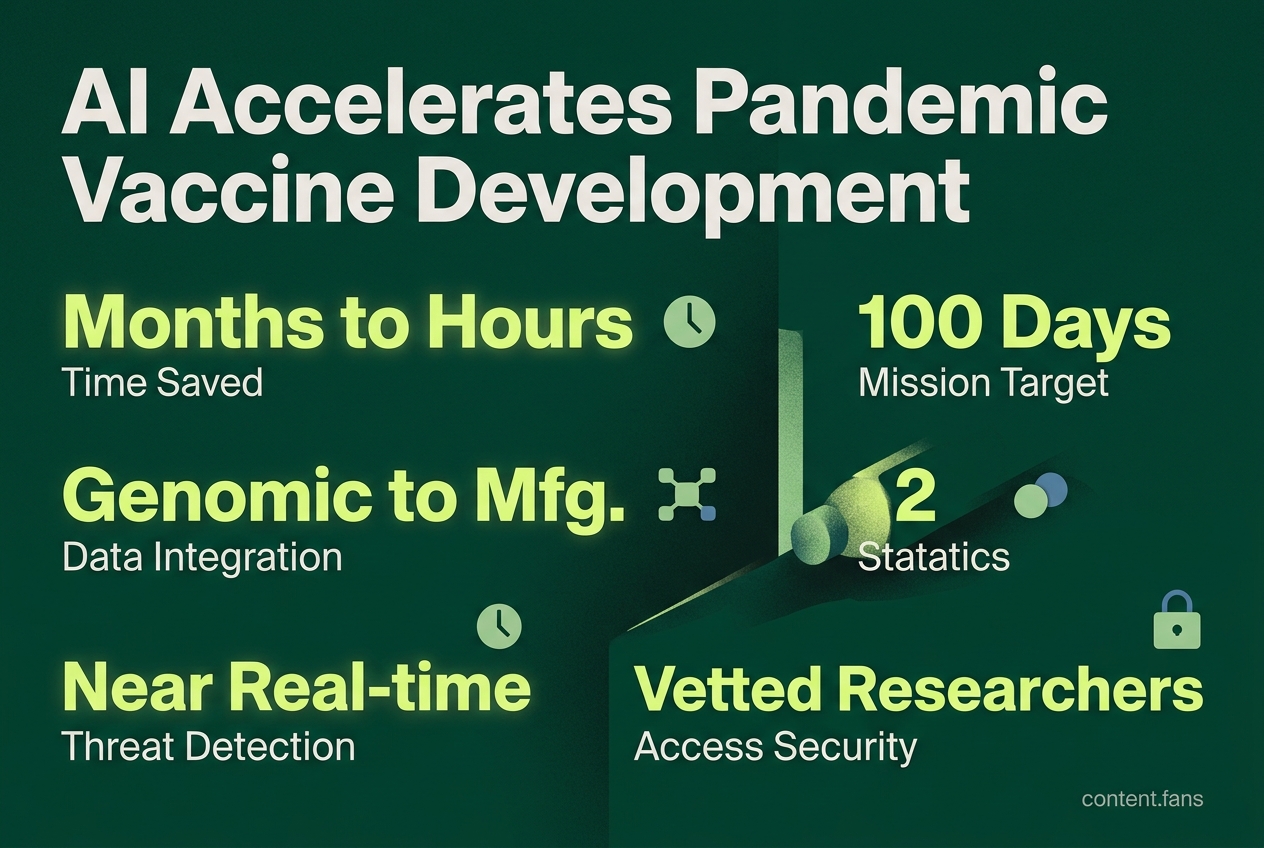
The Engine is designed to function as a secure, centralized platform integrating genomic surveillance data, epidemiological models, preclinical results, and manufacturing logistics. Advanced generative AI will analyze this vast dataset to identify viruses with pandemic potential and propose optimal antigen designs in hours, not months Building a global AI platform for pandemic preparedness. Reports suggest the system will also monitor global epidemiology in near-real-time, providing an early warning system for new outbreaks CEPI's Pandemic Preparedness engine uses AI to predict outbreaks.
Researchers will interact with the platform using natural language queries, much like a "ChatGPT for vaccine developers", to receive synthesized data and suggested vaccine targets. To ensure biosecurity, the architecture relies on vetted researcher access and government-backed high-performance computing hubs known as "AI factories." While the timeline remains aspirational, CEPI's documentation outlines ongoing prototyping.
Initial algorithm training focuses on high-risk pathogen families, including:
- Coronaviruses (SARS, MERS)
- Filoviruses (Ebola, Marburg)
- Arenaviruses (Lassa)
- Henipaviruses (Nipah)
- Tick-borne threats like Crimean-Congo haemorrhagic fever
Data Barriers and Ethical Watchpoints
Despite its promise, AI-driven vaccine R&D faces significant hurdles. Peer-reviewed analyses highlight persistent challenges with inconsistent immunological data, algorithmic bias, and the absence of clear regulatory pathways for AI-validated products. Industry reports identify data diversity and model explainability as key obstacles, recommending routine bias audits and transparent documentation.
Ethical considerations are also paramount, as training models on data that lacks demographic diversity could create vaccines that are less effective for underrepresented populations. While regulators are starting to develop frameworks, the International Pandemic Preparedness Secretariat estimates the 100-day vaccine target remains out of reach. Achieving this goal will require parallel progress in data governance, equitable data access, and streamlined clinical trial networks.
What is CEPI's Pandemic Preparedness Engine and how does it work?
CEPI is building a secure, AI-powered platform that ingests genomic surveillance, epidemiological models, pre-clinical results, regulatory files and more.
Generative algorithms then act like a "ChatGPT for vaccine developers", letting researchers ask plain-language questions ("Which antigen looks safest for a Nipah mRNA vaccine?") and receive ranked, evidence-based answers in minutes instead of months.
The engine continuously retrains as new outbreaks and papers appear, creating a living knowledge base that spans the full R&D chain from threat detection to filing.
How fast could this system really make a vaccine?
The official goal is the 100-day clock - from sequence release to first manufactured doses.
Inside the engine, antigen and vector proposals that once take months are compressed to hours, while built-in manufacturing simulations flag scale-up risks before a single vial is filled.
CEPI stresses the target is conditional on concurrent regulatory, clinical-site and supply-chain readiness; the AI simply removes the traditional scientific bottleneck so those other wheels can keep turning.
Which pathogens are covered first?
Initial training data come from studies on the viral families that the WHO already labels highest-risk:
- coronaviruses (SARS-1, MERS, SARS-CoV-2)
- filoviruses (Ebola, Marburg)
- arenaviruses (Lassa)
- paramyxoviruses (Nipah)
- bunyaviruses (Rift Valley fever, Crimean-Congo haemorrhagic fever)
The list is designed to be expanded in weeks when a novel lineage emerges, because the platform architecture is pathogen-agnostic.
Who can access the engine and how is it secured?
Access will be role-based and multi-layer vetted: only nominated scientists from CEPI-funded teams, public-health agencies and pre-qualified manufacturers receive log-ins.
Data never leave a governments-certified "AI factory" - a high-performance computing hub that uses encrypted pipelines, controlled transfer protocols and periodic algorithm audits to reduce biosecurity or IP leakage.
The first factories are being stood up with host governments on each continent so low- and middle-income countries can query the same models as large pharma.
What still needs to happen before the engine is live?
- Finalising data-sharing agreements with sequencing consortia and pharma partners
- Running bias and robustness drills to prove predictions hold across populations
- Aligning outputs with regulators (WHO, FDA, EMA) so an antigen card produced by the engine can be pre-reviewed for regulatory packages
- Securing ongoing funding that CEPI needs to keep the compute hubs and staff in place
Full public launch is anticipated in the coming years, but pilot groups are already stress-testing modules during ongoing outbreak responses.