
BCG: AI Reshapes 55% of US Jobs Within 3 Years
Serge Bulaev
The Boston Consulting Group estimates that AI could reshape 50 - 55 percent of U.S. jobs within three years, especially helping those who can guide or check automated work. Early signs show that both technical and nontechnical jobs may use AI tools, with more focus on reviewing and managing AI output than creating from scratch. Data suggests enterprise use of AI is growing, but not evenly. Skills like AI literacy, prompt design, and problem-solving may become more important than coding. Reports point out practical problems like security, context loss, and the need for better audit trails.

A recent BCG report forecasts AI reshapes 55% of US jobs within three years, a seismic shift extending beyond technical roles. This transformation favors orchestration over creation, as professionals in marketing, HR, and operations use AI-native environments to automate tasks. Analysts confirm a move toward guiding and validating AI-generated work, a trend highlighted by the BCG study. The core change: code-native AI workspaces empower more employees to interact with codebases, demanding greater judgment and review skills.
Adoption patterns in 2025
Enterprise AI adoption is rising, though unevenly, according to vendor and blog data. For instance, industry reports show Claude Code's usage among U.S. developers has grown significantly, primarily for refactoring and documentation. Similarly, major companies like Cisco, NVIDIA, and Duolingo report significant efficiency gains with Codex, including substantial improvements in code-review turnaround at Duolingo. While these figures are often from press releases and serve as directional signals, they point to a clear trend.
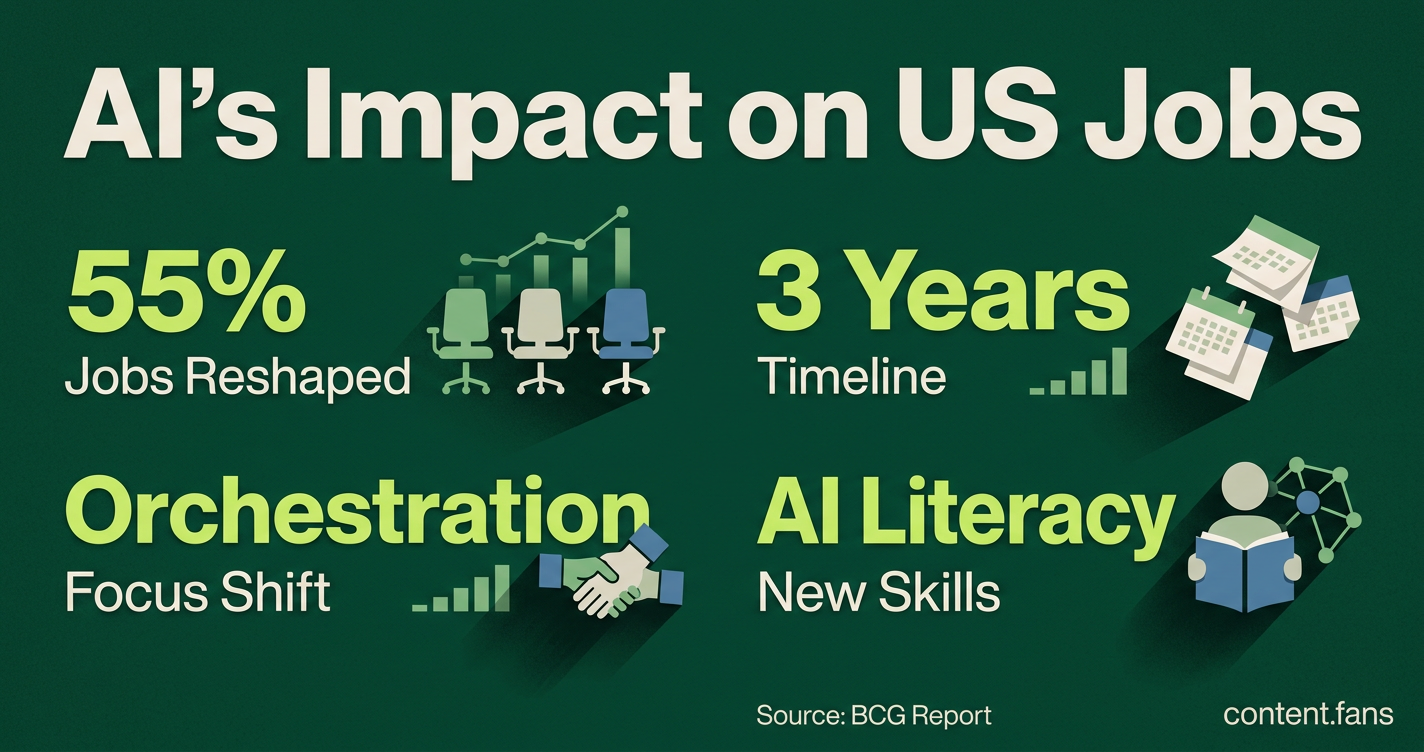
The transition to AI-native workspaces shifts the focus of work from manual creation to strategic orchestration. Professionals are increasingly required to guide, validate, and refine AI-generated outputs rather than producing them from scratch. This change elevates the importance of domain expertise, critical thinking, and prompt engineering skills.
What changes for nontechnical roles
For non-technical roles, this evolution means a shift "from creation to curation and direction," as IBM notes, placing a premium on critical evaluation. For example, a recruiter using an AI terminal can generate interview rubrics or run compliance checks without traditional coding skills, creating reproducible artifacts in the process.
The most in-demand skills are evolving toward:
- AI literacy - knowing the limits of model output
- Prompt design and context setting
- Review for bias, security and legal risk
- Systems thinking across adjacent workflows
- Domain expertise to accept or reject suggestions
This emphasis on soft skills is supported by industry data, which shows that AI-related job postings more frequently list communication, management, and problem-solving than specific coding languages.
Practical obstacles
Sources outline five recurring hurdles in AI adoption:
- Context fragmentation - long sessions exceed model memory and drop architectural decisions.
- Governance - non-deterministic output complicates traceability and liability reviews.
- Security - prompt injection and secret leakage risks grow as agents gain execution powers.
- Collaboration gaps - planning tickets, diagrams and chat often live outside the AI workspace.
- Maintainability - rapid code generation can obscure duplication and technical debt.
MIT Technology Review highlights that limited context windows still require human engineers to restate complex constraints. Meanwhile, an ACM paper on human-centered AI governance emphasizes the critical need for robust audit trails that link prompts to final approvals for accountability.
Signals to watch in the coming years
Looking ahead, key signals indicate a pattern of enterprise adoption. Companies are favoring a two-layer technology stack, with baseline autocomplete tools for all and advanced agentic terminals for high-leverage tasks. Adoption is typically bottoms-up, initiated by senior staff who then standardize workflows for their teams. Furthermore, training budgets are increasingly allocated to prompt engineering and security verification. This trend suggests that fluency in AI workspaces may soon become a standard requirement for non-technical roles, listed alongside proficiencies like Excel and CRM.
How will AI-native code workspaces change the daily routine of a non-technical employee?
Instead of using traditional spreadsheets or dashboards, non-technical staff like marketers and HR analysts increasingly start their day in a promptable notebook such as Codex or Claude Code. They use plain English to define a goal - such as analyzing churn data - and the AI agent generates the code, runs the analysis, and delivers an interactive report. The human's role evolves from manual production to framing questions, validating assumptions, and presenting the results. Industry reports suggest business users are completing analytics tasks significantly faster, with most time saved on data cleaning and chart formatting.
Which job families see the biggest skill premium from this transition?
Industry data reveals the fastest-growing keywords in U.S. job postings include "AI orchestration," "prompt validation," and "systems thinking," all showing substantial year-over-year growth. Roles that pair these skills with domain expertise - such as a revenue-operations analyst, supply-chain planner, or clinical-data reviewer - command higher median salaries than peers without AI literacy. The common thread is not coding fluency but the ability to steer, inspect, and iterate on agent-generated artifacts.
How real is enterprise adoption today - pilot toys or production reality?
Enterprise adoption is moving from pilot programs to production reality. Industry metrics show significant traction, with growing numbers of commits attributed to AI agents. Simultaneously, top-down adoption is accelerating; companies report faster code-review cycles and increased pull-request throughput after implementing AI tools. The emerging pattern is a two-layer stack: lightweight copilot suggestions for every developer, plus a "high-leverage agentic layer" reserved for senior staff tackling complex tasks.
What new governance headaches appear when agents can ship code?
When AI agents can ship code, security and governance teams face four concrete risks that were not prevalent previously:
- Prompt-injection attacks that trick the agent into leaking secrets.
- Over-confident code reviews - humans approve AI-suggested changes faster but may catch fewer security issues, according to industry reports.
- Attribution gaps - audit logs show which human clicked "merge" but not which prompt sequence created the change, complicating liability if a regression occurs.
- Parallel-agent race conditions - two agents editing the same micro-service can overwrite each other unless locking protocols are AI-aware.
In response, leading firms now require a "human-in-the-loop" sign-off for any code changes affecting critical systems like authentication, billing, or customer data models.
Will these environments make traditional SaaS dashboards obsolete?
While not an overnight change, the center of gravity is moving away from traditional SaaS dashboards. Many startups that began with a classic web UI are now exposing the same features as callable code notebooks for power users. Industry reports suggest that session length inside AI terminals at some SaaS companies is growing significantly. To remain competitive, SaaS products will likely need to offer promptable APIs, shareable code recipes, and agent-safe documentation, even while maintaining a GUI for casual users.