
Ukraine Ramps Up Domestic Enterprise Software Amid Cybersecurity Threats
Serge Bulaev
Ukraine is increasing its use and development of local enterprise software because of cybersecurity threats, especially from Russian-linked attacks. Officials say using Ukrainian and open-source software might help protect important services and keep control over digital systems. There is now more government funding and grants for local startups and tech companies, focusing on areas like enterprise software, AI, and cybersecurity. Reports suggest agencies and businesses prefer software they can check and keep, worrying about depending on foreign licenses. The market appears to be growing, but experts warn that success may depend on having enough skilled workers and reliable resources.

Facing persistent cybersecurity threats, Ukraine is accelerating its development of domestic enterprise software, with local vendors securing new contracts as foreign tools face scrutiny. This strategic pivot toward digital sovereignty is reshaping a significant IT market where software development constitutes a substantial portion of activity.
Government officials frame this shift as a matter of national digital sovereignty. The policy is codified in the Draft Cybersecurity Strategy (2021-2025), which mandates that state bodies prioritize locally developed and open-source code for critical infrastructure. Industry analysis highlights that vendor lock-in and dependence on short-term foreign licenses create significant supply chain risks, further compelling a turn toward Ukrainian alternatives.
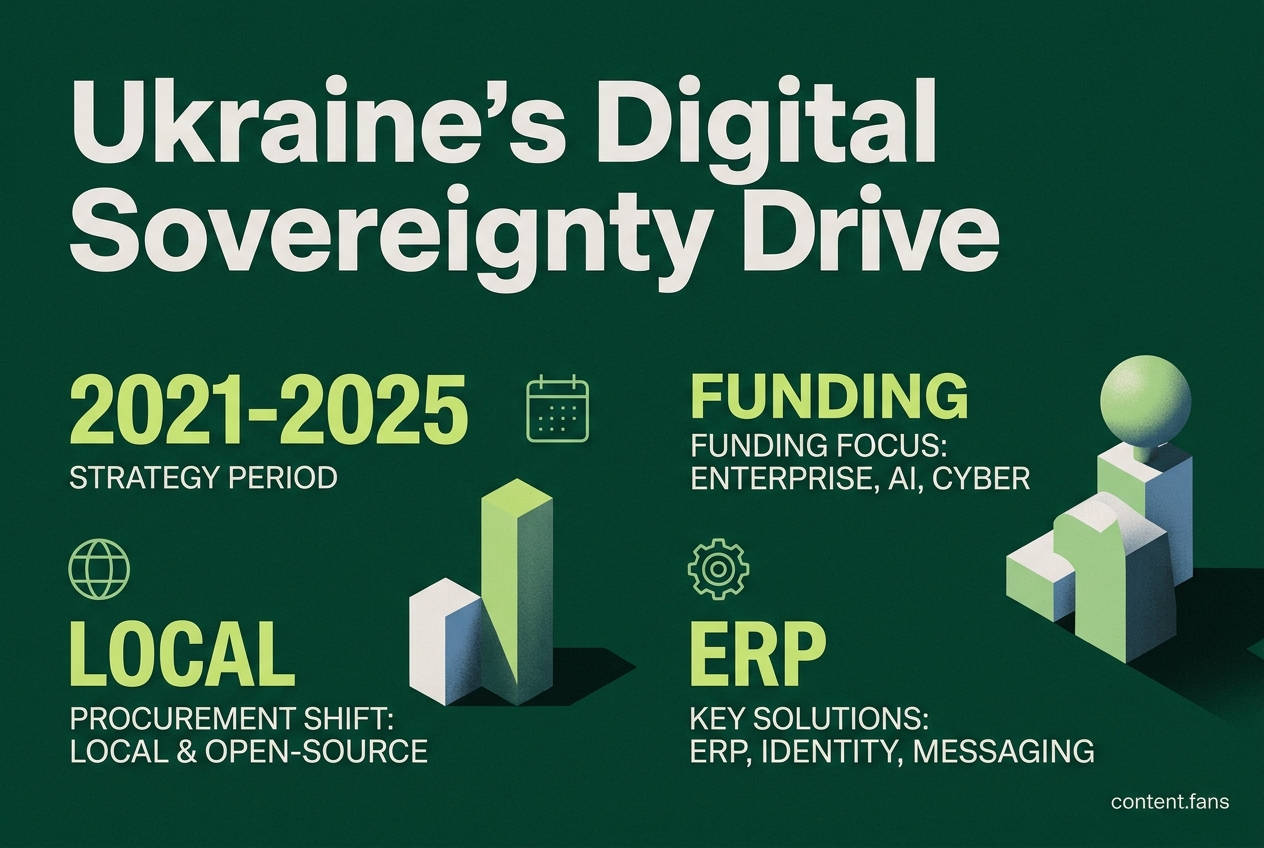
This has resulted in a surge in homegrown enterprise solutions for ERP, identity management, and secure messaging. For example, Kyiv-based N-iX reports increased demand for public utility data platforms, while Eleks has secured new digital transformation projects with regional banks. This trend underscores how wartime cyber threats and state funding are channeling spending toward domestic code and in-country cloud services.
Public Funding and Investment Landscape
Ukraine is prioritizing domestic enterprise software to ensure digital sovereignty and bolster national security. Heightened cybersecurity threats, particularly from Russian-linked actors, have exposed the risks of relying on foreign software, prompting a strategic shift toward locally developed, auditable, and more secure technology solutions for critical infrastructure.
Capital is being channeled through several public programs. The Ukrainian Startup Fund (USF), managed by the Ministry of Digital Transformation, offers funding at the seed stage through its Startup EDGE initiative, with applications available via the USF portal. Concurrently, the Ministry of Economy's "Investment in IT Startups" program provides grants, detailed in their grant announcements. Key priority verticals for funding include enterprise software, AI, and cybersecurity.
Key public and international instruments now available:
- USF Startup EDGE pre-seed grants
- Ministry of Economy IT grant programs
- EIC Accelerator awards providing significant non-dilutive funding
- Microsoft for Startups credits for qualifying companies
Applicants often stack domestic grants with Horizon Europe or USAID programmes to extend runway, according to industry advisors.
How Cybersecurity Pressures Reshape Procurement
Persistent cyber threats are directly influencing procurement decisions in both public and private sectors. Industry reports highlight that lengthy delays in fulfilling software requests have hampered incident response, forcing agencies to favor codebases they can audit and control. This trend intensified after supply-chain attacks on state registries. In the private sector, a significant number of export-focused firms are building redundancy with multi-cloud or hybrid setups, according to IT industry analysts. In response to phishing being a primary attack vector, companies like Sigma Software now bundle secure DevOps into long-term contracts, establishing a new market standard.
Market Growth and Talent Outlook
The market impact is significant, with product companies now comprising a substantial portion of Ukraine's tech ecosystem. This shift is mirrored in venture capital, with significant investment flowing into Ukrainian startups, with a strong focus on AI. While major financing rounds like Grammarly's substantial funding deal signal high investor confidence, experts note that broad success hinges on talent availability and stable infrastructure. To address this, industry leaders anticipate a larger talent pool following revised STEM curricula. Minister of Digital Transformation Mykhailo Fedorov projects a substantial rise in AI specialists, despite ongoing mobilization and emigration challenges.
Ultimately, Ukraine is strategically adapting its procurement rules, funding channels, and workforce development in direct response to unrelenting cyber pressure. This has fostered a cautious but steady expansion of the domestic enterprise software footprint across both public and private sectors, marking a critical step toward technological resilience.
Why is Ukraine prioritizing domestic enterprise software development now?
Ukraine's push for domestic enterprise software stems from critical vulnerabilities exposed by ongoing cyber threats and the fragility of foreign-dependent systems. The Draft Cybersecurity Strategy (2021-2025) explicitly mandates stimulating development of domestic software products, particularly open-source solutions, as priority for protecting state information resources and critical infrastructure. Persistent Russian cyberattacks targeting government and critical services have forced Ukraine to replace outdated foreign systems with custom-built domestic alternatives that match local infrastructure needs. Additionally, vendor lock-in from emergency architectural decisions and short-term software licenses have created urgent demand for permanent, sovereign software solutions.
What government funding is available for Ukrainian enterprise software startups?
While no single exclusive fund exists for enterprise software, multiple programs support this sector through the Ukrainian Startup Fund (USF) and Ministry of Digital Transformation. Key opportunities include:
- USF Startup EDGE program: Funding for seed-stage companies, with applications accepted through the USF portal
- Ministry of Economy IT grants: Support for startups creating jobs in the technology sector
- Microsoft for Startups: Azure credits for software-based product companies
Priority sectors explicitly include AI, machine learning, cybersecurity, and enterprise software. Ukrainian startups can also combine these with EU programs like the EIC Accelerator for larger funding rounds.
How significant is the growth in Ukraine's enterprise software market?
The enterprise software segment shows remarkable resilience and expansion despite wartime conditions. Key indicators include:
| Metric | Value |
|---|---|
| IT market | Substantial and growing |
| IT service exports | Significant contributor to economy |
| Software development share | Majority of IT market activity |
| Product companies | Growing portion of IT firms |
| IT specialists | Large and expanding workforce |
| Active IT companies | Thousands of active firms |
The sector contributed significantly to Ukraine's GDP and remains one of the few growing industries capable of fulfilling tax obligations during the invasion. Notably, Grammarly secured substantial investment from General Catalyst, while Ukrainian-founded Cyberhaven achieved significant valuation milestones for enterprise data security.
What types of cybersecurity threats are driving this domestic software shift?
The current threat landscape features increasingly sophisticated attacks that expose foreign system dependencies:
- AI-powered phishing: Generative AI creates convincing emails and deepfake CEO calls, with phishing remaining a primary attack vector
- Ransomware growth: Significant increases in ransomware attacks targeting businesses
- Supply chain compromises: Attacks on state registries demonstrate how compromising one vendor grants access to multiple clients
- Identity-based attacks: Credential intrusions evolving to target administrative tools with environmental access to critical sectors
- Hybrid warfare: Physical sabotage incidents have increased substantially, with numerous recorded incidents across EU/NATO including malware-induced power blackouts
These threats have prompted a strategic pivot toward national software sovereignty, with organizations shifting to multi-cloud or hybrid models to maintain continuity against data center disruption.
Which Ukrainian companies are leading in enterprise software contracts?
Major players securing significant enterprise contracts include:
- Artkai: Mid-sized enterprises and funded startups; product strategy, UX/UI, MVPs, blockchain
- Eleks: Digital transformation, data science, and R&D for enterprise transformation
- SPD Technology: Complex fintech, healthtech, and media platforms
- N-iX: Enterprise-grade delivery for fast-scaling companies in cloud and data analytics
- Sigma Software: R&D-heavy projects, enterprise software, and gaming
- TechMagic: AI-first platforms and mobile-first products with full-stack development
Contract trends are shifting toward AI/ML, cybersecurity, DevOps, GovTech, and smart infrastructure. Many Ukrainian IT companies planned to deepen work in key markets (U.S., U.K., Germany, Israel, Switzerland, Poland), with the U.S. representing a significant portion of export volume.