
IE Business School Report: 5 Trends Shape Digital Marketing's AI Future
Serge Bulaev
The IE Business School report suggests that digital marketing is changing due to several trends, not just one AI tool. Key shifts may include more use of real-time data for personalization, a move to first-party data as privacy rules increase, new ways to optimize for AI-driven search, and more immersive shopping experiences. AI appears to make content faster and better targeted, but experts note that combining automation with human relevance could matter most. The report also highlights that as cookies disappear, collecting consented data directly from users may become more important.

A new report from IE Business School reveals the 5 key trends shaping digital marketing's AI future, confirming that lasting change comes from broader strategic shifts, not single AI tools. While artificial intelligence enhances speed and targeting, its true power is unlocked when integrated with evolving approaches to data ownership, immersive media, search, and creator culture. The most successful marketers will be those who balance automation with human relevance to navigate these transformative forces.
Why "Digital marketing isn't changing because of one new AI tool" matters now
This concept matters because strategic success hinges on integrating AI into five broader market forces: hyper-personalization, first-party data, Generative Engine Optimization (GEO), immersive experiences, and creator partnerships. Focusing only on a single AI feature overlooks the foundational changes currently shaping consumer behavior and data privacy.
The report identifies five parallel trends that are fundamentally redirecting marketing budgets and skill development:
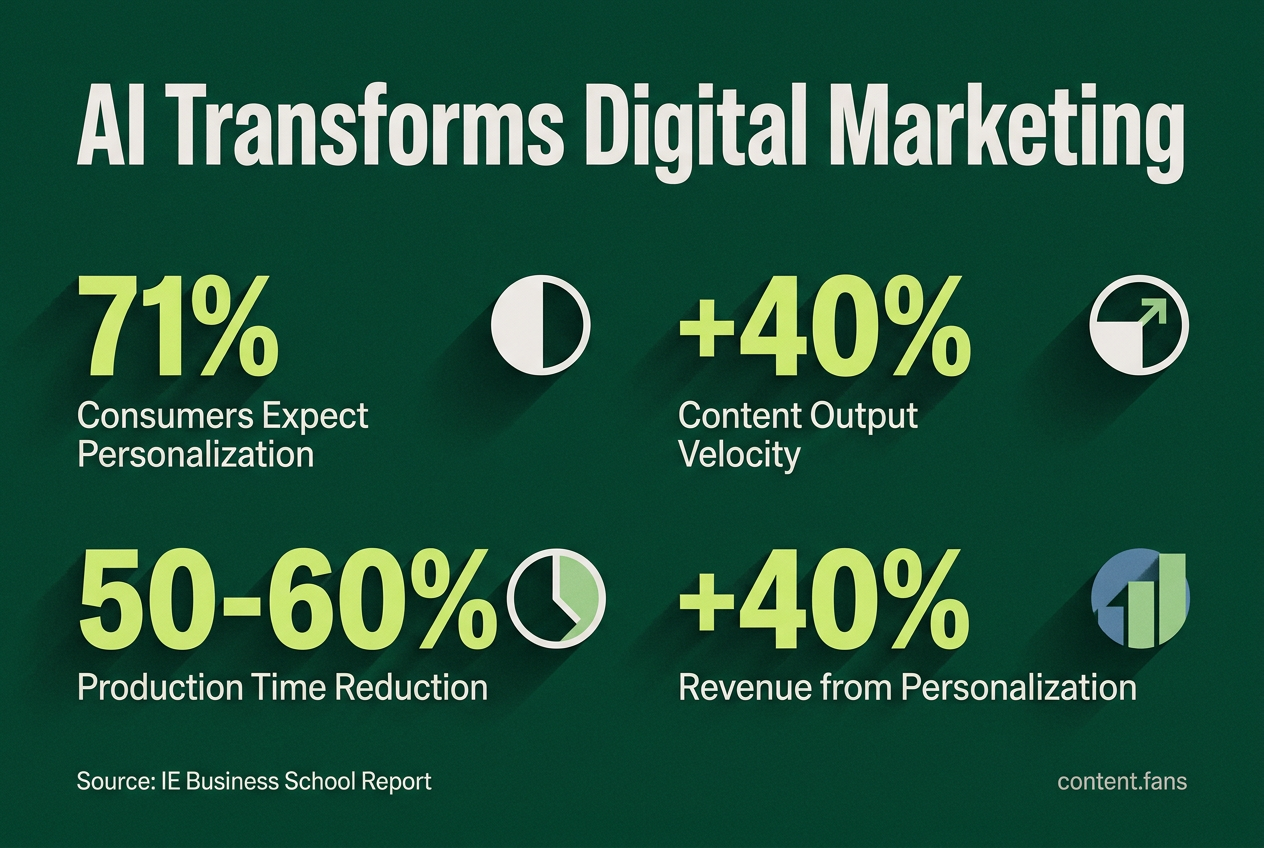
- Hyper-personalization: Using real-time behavioral data to meet consumer expectations, as 71% of consumers expect companies to deliver personalized interactions and 76% prefer personalized brands.
- First-Party Data: Building direct, consent-based customer data programs to replace third-party cookies amid stricter privacy regulations.
- Generative Engine Optimization (GEO): Adapting content for AI-powered conversational search engines, a strategy gaining importance for organic discovery.
- Immersive Commerce: Leveraging AR and VR for practical shopping experiences like virtual try-ons and product configurations.
- Creator-Led Authenticity: Shifting from influencer reach to authentic, creator-led video content, with nostalgic remixes showing increased engagement according to industry reports.
AI's Expanding Role in Content and Personalization
Generative AI is already delivering significant efficiency gains, with businesses reporting a 40% increase in content output velocity (Gartner), and AI reducing production time by 50-60% when combined with editing (Semrush). Industry reports indicate a growing number of marketers now use AI for brainstorming and drafting, achieving significant brand tone accuracy with proper governance. In personalization, fast-growing companies generate 40% more revenue from personalization, and AI-driven campaigns show substantially higher response rates. However, experts stress that these results depend on unified, well-governed data.
First-party data and the privacy-trust equation
As third-party cookies are phased out, brands are shifting to value-exchange campaigns to collect consented data directly from users. By offering exclusive content or perks for an email address or preference data, companies build trust and create a powerful competitive advantage. These owned, consented data profiles are essential for fueling AI models effectively while complying with privacy laws.
Search visibility through GEO
Traditional SEO is being challenged as AI-driven search engines provide single, synthesized answers instead of a list of links. Generative Engine Optimization (GEO) is the response, focusing on creating comprehensive clusters of authoritative content (articles, videos, data) that large language models are likely to cite. This strategy is becoming critical for organic discovery, particularly with younger audiences using social media as a primary search tool.
Immersive experiences and creator partnerships
Immersive technologies like AR and VR have evolved from novelties to practical sales tools, allowing customers to use try-on filters or preview products in their space, shortening the path to purchase. This trend toward participation is mirrored in creator partnerships, where brands now co-design campaigns with niche creators to foster authentic community and belonging, moving beyond simple influencer payment models.
Ultimately, these five trends show AI evolving into the central operating system for marketing. Strategic focus is now shifting to data sovereignty, immersive storytelling, and authentic co-creation. To stay ahead, marketers must develop new skills in prompt engineering, privacy compliance, and dynamic, multi-format content strategy according to industry experts.