
Authentic Brands Acquires Lee Denim for $1 Billion, Expands Portfolio
Serge Bulaev
Authentic Brands Group plans to buy Lee denim for $1 billion, but the deal still needs regulatory approval and may close in late 2026. ABG says it will move Lee to a licensing model, which might help the brand expand into new product categories more quickly. Lee made about $750 million in sales in 2025, and ABG sees this as a chance to grow its denim business, which already includes Dockers and a stake in Guess. Analysts suggest this licensing plan could keep the brand visible while lowering risks, but there may be concerns if new partners do not fit well. ABG has not yet shared details about future licensees or where Lee products will be sold.

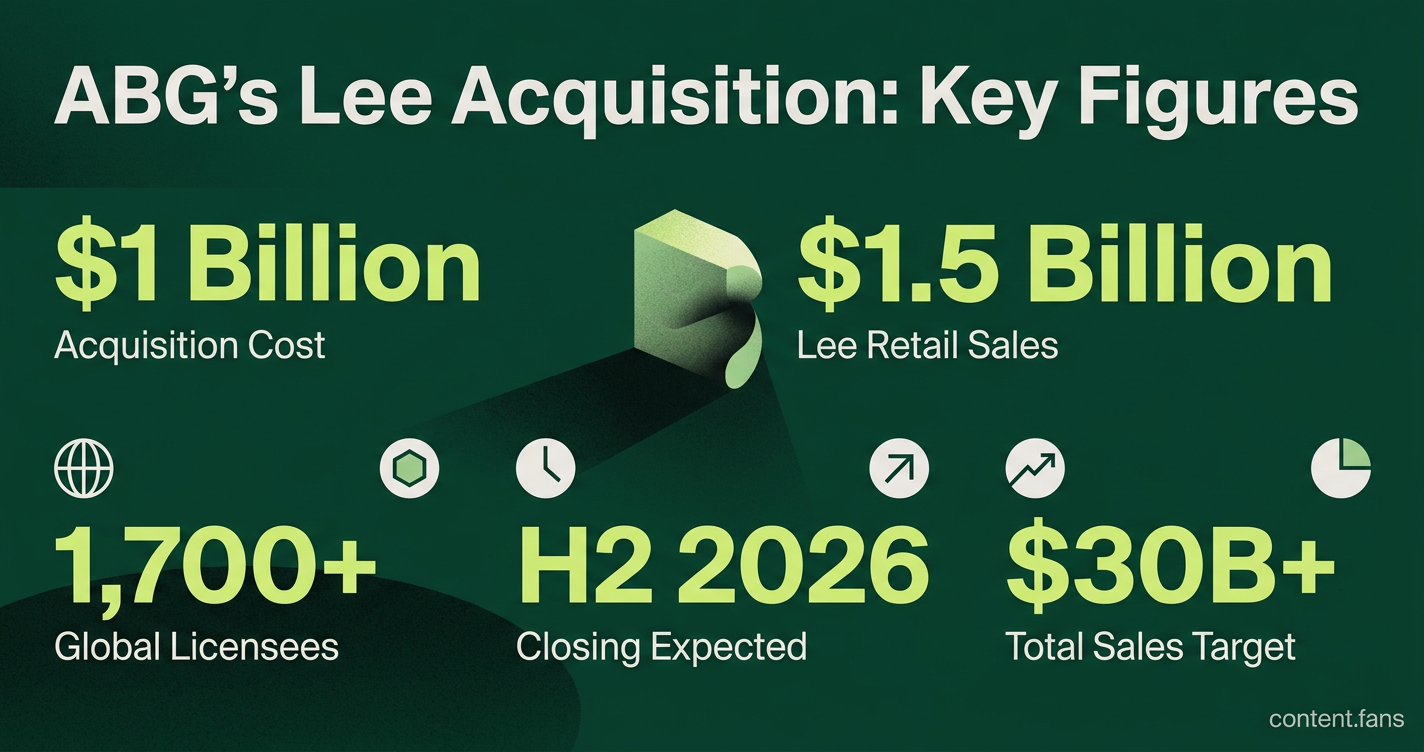
The major brand management firm Authentic Brands Group will acquire Lee denim in a landmark $1 billion deal, further expanding its powerful portfolio. According to a press release, ABG has signed a definitive agreement with Kontoor Brands for the heritage label. The transaction is subject to standard closing conditions, including regulatory approval, and is expected to close in the second half of 2026. ABG plans to convert Lee to a licensing model after closing.
How Lee fits into ABG's growing denim play
ABG is acquiring Lee and says the brand generates about $1.5 billion in retail-equivalent sales across 73 countries; the upfront deal price is $750 million, plus a potential $250 million earnout. The move strengthens ABG's denim portfolio, which includes Dockers and Guess, by applying a proven, capital-light business model to another heritage American apparel brand.
According to industry reports, Lee was classified as a discontinued operation by its parent company, Kontoor Brands, in early 2026. This reclassification highlighted the brand's smaller scale compared to Wrangler, which industry sources suggest generates significantly higher quarterly revenues than Lee.
ABG sees this as a significant growth opportunity. The plan is to integrate Lee into its vast network of over 1,700 global licensees, replicating the successful strategy used for its Champion acquisition. Adding Lee strategically strengthens ABG's denim division, which already manages Dockers and a controlling interest in Guess's IP.
Portfolio momentum and recent deal cadence
The Lee acquisition continues ABG's aggressive expansion in recent years, which saw the firm acquire major brands across sportswear and lifestyle apparel. Key deals included:
- Champion: An agreement to acquire the brand from HanesBrands, as noted by Latham & Watkins.
- Dockers: A significant acquisition according to industry reports.
- Guess IP: A controlling stake acquired for a substantial sum according to industry sources.
These strategic purchases, culminating with Lee, are set to propel ABG's total system-wide retail sales toward the mid-thirty-billion-dollar range.
What changes once Lee is under ABG
Upon closing, Lee will transition to a pure licensing model. This structure enables rapid, low-cost expansion into new categories like footwear and accessories while minimizing ABG's inventory risk. While analysts see this as a way to maintain brand visibility, the success of this strategy hinges on selecting the right licensing partners to prevent brand dilution and preserve Lee's perceived authenticity.
For the seller, Kontoor Brands, divesting Lee allows the company to streamline its operations and focus on its higher-growth brand, Wrangler. According to industry reports, the impact was positive, with Kontoor's post-divestiture revenue showing significant year-over-year growth, signaling a successful strategic shift. The acquisition is currently pending customary regulatory approvals, and Authentic Brands Group has not yet announced specific details regarding future licensee partners or global rollout strategies.
What does the $1 billion price tag say about Lee's market position?
The $1 billion valuation underscores the continuing appeal of heritage denim labels. Despite mixed recent growth, industry reports suggest Lee still generates substantial revenue, giving ABG a sales multiple that is reportedly in line with other apparel deals. The figure also signals confidence that global licensing can unlock new categories without the heavy costs of running retail operations.
Why did Kontoor Brands choose to sell Lee in 2026?
Industry reports suggest that after removing Lee from continuing operations, Kontoor's first-quarter revenue showed significant growth, hinting that the brand had become non-core. Weak international performance - including reported declines outside the U.S. in recent years - further pressured margins, making a divestiture attractive. Selling Lee lets Kontoor focus on higher-growth labels such as Wrangler, which industry sources indicate posted strong quarterly sales.
How will ABG's licensing model change Lee's day-to-day business?
ABG plans to convert Lee into a pure licensing play, tapping its network of over 1,700 partners rather than owning factories or stores. Industry reports suggest royalties typically range from a significant portion of wholesale sales, so substantial licensed product volumes could yield considerable near-risk-free cash for ABG. The approach also allows rapid geographic reach - essential because, according to industry reports, a growing number of brand owners plan to use licensed apparel to court Gen Z consumers.
What are the upside opportunities for Lee under ABG?
- Capsule collaborations - think limited drops with street-wear designers - can refresh brand heat; licensed apparel represents a significant portion of brand-license revenue according to industry sources.
- Archive licensing - Lee's Union-All, Rider jacket and lazy-S back pocket - can be repackaged for home, accessories and sustainable lines.
- Regional growth - ABG can place Lee in Asian or European department stores where direct retail would be capital-intensive.
Could licensing dilute Lee's authenticity?
Research shows the biggest risk is co-branding with partners that feel irrelevant: consumers can view the heritage name as "less responsible" for quality, trimming purchase intent. ABG mitigates this by vetting licensees, capping regional exclusivity and keeping a central design bible - tactics that help heritage labels stay credible while still chasing new revenue streams.