
26 states regulate AI deepfakes in 2026 elections, but rules vary
Serge Bulaev
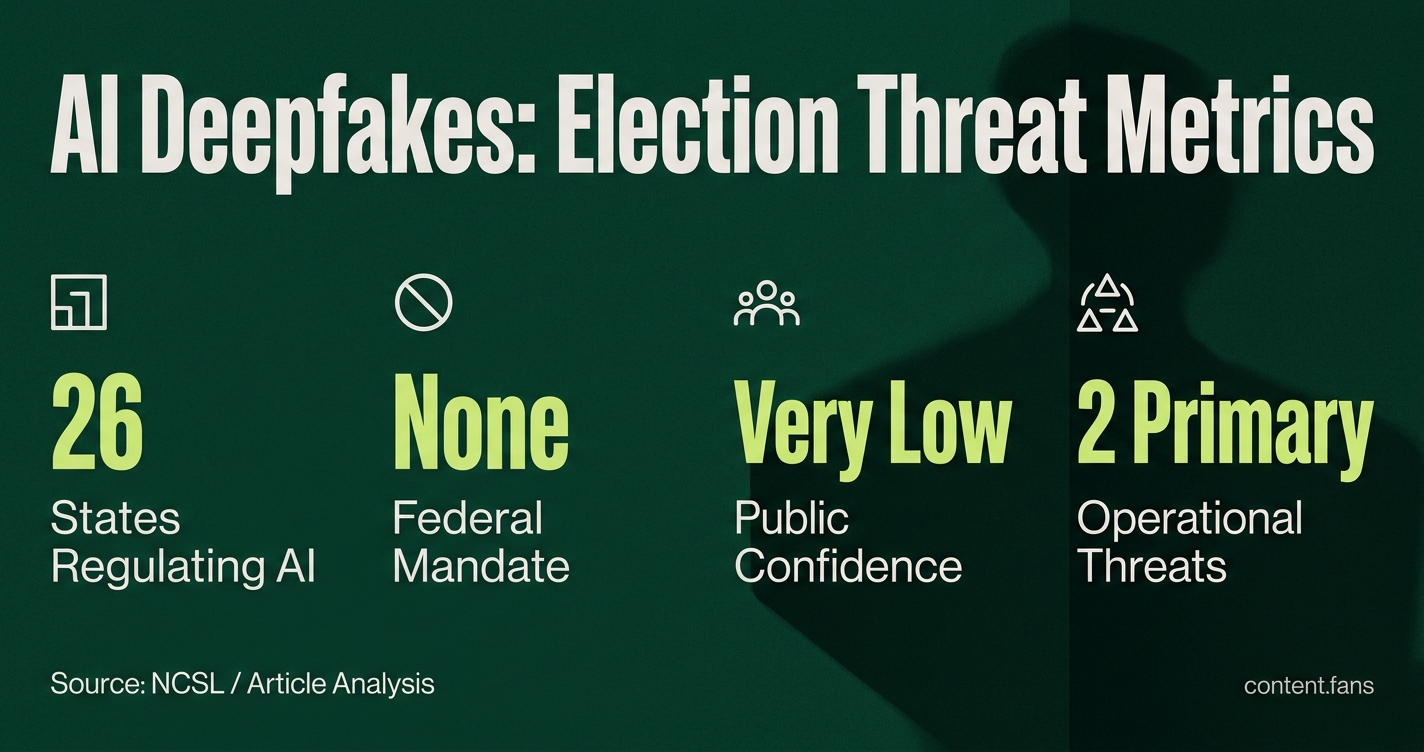
Twenty-six states have rules about using AI deepfakes in the 2026 elections, but these rules are different in each place. Many local leaders are worried because only a small number of people feel sure they can spot fake pictures or videos, which means even small fakes may hurt trust. There is no national rule for labeling AI-made political ads, so states and online platforms have their own ways, like labels or bans close to election day. Experts suggest that communities share accurate information early, keep records for checking, and teach people how to spot fakes. Without stronger and more uniform rules, fake content may spread faster than the efforts to control it.

The use of AI deepfakes in the 2026 elections is a growing concern, with viral videos and voice-cloned robocalls now appearing in local races. As these technologies become more accessible, eye-catching synthetic content often outpaces fact-checking efforts, creating significant risks of misinformation for voters.
Local officials are right to be concerned. While a National Conference of State Legislatures brief confirms that multiple states have regulations on political deepfakes (NCSL overview), the inconsistency of these rules leaves many local governments to navigate this complex landscape on their own.
The Risk of Spectacle and Misinformation in Local Elections
Rules for AI-generated political content vary significantly by state. Most states with regulations require a disclosure label, while a few ban deceptive deepfakes near an election. With no federal mandate, compliance is a patchwork, creating challenges for campaigns operating across state lines and for voters seeking truth.
The potential for harm is high, as public confidence in spotting synthetic media is extremely low. Recent studies indicate that a significant portion of Americans lack confidence in their ability to detect deepfakes, meaning even minor fakes can erode public trust. Furthermore, analysts note that bad actors can also dismiss true scandals as "misinformation," further undermining voter accountability.
Patchwork Disclosure Rules in 2026
While federal law requires sponsor identification for broadcast ads, no national mandate exists for labeling AI-generated content. State laws on AI/deepfake election disclosures vary widely, with different approaches to regulation including bans, disclosure requirements, and metadata mandates.
Online platforms introduce their own rules. For example, Meta requires political advertisers to disclose the use of AI in creating or altering ads; the company then labels the content in its Ad Library (Meta policy). Campaigns that fail to comply risk having their ads taken down.
Operational Risks Beyond Ads
Experts identify two primary operational threats from political deepfakes. First is candidate impersonation, where a fabricated video showing a false confession or policy stance can spread virally before a campaign can rebut it. Second is voter suppression, where synthetic audio - like the voice-cloned robocalls documented in 2024 - misleads voters about polling locations or hours to reduce turnout.
Policy Actions Local Leaders Can Take
Because local information spreads rapidly within smaller communities, a swift response is crucial. Experts recommend the following harm-reduction practices based on state guidance and academic research:
- Pre-bunk Misinformation: Proactively publish and promote a calendar of verified election information (e.g., dates, polling locations) to counter rumors before they start.
- Mandate Auditable Records: Contractually require all campaign vendors to maintain original source files to ensure disclosures can be audited for compliance with state law.
- Amplify Trusted Voices: Partner with local libraries, news outlets, and community groups to distribute clear, easy-to-understand myth-busting content.
- Create Rapid Reporting Channels: Establish a simple, accessible way for residents to report suspected deepfakes or misinformation quickly.
- Measure and Evaluate: Budget for evaluating the effectiveness of these efforts, tracking whether they successfully guide residents to trusted information sources.
Building Voter Resilience
Building long-term resilience requires proactive media literacy education. Research emphasizes interactive learning, with experts recommending community workshops in schools and libraries. Practical guides also stress using plain language and accessible graphics to educate the public. These efforts are crucial for empowering voters to critically evaluate the information they see online.
Ultimately, local elections are uniquely vulnerable due to their high community impact and the current lack of consistent regulatory oversight. Without stronger, uniform disclosure standards and sustained public literacy initiatives, the risk grows that AI-generated political content will spread faster than our ability to regulate it.