
Apple Unveils Major Siri AI Redesign at WWDC26, EU Excluded at Launch
Serge Bulaev
Apple announced a major redesign of Siri at WWDC26, making it more integrated with the operating system and focused on privacy. New features may include a dedicated Siri app, personal context search, onscreen awareness, and image understanding. Apple says the update will be tested by developers first, with a wider beta coming later for some English-language users, but people in the European Union will be excluded at launch. The EU exclusion appears to be because of a disagreement over Digital Markets Act rules. Analysts suggest Siri is becoming more like other modern AI assistants, but direct comparisons might not be possible yet.

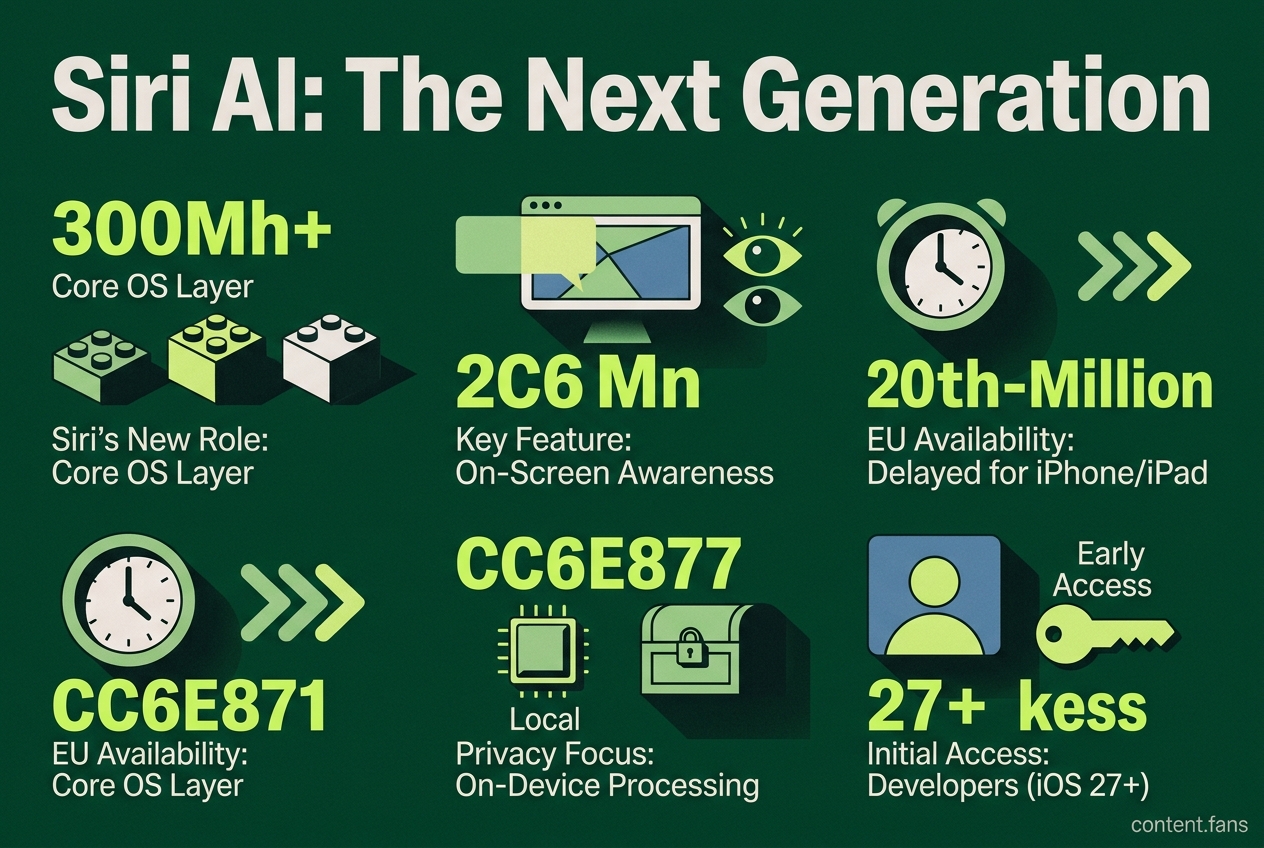
Apple's major Siri AI redesign, unveiled at WWDC26, transforms the assistant into a core OS layer with advanced personal context and on-screen awareness. This overhaul, powered by Apple Intelligence, introduces powerful new capabilities, but the features will not be available in the European Union at launch due to regulatory conflicts.
What exactly is new in the 2026 Siri AI overhaul?
The 2026 Siri AI overhaul moves the assistant from a voice add-on to a core operating system layer. Key updates include a dedicated app with conversation history, personal-context search across apps, on-screen awareness, and the ability to trigger system-wide actions within third-party and Apple applications.
Apple calls the update a complete reset, not simply a patch. The headline changes include:
- A dedicated Siri app that keeps chat threads alive across devices through iCloud-synced conversation history.
- Personal-context search that can look inside Messages, Mail, Photos, Calendar, Notes, and more to answer questions.
- On-screen awareness, allowing users to point at anything on their display and ask a question, with Siri understanding the context.
- System-wide app actions, enabling Siri to trigger tasks inside third-party and Apple apps without switching screens.
Apple's official post positions the assistant as an OS-level layer rather than a separate service.
Why will the new Siri AI be unavailable in the EU on day one?
Apple says Siri AI will not be available initially in the EU on iOS and iPadOS, while Mac, Apple Watch, and Apple Vision Pro users in the EU will be able to access it when set to a supported language. Secondary reporting attributes the restriction to DMA-related regulatory issues, but Apple has not provided detailed explanations for the delay. While the European Commission maintains the law does not block new services, Apple is delaying the rollout for EU users pending further compliance work.
Which devices and languages will support Siri AI at launch?
Developer access to the new Siri AI began immediately following the WWDC26 keynote for iOS 27, iPadOS 27, macOS 27, and visionOS 27. A public beta is scheduled for later in 2026, initially limited to supported devices running in English. The European Union launch delay specifically affects iPhone and iPad, as Mac and Vision Pro are not currently subject to the same DMA gatekeeper designations.
How does Apple protect privacy with these deeper integrations?
Apple emphasized a privacy-centric architecture for the new Siri, built on three core pillars to protect user data:
- On-Device Processing: Most tasks that involve personal data are handled directly on the user's device, ensuring information never leaves it.
- Private Cloud Compute: For more complex requests, Apple uses a secure, custom cloud infrastructure that processes data without creating permanent records or user profiles.
- Restricted Data Access: The system is designed so that Siri never exposes a user's raw personal context to third-party apps or servers, even when performing actions within them.
Full technical details of these safeguards are available on Apple's dedicated privacy page.
What should developers do to get ready?
Developers can begin preparing their apps for the new Siri AI capabilities by leveraging a new set of APIs in the latest beta SDK. Key steps include:
- Download Xcode 15.4 beta and opt in to the Siri AI capability in your project.
- Adopt App Intents - lightweight descriptions that let Siri perform actions inside your app.
- Test on-screen awareness by surfacing relevant metadata through the
AXCustomContentAPIs. - Submit feedback via Feedback Assistant; Apple plans to expand language support after the initial English rollout.
How Does the New Siri Compare to Competitors?
Industry analysts note that this overhaul brings Siri's capabilities more in line with modern generative AI assistants like Google Assistant and Amazon Alexa. The shift towards a conversational, context-aware model represents a significant step forward. However, direct feature-by-feature comparisons remain speculative, as full details of competitors' 2026 roadmaps are not yet public.