
Amazon sets June 23 for Prime Day 2026, impacts retail calendars
Serge Bulaev
Amazon has announced Prime Day 2026 will run from June 23 to June 26, several weeks earlier than usual. This change may impact supply chain timelines, as suppliers and sellers might need to prepare stock and campaigns earlier than before. Industry commentary suggests that the earlier date compresses lead times and may cause challenges with shipping and inventory. Research cited by Amazon indicates that most shoppers may find new brands before Prime Day and could purchase items they discover early. Prime Day deals will be available in 22 countries in June, with some other markets participating later in the summer.

Amazon has confirmed Prime Day 2026 will take place from June 23-26, several weeks earlier than its traditional July slot. This strategic shift immediately reshapes retail calendars, accelerating planning for inventory, marketing, and fulfillment operations worldwide.
Prime Day 2026: Official Dates and Details
Amazon's Prime Day 2026 will run for four days from June 23 to June 26. The 96-hour sales event is expected to include deals across nearly 30 categories. The event will take place in multiple countries during this period.
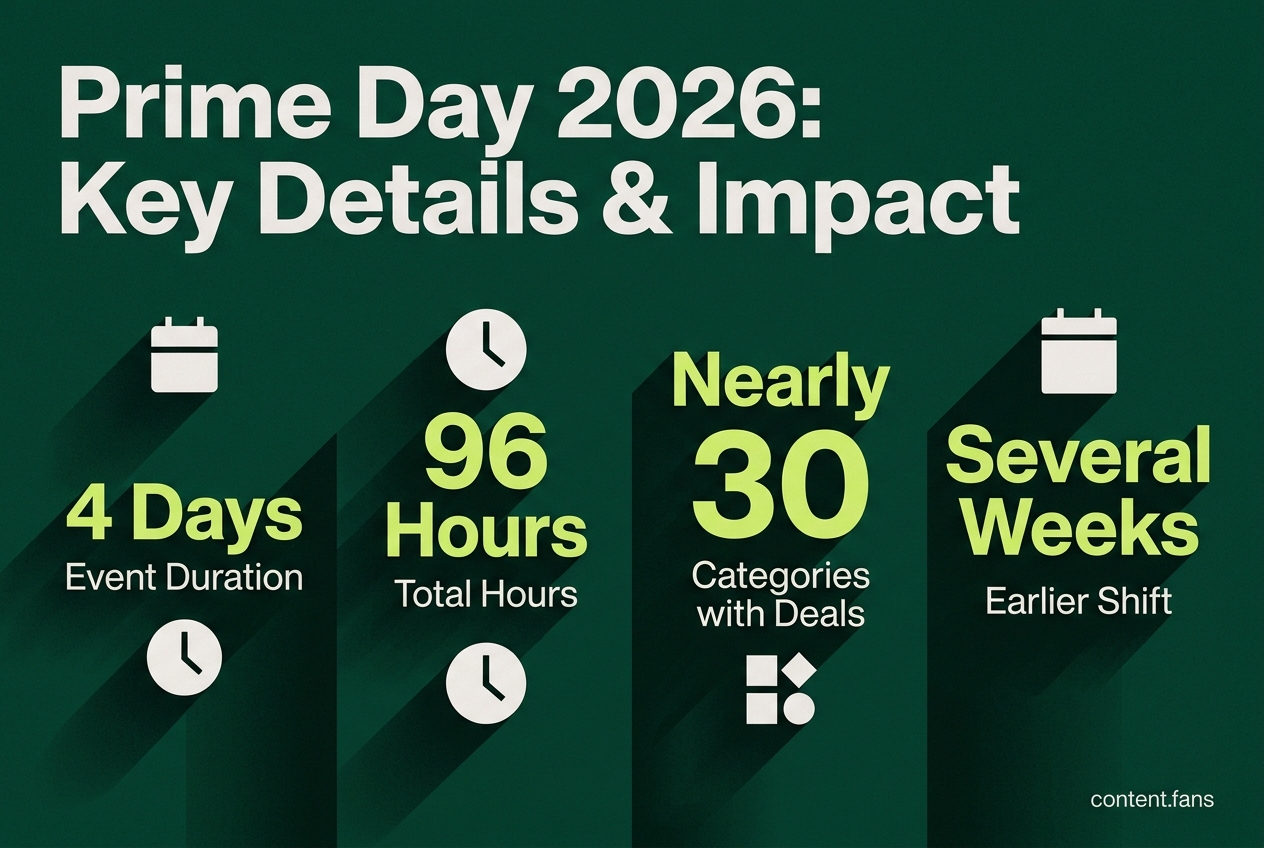
In an official announcement from the Amazon newsroom, the company confirmed the 96-hour event will feature deals across nearly 30 categories. While the main event is in June for many countries, Prime members in Australia, Brazil, India, and Japan will have their Prime Day later in the summer. This four-day format continues the model from 2025, providing a wider window for "Today's Big Deals" and increasing competition for brand advertising.
How the June Date Impacts Supply Chain and Logistics
The shift to June significantly compresses supply chain lead times. Industry reports suggest that suppliers, particularly those shipping from Asia, must now meet earlier production and shipping deadlines. According to industry reports, sellers should have adequate inventory on hand before the event, plus sufficient stock for post-sale demand, intensifying the pressure.
This accelerated timeline creates several critical operational challenges:
- Forecasting: Decisions must be finalized without complete spring sales data.
- Freight: Inbound shipping schedules may conflict with potential mid-June port congestion.
- Inventory Receiving: FBA and AWD warehouse slots are likely to close earlier than in past years.
- Promotions: Shorter approval cycles reduce time available for price testing.
Experts warn that sellers who delay preparations risk losing valuable prep time and facing stockouts during the event.
Marketing Strategy: Adjusting for an Earlier Prime Day
The earlier date also demands a shift in advertising strategy. Industry reports indicate that a significant portion of shoppers discover new brands leading up to Prime Day, with many likely to purchase products they discovered early. Furthermore, a growing number may repurchase after the event, highlighting the importance of pre-event marketing for long-term customer acquisition.
Brands should prepare for heightened advertising competition. Industry reports suggest cost-per-click (CPC) rates may increase significantly during the sale. To counter this, agencies recommend launching marketing campaigns several weeks before June 23 to build audience engagement and gain algorithmic favor before the peak traffic surge.
Which Countries Will Participate in the June Prime Day?
The June Prime Day event will be available to Prime members in Austria, Belgium, Canada, Colombia, Egypt, France, Germany, Ireland, Italy, Luxembourg, Mexico, the Netherlands, Poland, Portugal, Saudi Arabia, Singapore, Spain, Sweden, Türkiye, the United Arab Emirates, the United Kingdom, and the United States.
Prime Day events for Australia, Brazil, India, and Japan are scheduled for later in the summer.
When is Amazon Prime Day 2026?
Amazon has locked in June 23-26, 2026 for Prime Day, giving sellers and competing retailers a full-year heads-up to reset their promotional calendars. The four-day window is 96 hours of Prime-member-only deals across nearly 30 categories, with fresh "Today's Big Deals" dropping regularly each day.
Why does the June timing matter for supply-chain teams?
Moving Prime Day out of its traditional July slot compresses every deadline forward by roughly four weeks. According to industry reports, suppliers now need adequate inventory staged before June 23 and sufficient cover after June 26 to avoid stock-outs and costly air-freight. European retailers sourcing from Asia face especially tight shipping cut-offs, so purchase orders that used to close in April must now be finalized in early March.
How should brands adjust marketing budgets for the earlier date?
Media teams should re-allocate July spend to June and launch warm-up campaigns at least six weeks ahead. Industry reports suggest significant cost-per-click inflation during the event as ad auctions tighten. Many shoppers are likely to buy products they discovered before Prime Day, so early visibility pays off; a significant portion are also highly likely to repurchase after the event, turning Prime Day into a customer-acquisition tool, not just a spike.
Which product categories win from a late-June Prime Day?
Amazon-branded devices (Echo, Fire, Kindle) always headline, but seasonal categories gain extra lift this year: patio sets, garden tools, summer apparel and skincare all hit peak demand right before vacation season. Household essentials, kitchen gadgets and cleaning products remain high-interest, deal-driven baskets, while early back-to-school items start creeping into carts.
What happens if a retailer waits for "official" confirmation next spring?
Waiting until Amazon repeats the date erases 2-4 weeks of prep time, according to agency forecasts. By the time the news is re-announced, container slots are gone, FBA cutoffs have passed, and ad inventory is pre-sold. According to industry reports, retailers that build June 23-26, 2026 into their baseline calendars now can secure better positioning for freight rates, warehouse space and promo creatives before competitors increase market competition.