
Zero-Click Searches Hit 68% in 2026, Reshaping SaaS Marketing
Serge Bulaev
Zero-click searches may have reached 68% of Google queries in the U.S. by early 2026, according to recent studies. This suggests that most people finish their research on the search results page without visiting a website. Analysts say this trend may push SaaS marketers to focus more on brand visibility and citations rather than just getting visitors to their sites. The increase in zero-click searches appears linked to more featured snippets, knowledge panels, and AI-generated answers, especially on mobile. Marketers are now testing new tactics like publishing original data, optimizing for snippets, and tracking brand mentions to adapt to these changes.

With zero-click searches now making up 68% of all Google queries in 2026, the environment for SaaS marketing is undergoing a fundamental transformation. A study from Similarweb, covered by Search Engine Land, reveals that most potential buyers now complete their research directly on the search results page. This trend forces SaaS marketers to pivot from pursuing clicks to prioritizing brand visibility, SERP features, and authoritative citations.
Why the Percentage Keeps Climbing
The increase in zero-click searches is not a recent phenomenon. Ekamoira cites Semrush's 2025 zero-click study as 58.5% (US) and 59.7% (EU), while a separate SparkToro/Similarweb report says US zero-click reached 68.01% in the first four months of 2026. This growth is fueled by Google's expanding use of featured snippets, knowledge panels, and AI Overviews that provide instant answers. Industry reports suggest the trend is more pronounced on mobile compared to desktop.
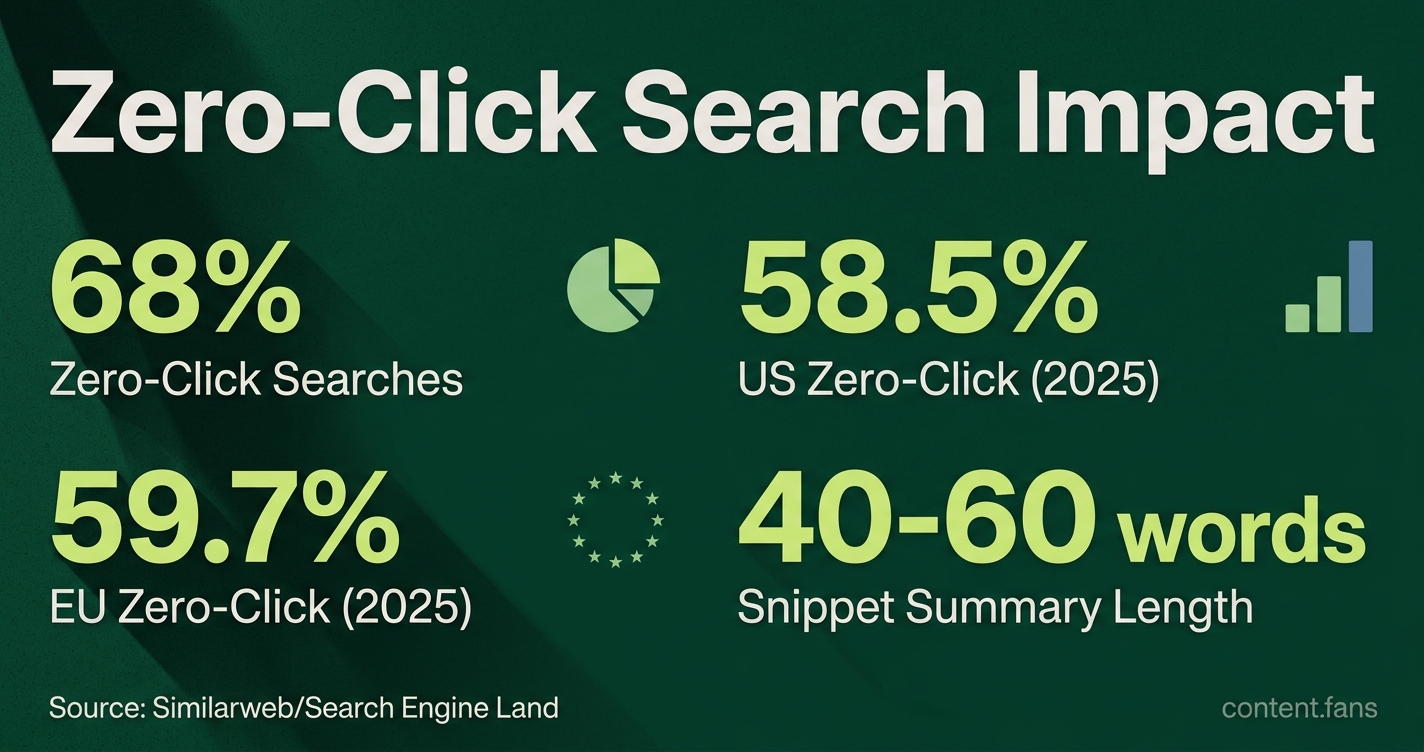
For SaaS marketers, this trend means a strategic pivot is essential. Success is no longer measured solely by website traffic but by brand visibility within search results themselves. The new goal is to appear in featured snippets, AI answers, and knowledge panels to influence buyers at the top of the funnel.
Impact on Each Funnel Stage
| Funnel Stage | Observed Zero-Click Effect | Adaptive Response |
|---|---|---|
| Awareness | Users learn category basics directly from SERP features like snippets and AI Overviews. | Optimize content for brand mentions within definitions and secure first-paragraph answer snippets. |
| Consideration | Comparison queries (e.g., 'Product A vs. B') are resolved through instant tables and AI summaries. | Publish proprietary data and balanced comparison tables that Google can feature directly. |
| Conversion | Fewer, but more qualified, high-intent visitors click through to pricing and conversion pages. | Streamline the signup process and prominently display social proof to capture high-intent traffic. |
Tactics for a Zero-Click World
Effective SaaS marketing now relies on adapting content to be featured directly on the SERP. Marketers are seeing success with these tactics:
- Publish original data and research that AI Overviews and other publications are likely to cite as a primary source.
- Structure content with a direct, 40-60 word summary at the top to win featured snippets.
- Implement structured data like FAQ and HowTo schema to help search engines parse and feature your content.
- Develop objective product comparison pages using clear criteria and third-party data to build trust.
- Track non-click metrics like branded search volume and share of voice in SERP features alongside traditional clicks.
Measurement Is Shifting Too
Traditional analytics dashboards often fail to capture the brand impact of zero-click searches. With most search journeys ending on the results page, marketers must adopt new measurement strategies. This involves tracking visibility in featured snippets, monitoring for AI citations, and mapping assisted conversions to understand the full influence of your SERP presence. These signals can then be integrated into attribution models to credit brand exposure that doesn't result in a direct click.
Distribution Beyond Google
To maximize visibility, SaaS brands must look beyond their own websites. AI Overviews and snippets often pull information from diverse sources like Reddit threads, YouTube videos, and industry review sites. Building a strong presence on these platforms increases your chances of being cited. Ultimately, the search results page is the new destination. By providing clear answers and earning citations across the web, marketers can shape buyer perceptions even without a click.
What does the high zero-click search rate really mean for SaaS marketers in 2026?
This means a significant majority of Google searches conclude without a click to any website, based on data covered by Search Engine Land. For SaaS companies, the customer acquisition funnel now begins on the SERP. Success is defined not by top rankings, but by winning brand presence in featured snippets, AI Overviews, and knowledge panels.
Which types of SaaS content are most affected?
Top-of-funnel informational content is most impacted. Industry reports suggest that queries for "what is," "how to," and product comparisons are frequently answered directly on the SERP. While deeper-funnel content like pricing pages is less affected, its purpose is shifting. The new role of educational content is not just to drive clicks, but to earn citations and build authority.
How should SaaS teams measure success when traffic drops but SERP visibility rises?
SaaS teams should shift from tracking sessions to measuring share of voice in search answers. Key performance indicators (KPIs) now include:
- SERP Feature Presence: How often your brand appears in snippets, "People Also Ask" boxes, or AI Overviews.
- Branded Search Lift: Growth in search queries for your brand name, indicating increased awareness from SERP exposure.
- Assisted Conversions: Tracking users who were exposed to your brand in a zero-click search and later converted.
- Citation Tracking: Monitoring how often your content is cited in AI answers, even without a click.
What specific on-page tactics increase the odds of being cited on the SERP?
To increase your chances of being featured on the SERP, focus on these on-page tactics:
- Answer First: Start content with a concise, 40-60 word answer that can be easily pulled for snippets.
- Use Question-Based Headings: Structure articles with H2s and H3s that match user search queries.
- Add Structured Data: Use schema markup (FAQ, HowTo, Product) to provide context to search engines.
- Create Comparison Tables: Build clear tables comparing features or products, as these are often lifted directly into SERPs.
- Publish Original Data: Include proprietary metrics and research to become a citable primary source.
Beyond SEO, what new distribution channels should SaaS companies prioritize?
Since organic search is just one piece of the puzzle, SaaS companies should build a presence on other high-citation channels:
- Reddit and Niche Forums: Authoritative discussions on Reddit and technical forums are frequently sourced by AI.
- YouTube: Video tutorials and explainers can appear as direct answers in search results.
- Community and Review Sites: User-generated content and expert reviews build brand mentions and trust.
- Partner Ecosystems: Drive direct traffic and leads through partner newsletters and product integrations.