
TIME expands creator strategy, removes paywalls
Serge Bulaev
TIME is shifting its strategy to focus more on digital creators and has removed most paywalls. The magazine suggests that individual creators might hold as much influence as traditional media. Surveys indicate that many people, especially teens, get news from creators, and audiences may trust transparency more than follower counts. TIME appears to be adapting by using short videos and building partnerships with creators, while still emphasizing editorial standards and fact checking. This new approach may help TIME reach audiences who already see creators as a key part of their news experience.

TIME is making a significant pivot as it expands its creator strategy and removes paywalls, betting on the rising influence of individual digital creators. Recognizing that creators can rival traditional media outlets in authority and reach, the 103-year-old publication is adapting its model to prioritize trust, transparency, and direct engagement with new audiences.
At the core of this transformation is the TIME100 Creators initiative, designed to integrate the legacy newsroom with the booming creator economy. According to industry reports, the initiative asserts that individual creators can possess the same editorial weight as established institutions. Editor in Chief Sam Jacobs has framed creators as "media companies in their own right," stating that TIME's unique advantage is the institutional trust it can extend to these new voices.
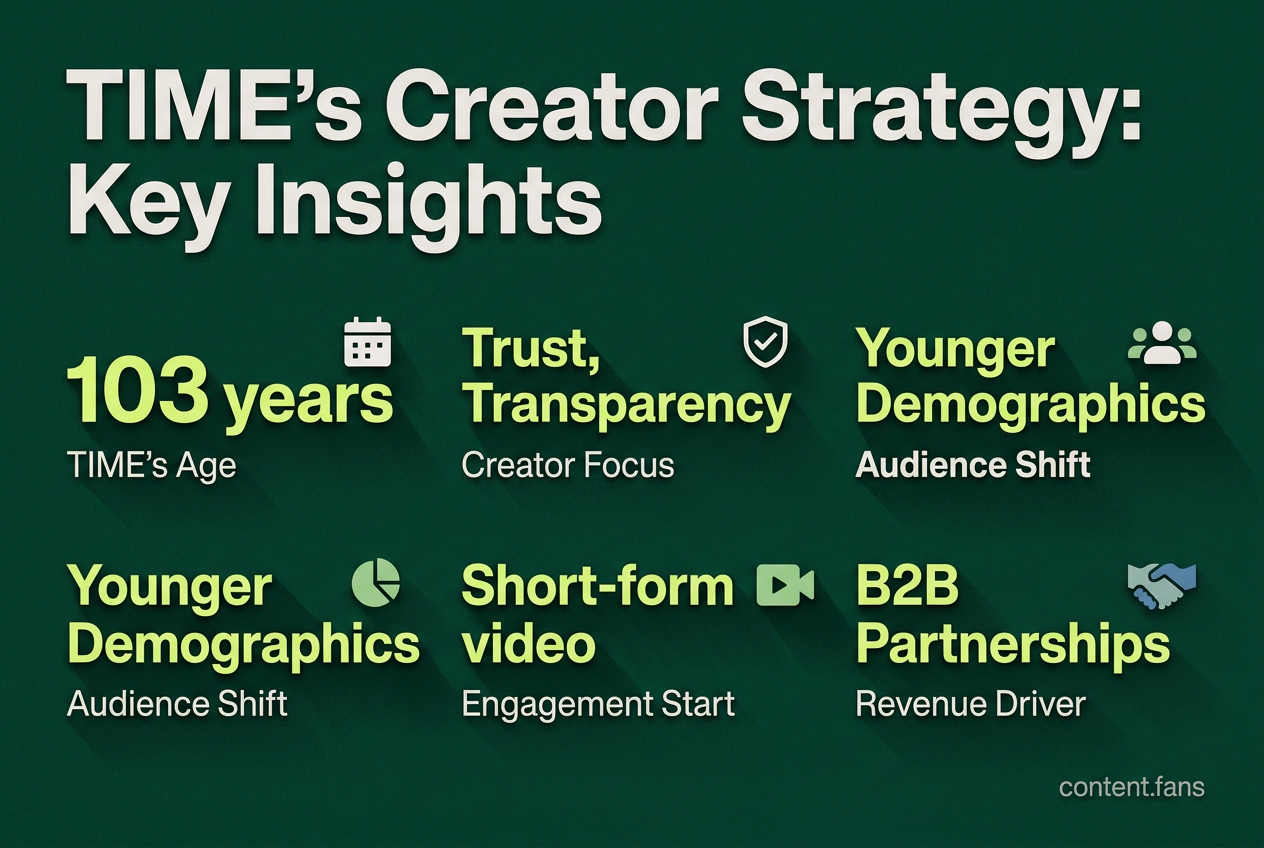
TIME100 Creators and the shift from reach to trust
TIME's strategy shifts focus from traditional audience reach to building trust with modern consumers. By collaborating with vetted creators and removing most paywalls, the publisher aims to engage audiences, particularly younger demographics, who increasingly source their news and information from independent digital personalities over legacy media institutions.
The TIME100 Creators list categorizes top influencers into multiple groups including Titans, Entertainers, Leaders, Phenoms, and Catalysts. To make their selections, editors worked with the marketplace #paid, analyzing quantitative signals like reach and engagement. This pivot reflects broader industry trends showing that a significant portion of Americans, particularly teens, get news from creators. Research indicates that audiences prioritize transparency in creator content over traditional metrics like follower count.
What TIME learned from creator engagement
- Younger audiences engage first through short-form video, then seek deeper coverage on other channels.
- Brands gravitate toward serialized franchises where creators hold community attention.
- Editorial vetting remains a differentiator when misinformation concerns persist.
These insights have shaped TIME's strategic direction. Sam Jacobs noted that short, vertical video "Bytes" now accompany articles, with strong revenue performance. Furthermore, Chief Executive Jessica Sibley told Digiday the company is forging substantial B2B partnerships centered on live journalism events that pair prominent creators with corporate sponsors.
Building a lasting creator strategy
This move aligns with a broader industry trend noted by analysts for LinkedIn Trends, where media companies are shifting from high-volume output to developing personality-led intellectual property (IP). By removing most paywalls and investing in creator-specific verticals, TIME is redefining its competitive landscape. Experts suggest its new rivals are not other magazines but individual creators commanding loyal, portable audiences.
Jacobs acknowledges the tension between algorithmic virality and journalistic verification. TIME plans to navigate this by using its editorial standards as a filter, collaborating with creators who welcome fact-checking. This approach positions the publisher to serve an audience that increasingly sees creators as an integral part of their news diet.
What is the TIME100 Creators list and when did it launch?
The TIME100 Creators list is an initiative that recognizes influential digital content creators changing how people inform themselves. The list represents a significant expansion of TIME's iconic TIME100 franchise. According to industry reports, the list features creators from multiple countries across categories including Titans, Entertainers, Leaders, Phenoms, and Catalysts. Notable honorees have included figures like MrBeast, Joe Rogan, Alex Cooper, and Khaby Lame, with creators spanning various age groups including 12-year-old Taylen Biggs.
How does TIME select creators for the list?
TIME employs a rigorous, data-driven methodology developed in partnership with creator marketplace #paid. The selection process emphasizes creators who built careers natively through digital platforms - excluding those who transitioned from traditional media like television or journalism. Editors analyze reach, engagement metrics, and business models while polling sources globally to identify influential voices. The selection process focuses on creators across various languages while maintaining broad age inclusion, allowing creators across generational boundaries.
Why is TIME removing paywalls and embracing creator-driven media?
According to Editor in Chief Sam Jacobs, TIME is undergoing a fundamental strategic reorientation to adapt to shifting audience behaviors. The publisher recognizes that creators now function as legitimate media enterprises with real audiences, impact, and business models. Rather than viewing creators as competitors, TIME positions itself to bring editorial standards and trust to creator platforms through collaboration. This approach reflects TIME's 103-year history of adapting to new media formats - from radio to television to digital - now extending its reputation for trustworthiness to creator-driven formats.
What does research show about news consumption from independent creators?
Industry research reveals striking data about creator influence: a significant portion of Americans get at least some news from independent creators, with usage particularly high among teens. Studies show creators serve as cross-generational sources of information, particularly for national news, pop culture, and wellness. Research indicates that many teens now get local news from independent creators compared to adults - signaling a generational shift in information sourcing.
How is this strategy changing TIME's business model?
TIME's creator embrace represents a structural transformation rather than a surface-level addition. The publisher is shifting from content volume to audience control, from algorithmic distribution to owned communities, and from transactional advertising to integrated commerce and B2B partnerships. Key initiatives include launching creator-specific verticals, investing in community-driven live journalism, and integrating vertical video ("Bytes") across article pages. This positions TIME to compete with individual creators functioning as media companies while leveraging its distinctive editorial judgment and institutional trust.