
YouTube updates monetization policy, targets AI-generated "slop" content
Serge Bulaev
YouTube updated its monetization rules for 2025-2026 to target repetitive, low-value, and undisclosed AI content. The new policy may remove ads from generic or poorly-made videos, especially those made with AI that are not clearly labeled. Creators whose channels depend on mass-produced content might see earnings drop, while those making original videos or using other ways to earn money might not be affected as much. Shopping-focused channels may need to build trust with viewers by offering real product demos and honest advice. Successful creators now seem to focus on unique content, are clear about AI use, and use several ways to earn money, not just ads.

With its latest monetization policy update, YouTube is targeting low-value, repetitive, and undisclosed AI-generated "slop" content. This enforcement initiative redirects revenue to channels producing original, high-value content, creating new challenges and opportunities for creators. This guide explains how the new standards impact monetization, content strategy, and social commerce.
What changed in the 2025-2026 rulebook
YouTube updated its channel monetization policies by renaming "repetitious content" to "inauthentic content." The platform now specifically demonetizes mass-produced, generic, or manipulative videos, including those using AI for sensitive topics or reusing clips without adding significant value. An expanded AI disclosure rule was also introduced.
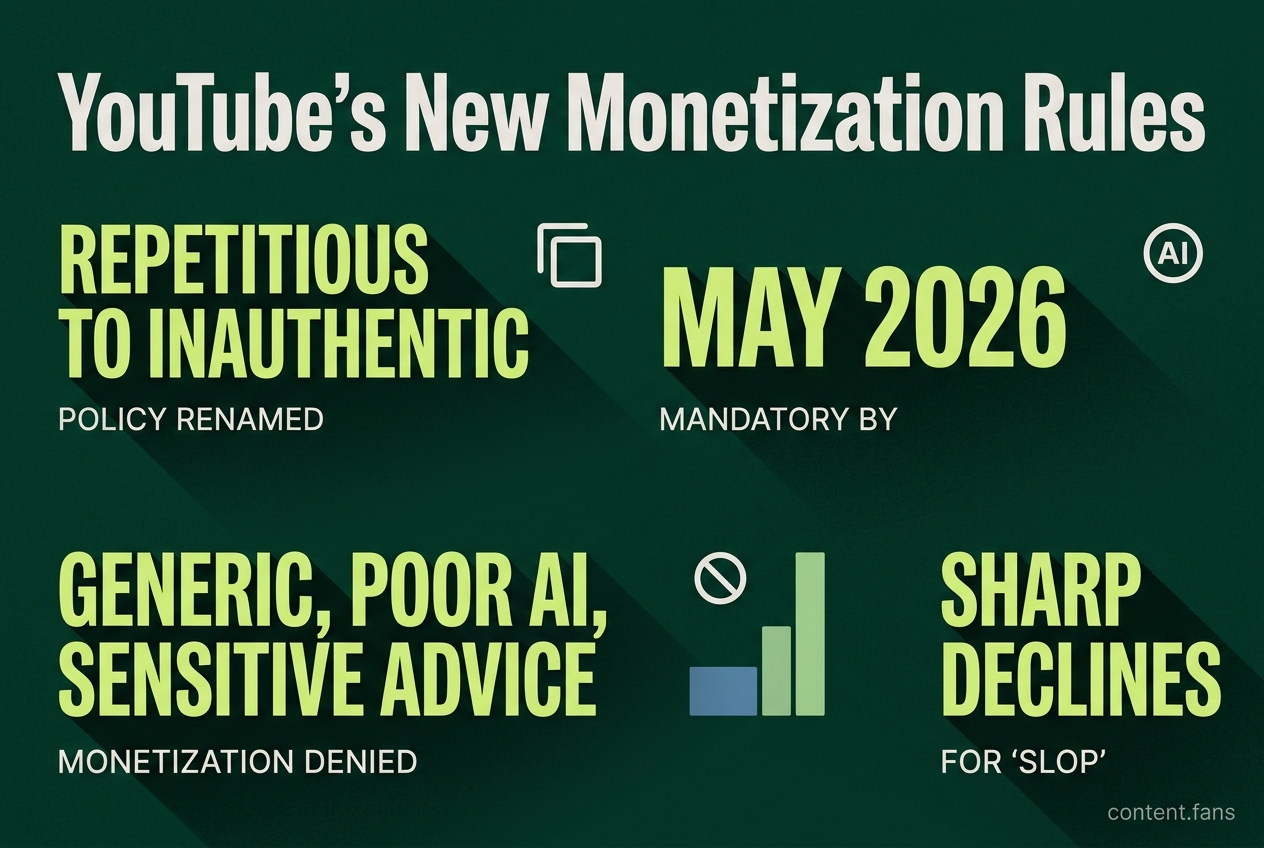
Effective July 2025, YouTube rebranded its "repetitious content" policy to "inauthentic content," clarifying its stance against mass-produced and manipulative uploads. According to the updated channel monetization policies, all monetized content must be "original and authentic." Further, a May 2026 update to the AI disclosure rule requires creators to flag realistic synthetic media or risk having it automatically labeled by the platform. The platform now explicitly denies monetization for several content types:
- Generic or template-based videos that show minimal transformation of existing material.
- Unsatisfying or off-putting content such as poor AI voiceovers paired with stock visuals.
- AI personas offering advice on sensitive topics like health or finance.
- Compilations or reactions that reuse clips without substantial commentary.
Immediate revenue impact
The crackdown on what is often called "AI slop" has immediate financial consequences. As TechCrunch reports, heightened enforcement has increased demonetization risk for channels built on bulk, low-effort uploads. Creators relying solely on ad revenue from this type of content are seeing sharp earning declines, whereas those with diversified income streams like memberships or merchandise are more insulated from the changes.
Implications for social commerce
The policy shift also reshapes social commerce. With stricter reviews of titles and thumbnails, clickbait and deceptive, urgency-based sales tactics are less effective. This pushes shopping channels toward building trust through authentic formats like live product demos, detailed comparisons, and tutorials that address genuine customer questions. Consequently, brands seeking affiliates are prioritizing creators with high retention metrics over those with high click rates, as longer watch times indicate stronger purchase intent.
Creator playbook for navigating policy changes
To navigate these changes and protect monetization, many creators are adopting new strategies. Key approaches include:
- Prioritize Evergreen Value: Focus on creating searchable, high-retention videos that solve specific problems for a target audience, attracting high-CPM advertisers.
- Diversify Revenue Streams: Reduce reliance on ad revenue by incorporating memberships, affiliate marketing, and digital product sales to build a more resilient business model.
- Ensure Full Transparency: Proactively disclose all realistic AI-generated content to avoid automated labels that can limit reach. Add substantial commentary and original perspective to any reaction or compilation videos.
- Audit All Metadata: Regularly review titles, thumbnails, and descriptions to ensure they accurately reflect video content. Misleading metadata is now a direct path to demonetization or channel strikes.
- Build an Off-Platform Audience: Cultivate direct relationships with viewers through email lists and private communities to mitigate the impact of future policy shifts.