
YouTube expands AI deepfake detection to all adult creators
Serge Bulaev
YouTube is expanding its AI deepfake detection tool to all adult creators, after a year of testing with select users. This move may be a response to growing concerns about AI impersonations and creator safety. The tool lets creators upload a selfie video and ID so YouTube can check new videos for possible fake likenesses. However, finding a match does not always mean the video will be removed, as exceptions for satire and commentary remain. This suggests YouTube is trying to balance creator protection with free speech rules.
YouTube is expanding its AI deepfake detection tool, making the likeness-scanning service available to all creators aged 18 and over. This move addresses creator safety concerns amid the rise of synthetic media, following a successful year-long pilot program with select users.
How creators can enrol
Creators can enable the feature within YouTube Studio under the "Content detection - Likeness" menu. The process, detailed in an Engadget walkthrough, requires identity verification and a brief selfie video to create a facial reference. YouTube's system then automatically scans new uploads for potential matches.
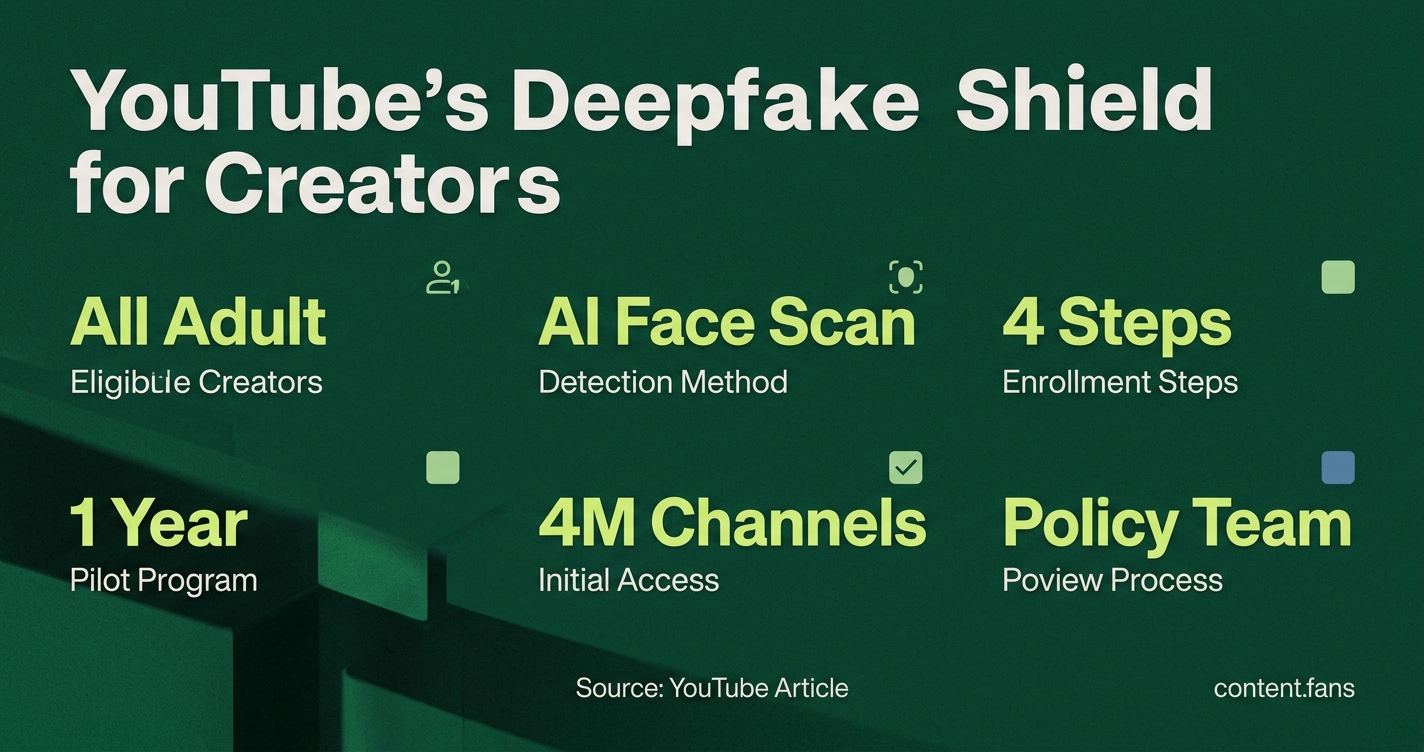
YouTube's AI deepfake detection tool is a service that automatically scans new video uploads to find unauthorized uses of an enrolled creator's face. Previously available only to select partners, it is now open to all adult creators, allowing them to request takedowns of impersonating content.
- Open YouTube Studio on desktop and choose Likeness under Content detection.
- Scan an on-screen QR code with a phone and upload a government ID.
- Record the prompted selfie video to create a facial reference.
- Wait for email or mobile alerts whenever a possible match is flagged.
What the detector looks for
Functioning like "Content ID for faces," the system compares new video uploads against a creator's enrolled facial reference to identify AI-generated face swaps and other synthetic likenesses. When a match is found, the creator can request its removal for violating privacy guidelines. However, YouTube reviews each request and allows exceptions for parody or commentary.
Gradual rollout timeline
The tool's expansion follows a phased rollout. It was initially provided to about four million Partner Program channels, as detailed in a TechBuzz report. On March 10, 2026, access was extended to a test group of public figures, including politicians and journalists, as covered by TechCrunch. The latest update in May 2026 opens the feature to all adult creators globally.
Important caveats
It is crucial to note that detecting a deepfake does not guarantee its removal. YouTube's policy team reviews every report for context, and content deemed protected speech - such as parody, satire, or public-interest commentary - may remain on the platform, reflecting a balance between creator protection and fair-use principles.
What exactly does YouTube's AI deepfake detection tool do?
The system functions as a "Content ID for your face," automatically scanning new uploads for AI-generated visuals that match enrolled creators. Upon finding a potential match, it sends an alert, allowing the creator to review the video and submit a one-click removal request, which is then handled by YouTube's human review team.
Who can enroll and how long does setup take?
As of the cited reporting, access was limited to a pilot group of eligible public figures and not broadly available to all creators 18+. The setup process is server-side and takes about three minutes: open Studio, select "Likeness" under Content Detection, and follow the on-screen prompts to scan a QR code, record a selfie video, and upload a government ID. Approval typically takes less than an hour.
Does detection guarantee the deepfake will be removed?
No. While the tool significantly speeds up detection, YouTube's human reviewers make the final decision. They apply existing policies for parody, satire, and public-interest exceptions. During the pilot, a significant portion of flagged videos remained online because they fell under these protected categories.
How big is the deepfake problem for everyday creators?
While YouTube hasn't released specific data, industry trends show the scale of the problem. According to industry reports, deepfake videos have grown rapidly, and many creators are concerned about the non-consensual use of their likeness. This tool is the first free, platform-integrated solution for non-celebrity creators.
Are other platforms offering similar protection?
Currently, no other major platform offers a comparable tool at this scale. TikTok and Instagram provide limited likeness checks for high-profile verified accounts, and third-party services like Hive AI are often too expensive for individual creators. YouTube's free, automated tool represents a significant development in creator protection on user-generated content platforms.