
Xbox Rethinks Console Costs as Memory Prices Drive Up Hardware Expenses
Serge Bulaev
Xbox leaders say they are still committed to making consoles but may need to change how they build and sell them because the price of memory and other parts is going up. They might offer different storage options or bundle hardware with longer Game Pass commitments to help keep costs down, though no final decisions have been made. Xbox plans to keep making exclusive games to keep players interested, but it appears that Game Pass growth has not greatly increased console sales so far. Rising costs, especially for memory, may keep affecting all game systems, and some believe future consoles might be much more expensive if trends continue. Xbox's new plans may help, but it is not clear if they will stop falling console sales.

Facing escalating hardware expenses, Xbox is rethinking console costs to keep future systems affordable for its player base. Xbox executives are stressing their commitment to the console market, but a The Verge interview with Asha Sharma reveals leadership is actively "rethinking the cost construction of the console." Reinforcing this, Chief Strategy Officer Matthew Ball told a GamesIndustry.biz briefing that Xbox has "no desire to move away from the console business," signaling a strategy that balances financial pressures with hardware loyalty.
What the internal memos reveal
Xbox is re-evaluating its console pricing strategy due to significant pressure from rising component costs, particularly for memory. Driven by high demand from the AI sector, memory can now represent over 35% of a console's manufacturing bill, forcing the company to explore new financial models.
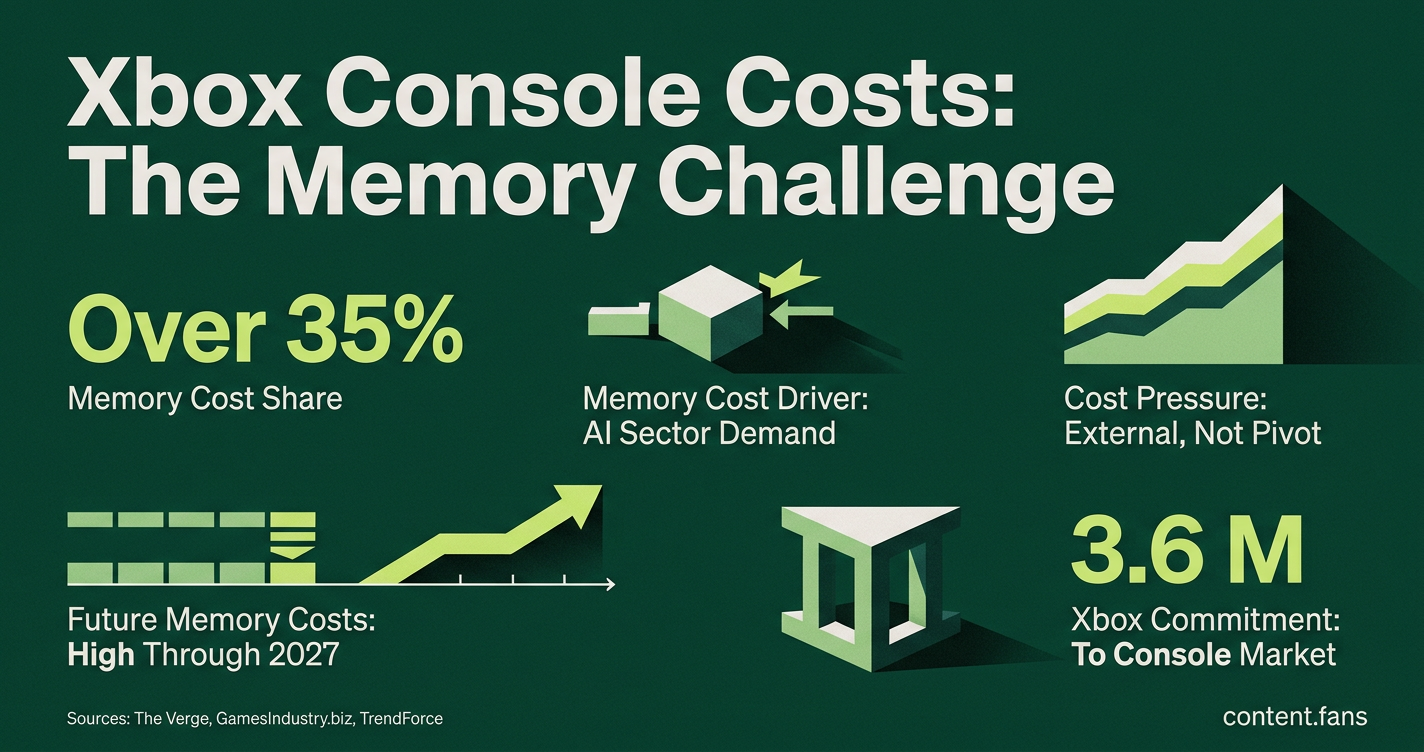
Internal documents underscore this dual focus. A June 2026 memo, summarised on Wikipedia, describes console hardware as foundational to the Xbox ecosystem while also outlining a multi-platform strategy. Analysts at Naavik note the same document highlights exclusive games as vital for platform health. The cost pressure is external, not a signal of a pivot from hardware. According to TrendForce data, memory can comprise over 35% of a console's bill of materials, a figure expected to rise as AI development consumes chip supply. This component inflation already prompted Sony to increase PlayStation 5 prices, and Reuters-syndicated coverage suggests high memory costs may continue through 2027.
Exploring cheaper paths to hardware
In response, Xbox is exploring what Asha Sharma, in a quote from Pure Xbox, called "radically different business models." Industry observers suggest several options are being considered to manage the rising costs without abandoning consoles:
- Flexible storage tiers to lower the upfront purchase price.
- Hardware bundles subsidized by longer-term Game Pass commitments.
- Regional assembly partnerships to minimize tariff impacts.
While unconfirmed, these strategies indicate a proactive approach to maintaining console accessibility.
Content pipeline as retention tool
To retain its player base, Xbox is doubling down on exclusive content. Matthew Ball promised players "a dependable pipeline" of exclusives in his GamesIndustry.biz comments, with a Wikipedia summary confirming two new Xbox-only titles were announced in June. However, financial results show a complex picture. Variety reported that Microsoft's Q1 FY2026 console revenue fell 29%, even as content and services grew 1%. Analysts quoted by GamesIndustry.biz caution that Game Pass growth has "not significantly enhanced Xbox console sales," and The Guardian separately noted that a major Game Pass launch could cost $300 million in lost premium sales.
Supply chain pressures across the industry
This financial strain is not unique to Microsoft. TrendForce warns that memory cost inflation threatens the profit margins of all console manufacturers. Memory is projected to account for 21-23% of the cost for Nintendo's next console, with Sony and Microsoft facing even higher proportions. Reporting in the Times of India connects this surge directly to competition for chips from AI data centers. This has led to dire predictions, with analysts cited by Hypebeast speculating that next-generation flagship consoles could approach a $1,000 price point if current trends hold.
In this challenging economic climate, Xbox is signaling a three-pronged strategy: maintain its commitment to hardware, tighten its focus on must-have exclusive games, and explore new pricing structures to manage costs. While executives argue these steps are vital for the console's future, whether they can reverse declining hardware sales remains to be seen.