
White House shelves AI model review after industry pushback
Serge Bulaev
The White House dropped a plan that would have asked AI companies to let federal testers review their new models for 90 days before release, after industry leaders raised concerns. Some worry this may slow down safety checks, but government agencies are still testing some models early under voluntary agreements. This ongoing testing is not required by law, and companies still decide when to release their products. Some experts say this approach may help, but others argue stronger rules might be needed to protect the public. Officials might look at new rules in the future, possibly like those used in the UK.

Reports suggest the White House has been considering a planned AI model review process, with discussions ongoing in the tech and policy worlds. According to industry reports, a draft order for pre-deployment federal review of frontier models has been under consideration. The administration has been briefing AI companies about potential oversight measures, highlighting the ongoing tension between rapid innovation and national security concerns.
From Voluntary Plan to Ongoing Discussions
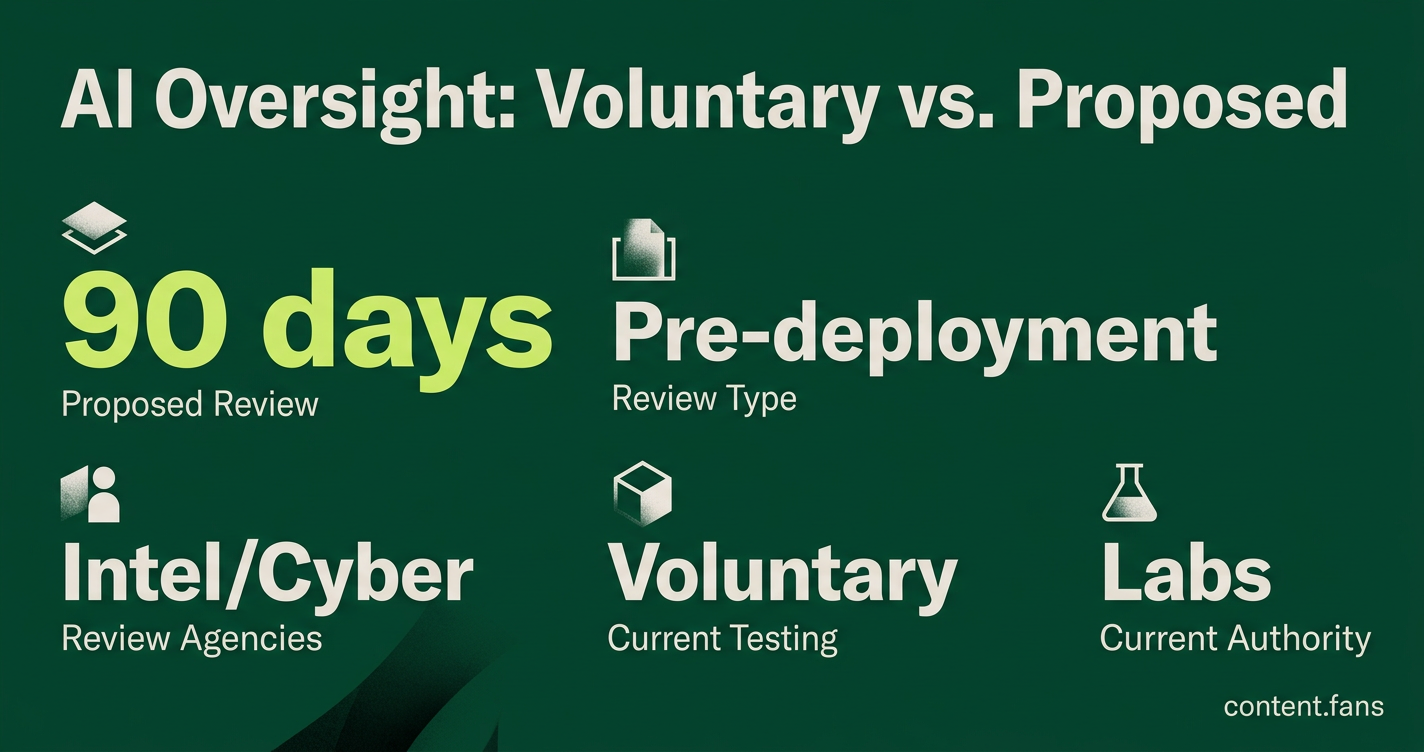
The proposed directive would have allowed voluntary pre-deployment review of frontier AI models by intelligence and cybersecurity agencies within about 90 days, rather than a NIST-run review program. The plan would evaluate new frontier models from labs like OpenAI and Google DeepMind for potential risks, including cyber threats and biosecurity vulnerabilities.
Industry leaders have voiced concerns that such measures would stifle innovation and cede a competitive advantage to international rivals, particularly China. Tech executives have made appeals to the administration, emphasizing the importance of maintaining the pace of U.S. AI development over implementing new voluntary safety checks.
Although the plan did not include mandatory licensing, executives reportedly feared it could lead to stricter regulations later. According to industry reports, concerns have been raised that the review process would slow U.S. firms compared to Chinese competitors, a view that has gained attention within the administration.
The Current State of AI Safety Testing
Pre-release testing continues through separate, voluntary agreements coordinated by the Commerce Department. The Center for AI Standards and Innovation (CAISI), a division of NIST, receives early access to leading models for national security-focused red-teaming, as noted in a CIO story. Analysts often test versions with reduced safety features to identify potential failure points.
Key participants in this voluntary program include:
- Anthropic
- Google DeepMind
- Microsoft
- OpenAI
- xAI
CAISI experts perform capability audits, hunt for jailbreak methods, and provide developers with recommendations. However, the AI labs keep full authority over product releases, and this entire framework remains non-binding.
The Debate Over Regulation vs. Innovation
The ongoing policy discussions have intensified the debate between AI safety and the speed of innovation. While some policy experts view the current CAISI testing as an improvement over earlier self-regulation, advocacy groups like the Future of Life Institute argue that without a formal mandate, public safety relies too heavily on corporate timelines. They contend that companies should not have the sole power to release models capable of disrupting critical infrastructure.
Conversely, industry proponents argue that mandatory reviews would cause significant delays, putting U.S. companies at a disadvantage. An investor noted that a three-month delay could make a new model obsolete upon release.
Looking ahead, analysts expect the administration to explore a more permanent regulatory structure, potentially modeling it after the UK's AI safety framework. For now, tech companies continue to cooperate with CAISI, likely hoping to demonstrate that voluntary measures are sufficient to prevent stricter government mandates.
What is the proposed White House AI plan?
The proposal would have asked frontier labs to voluntarily share new models up to 90 days early with intelligence and cybersecurity agencies. The goal was to let federal experts probe for dangerous capabilities, security holes and dual-use risks before public release. Crucially, the draft carried no licensing mandate and no legal power to block a launch - it relied entirely on companies opting in.
Why are there concerns about the order?
After discussions with AI executives and policy advisers, concerns have been raised that any slowdown could hand China a lead in next-gen models. Industry leaders have emphasized the importance of maintaining U.S. leadership in AI development. The administration is weighing these competitive concerns against safety oversight needs.
What role do policy advisers play?
Policy advisers within the administration have become influential voices in shaping AI strategy. Sources suggest that concerns have been raised about plans potentially morphing from voluntary to mandatory, which has influenced ongoing discussions. The principle of "permissionless innovation" continues to shape federal AI strategy discussions, from deregulation talks to fast-track data-center permits.
What happens to AI safety oversight now?
For the moment Washington is leaning on company pledges and post-release monitoring. Every major U.S. lab has already agreed to give Commerce's Center for AI Standards and Innovation pre-release access for national-security checks, but participation remains non-binding. If a future incident erodes public trust, lawmakers could revive mandatory review proposals and export-style controls.
Do these discussions really impact U.S. competitiveness?
Short term considerations: fewer gatekeepers mean faster product cycles and lower compliance costs, factors investors track closely. Yet safety advocates warn that a high-profile misuse event could trigger patchwork state rules or foreign market bans, raising costs later. In other words, innovation gains today may collide with governance backlash tomorrow if self-policing falls short.