
Slack AI Expands to Enterprise Grid with Multi-Language Support, Admin Controls
Serge Bulaev
Slack AI is now available for Enterprise Grid, offering multi-language support and admin controls. Early users say that AI summaries and translations may help teams catch up on conversations and understand colleagues in different languages quickly. Admins can control who uses these tools and set limits to protect sensitive information. Data from Slack suggests users might feel more productive and save time, though results could vary. Some features, like drafting in any language and detailed AI usage alerts, are still being improved.

Following months of closed pilots, Slack AI is currently available only in English and as a paid add-on for Enterprise plans; multi-language support is planned but not yet released. Large organizations are now leveraging the AI toolkit to accelerate productivity, with early reports citing significant time savings. The release leverages Slack's secure Enterprise Grid architecture, allowing AI to operate across isolated workspaces while maintaining compliance. This integration enables teams to consolidate collaboration within a single platform, eliminating the need for disjointed email threads and regional chat applications.
Core feature set
Slack AI is currently limited to English; multilingual support is not yet available. Key features include instant message translation, AI-powered conversation summaries, and automated recaps. The system is built with administrative oversight and security controls to manage access and protect sensitive company information.
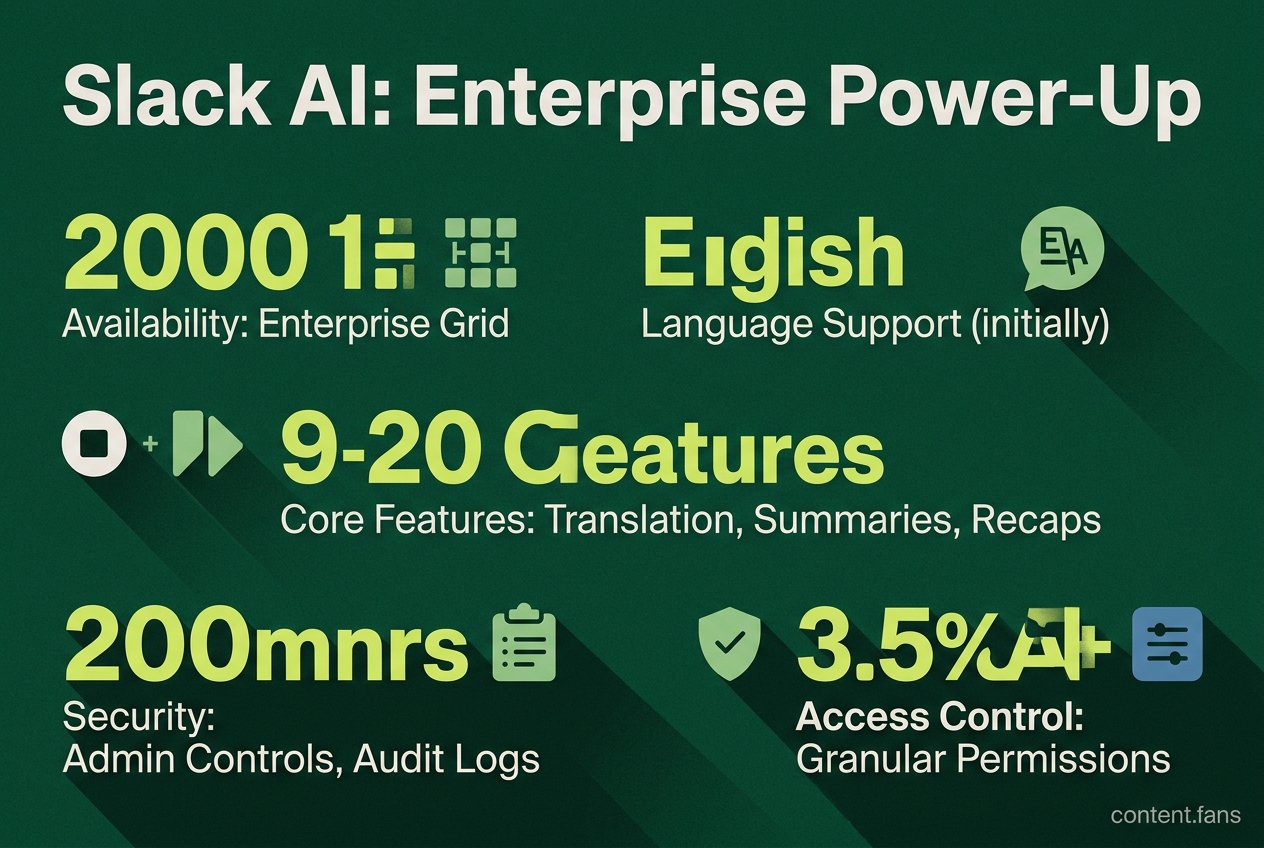
Slack AI's core features empower users to translate messages inline, generate instant conversation summaries, and create daily channel recaps. The platform can transform these insights into draft announcements or meeting agendas. The official Guide to AI features in Slack says message translation supports any user-selected language, with summaries defaulting to the reader's interface language. Additionally, Slackbot can summarize discussions and draft messages, but there is no confirmed feature for Canvas writing assistance building structured outlines from threads and files. As Fast Company reported, these capabilities include automatic citations linking AI-generated content back to its source messages.
Enterprise-Grade Admin Controls and Security
For administrators, the expansion introduces a new AI settings page with granular controls over feature access. Org Owners on Enterprise Grid can now define entitlements, deciding whether to deploy tools like Slackbot deep research to the entire organization, specific departments, or a limited pilot group. As detailed in the Manage access to AI features in Slack article, the platform includes critical security guardrails:
- Real-time Permission Checks: The AI respects all existing user permissions, preventing it from accessing or exposing restricted messages.
- Content Exclusions: Administrators can designate specific channels, canvases, or conversations as off-limits to AI, ensuring sensitive data is never used in prompts.
- Comprehensive Audit Logs: All AI prompts and data interactions are logged, providing full visibility for incident response and compliance teams.
- Usage Metrics API: A forthcoming Real-Time Search API will allow organizations to feed AI usage data directly into custom monitoring dashboards.
These controls integrate seamlessly with existing audit logs, eliminating the need for a separate compliance console.
Measurable Productivity Gains
Early data highlights significant productivity improvements. According to industry reports, many daily AI users report substantial increases in productivity, saving considerable time per week. This efficiency stems from reduced context switching, as the AI enables quick, powerful searches across integrated tools like Google Drive, GitHub, and Salesforce. As noted in Slack's blog on AI enterprise search tools, the enterprise search module is robust enough to handle conversational queries, even those with spelling errors.
Current Limitations and Future Roadmap
While the feature set is robust, some capabilities are still evolving. Native draft generation in all languages is an emerging feature; currently, AI composes drafts in the user's interface language, which can then be translated. Similarly, Canvas summarization for long-form documents is in a phased rollout. While dedicated AI spend alerts are not yet available, administrators can monitor costs through broader usage dashboards.
To manage costs and measure return on investment (ROI), administrators can begin by assigning AI entitlements to a small pilot group. By monitoring usage via the central dashboard, they can validate the tool's impact and configure security guardrails before gradually expanding access across the organization.