
White House asked OpenAI to delay GPT-5.6 release over security fears
Serge Bulaev
The White House reportedly asked OpenAI to delay the release of its new AI model, GPT-5.6, because of security worries. Officials said the model might help with cyber attacks or harm important infrastructure, so only a few trusted partners could access it at first. A recent executive order allows the government to review certain advanced AI models for up to 30 days before they are widely shared. Critics say this process, though called voluntary, may be hard for companies to refuse. It is still unclear if these rules will become law, but this situation shows the government may play a bigger role in checking powerful AI systems.

The White House asked OpenAI to delay the public release of its GPT-5 model due to national security fears, subjecting the powerful new AI to federal review before its launch. The move signals a significant shift in U.S. government oversight of private AI development, establishing a new process for vetting frontier models that could pose a threat.
What the administration requested
According to a Wall Street Journal article, OpenAI will initially restrict GPT-5 access to a small group of government-approved "trusted partners." The administration's request stems from concerns that the model's advanced capabilities could be exploited for offensive cyberattacks or to compromise critical infrastructure.
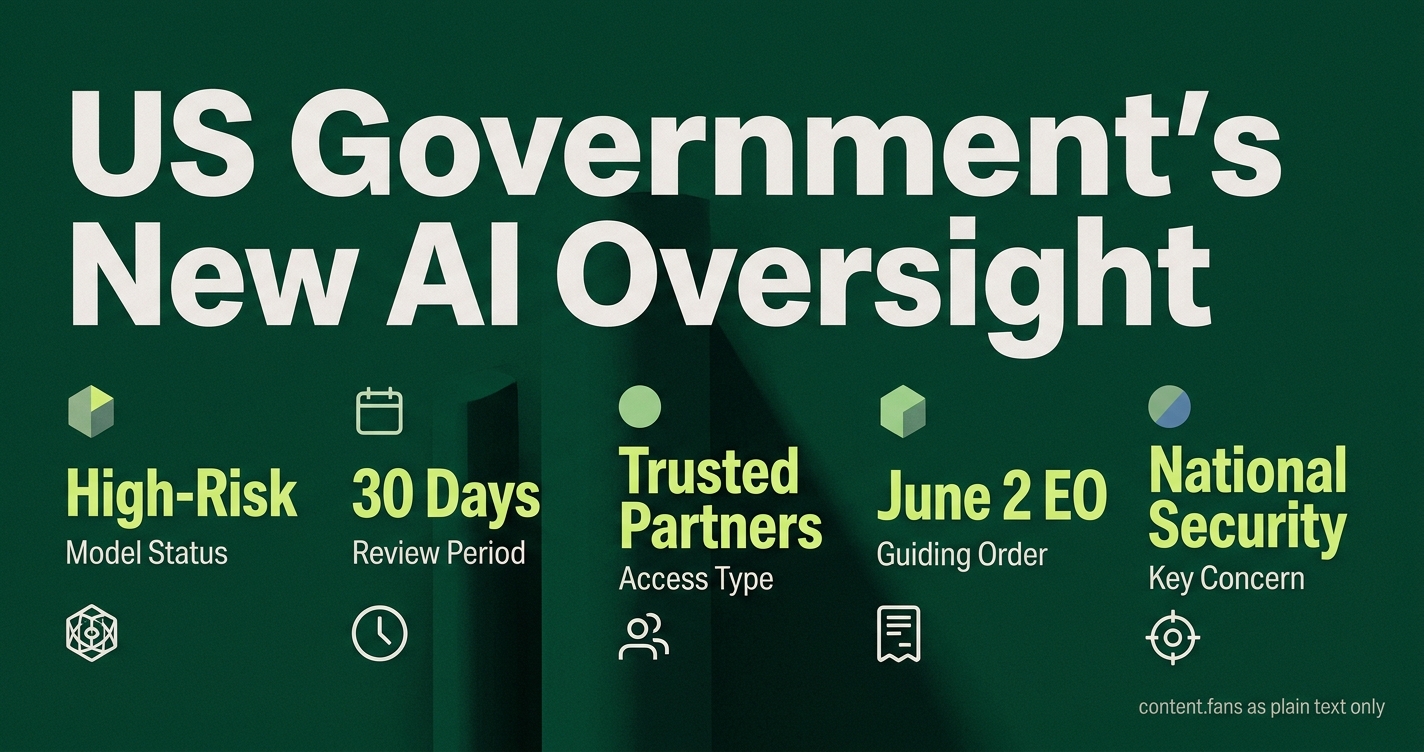
The White House requested the delay due to national security concerns. Officials fear GPT-5's advanced reasoning could help malicious actors launch cyberattacks or harm critical infrastructure. The pre-release review allows federal experts to assess these risks before the model is widely available to the public.
This action is guided by a June 2 executive order that established a voluntary 30-day federal testing period for "covered frontier models." The 'covered' model status is determined by legislation (e.g., AI Incident Reporting Act) targeting models that evade human oversight, resist shutdown, or enable cyberattacks. OpenAI's compliance confirms GPT-5 meets this high-risk threshold, influencing its entire release strategy.
How prerelease reviews work
The review process generally follows these steps:
1. The AI developer informs the Office of the National Cyber Director about a potential "covered" model.
2. The Office of the National Cyber Director (ONCD) and Office of Science and Technology Policy (OSTP) conduct security assessments to test for cyberattack and autonomous misuse risks.
3. If risks are manageable, the model is cleared for a limited "trusted partner" release.
4. If significant vulnerabilities are found, the public launch is postponed until sufficient safeguards are developed.
While the White House frames the review process as voluntary, critics contend that the risk of public censure or losing federal contracts makes it a de facto requirement for major AI labs.
A break from previous policy
This level of intervention represents an escalation from voluntary to mandatory oversight. Federal AI strategy previously included mechanisms such as voluntary safety commitments, export controls on AI hardware, and the National AI Action Plan which addressed research and workforce development. The new executive order pivots from voluntary guidelines to direct, real-time oversight of AI that could impact national security or financial systems.
Early signals for industry governance
- Longer Development Cycles: Mandatory pre-release reviews are likely to extend development timelines for leading AI companies.
- Limited International Access: The requirement for pre-release safety reviews of AI models could restrict access for users and developers outside the U.S. through export controls or data residency laws.
- Industry-Wide Impact: Competitors like Anthropic are subject to the same emerging regulatory frameworks. Federal agencies have raised concerns about AI supply chain security, demonstrating the real-world consequences of this new oversight.
This 30-day review period is expected to become standard practice for all advanced AI models. While it remains unclear if Congress will codify this framework into law, the GPT-5 case establishes a new precedent for U.S. government intervention in AI, balancing national security claims against concerns for innovation and civil liberties.
What exactly did the White House ask OpenAI to do with GPT-5 and when?
In June 2026, the administration asked OpenAI to stagger the public release of GPT-5, its newest frontier model. Instead of a normal product launch, the company was told to provide the government with a 30-day pre-release access window so federal teams could run a classified cyber-capability assessment. After that review, OpenAI may only roll the model out to approved partners, with new access individually approved by the White House. CEO Sam Altman told staff the rule is "highly unusual" but that OpenAI will comply while the policy is in effect.
Why does the government see GPT-5 as a special security risk?
Federal benchmarking processes flagged GPT-5 as a "covered frontier model", meaning evaluations showed it could materially aid offensive cyber operations or act autonomously in malicious ways. Because the model's reasoning capabilities reached concerning levels, the Office of the National Cyber Director argued that an unchecked release could let hostile actors probe U.S. financial-market infrastructure or critical control systems before defenders had time to adapt.
Is this request backed by law or is it voluntary?
The action rests on an Executive Order signed June 2, 2026, regarding AI oversight. The order explicitly states it does not create a mandatory licensing regime; instead it offers a voluntary framework under which companies give the government up to 30 days of pre-release access. In practice, the "voluntary" label becomes problematic: firms that decline face potential consequences including being locked out of federal contracts.
How common is pre-release vetting for consumer AI models?
Before mid-2026, no federal rule required the government to inspect consumer AI models before launch. The Biden administration's 2024 National Security Memorandum on AI directed the AI Safety Institute to pursue voluntary preliminary testing of at least two frontier AI models within 180 days and issue guidance to developers. The current approach represents a significant escalation in federal AI governance oversight. For context, the EU's AI Act entered into force in August 2024, with most provisions becoming applicable on August 1, 2026, imposing mandatory pre-deployment audits for "general-purpose AI" models, while the U.K. is still debating statutory pre-deployment testing authority.
What does the delay mean for OpenAI, competitors and everyday users?
-
OpenAI: The company faces significant operational costs, so every extra week of staggered access defers subscription revenue. Delays could impact enterprise revenue significantly.
-
Rivals: Competitors such as Google, Anthropic and Cohere now face the same federal review pipeline. Any model that crosses the classified cyber-capability threshold will be subject to similar approval processes, leveling the playing field but also clouding release calendars.
-
End-users: Consumers will see no immediate change - GPT-5 remains available only to U.S.-based "trusted partners" cleared by the White House. International developers and non-U.S. start-ups are excluded from the first wave, accelerating a trend toward geographic fragmentation of frontier-model access.
-
Policy watchers: The episode signals a shift from voluntary safety pledges to active deployment controls. Expect the next frontier model - whether from OpenAI, Google or Anthropic - to be measured against the same 30-day security review process, making staggered rollouts a likely new norm rather than a one-off event.