
Demand Gen Report unveils 2026 AI benchmark for B2B marketers
Serge Bulaev
Demand Gen Report has launched its 2026 AI benchmark survey to help B2B marketers assess how AI performs in real business tasks, such as content creation, lead scoring, campaign optimization, and workflow management. The survey aims to find where AI may be adding real value, rather than just tracking how many people are using it. Previous research suggests most marketers are using AI, but clear proof of return on investment still lags behind. Early results indicate that personalized content at scale appears to be a strong use case for AI, even though data issues remain a challenge. The benchmark may show if AI starts to deliver clear revenue benefits for B2B marketing in 2026.
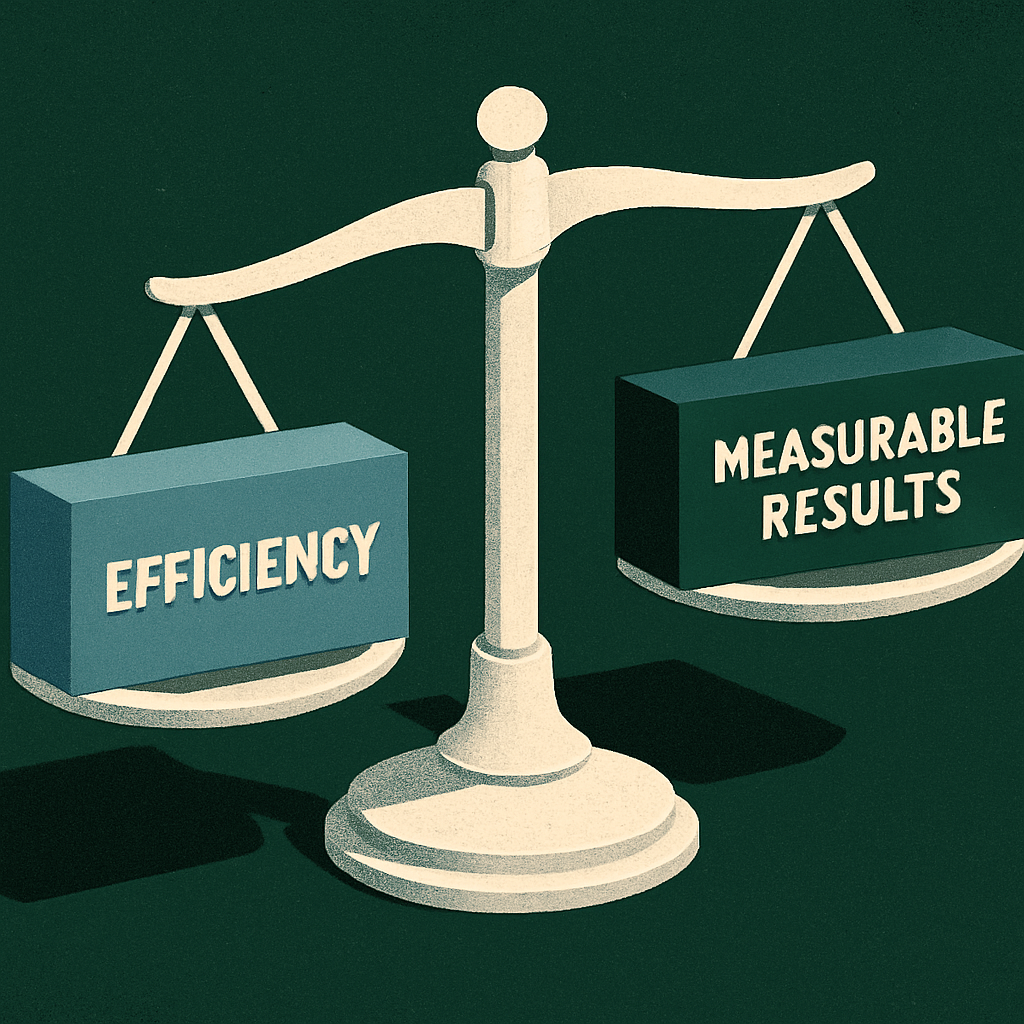
Demand Gen Report's 2026 AI benchmark for B2B marketers is now open, designed to measure artificial intelligence's real-world business impact. The survey moves beyond adoption metrics to assess how AI is performing in production workflows, helping teams create data-driven roadmaps and budgets by identifying where AI is truly delivering value.
What the 2026 questionnaire measures
The survey evaluates AI's transition from testing to production across four key operational areas: content creation, predictive lead scoring, campaign optimization, and workflow orchestration. It collects performance metrics, data quality hurdles, and details on human oversight to build a comprehensive picture of AI's practical application.
According to the AI Across the Workflow announcement, participants are asked to report on AI's status in:
- Content drafting and scaling
- Predictive lead scoring
- Real-time campaign optimization
- Cross-tool workflow orchestration
Usage is high, but ROI proof lags
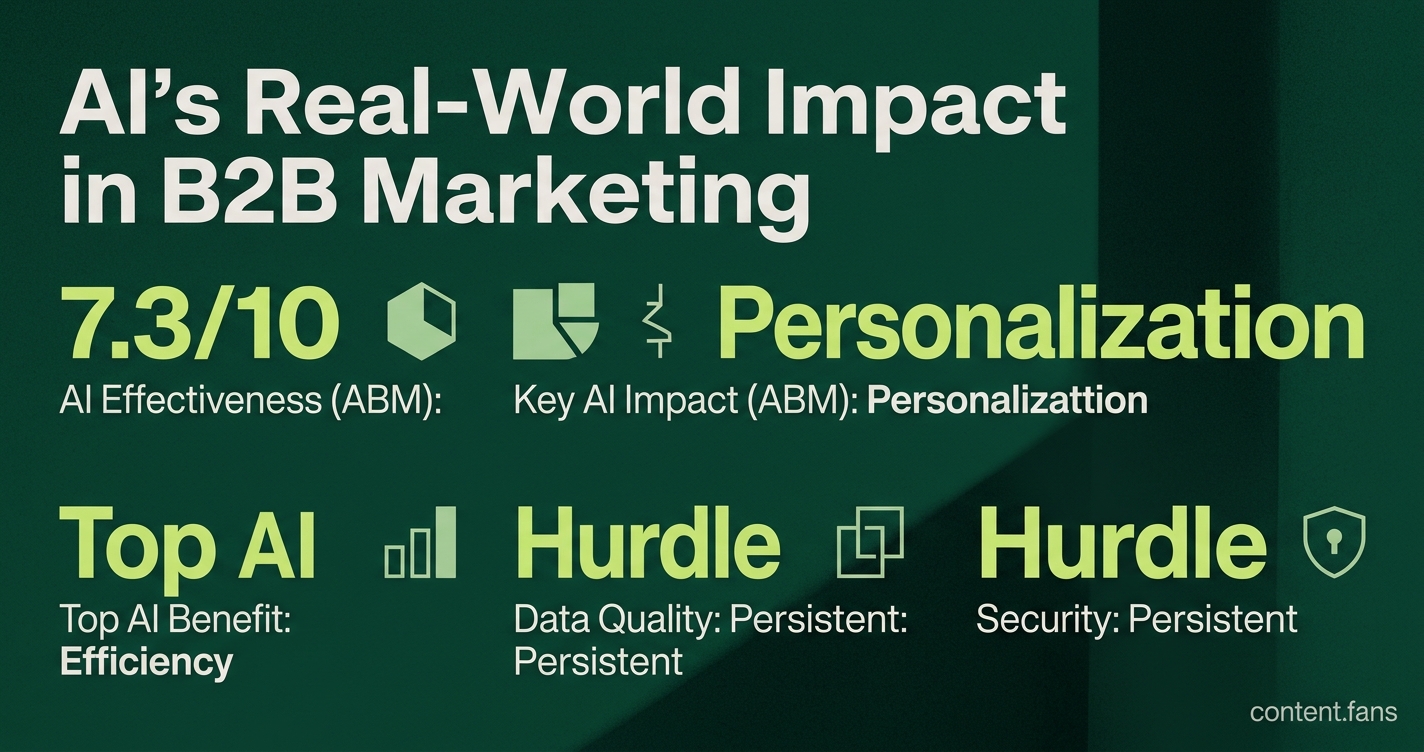
Previous research from Demand Gen Report highlights a significant gap between AI adoption and proven ROI. While a significant portion of B2B marketers use AI, with many citing efficiency as the top benefit, documented performance gains remain elusive. Persistent barriers like incomplete data and security concerns continue to hinder progress. This new benchmark aims to bridge that gap by focusing on measurable outputs, including conversion rate lift, time savings, and revenue influence.
Early signs: personalization at scale leads ABM gains
Early data suggests AI's most powerful application in B2B is content personalization at scale. According to the ABM Benchmark findings, AI's strongest impact is in personalization, account selection, and workflow optimization, with AI receiving an average effectiveness rating of 7.3 out of 10 for improving overall ABM outcomes. AI's ability to rapidly synthesize CRM data, intent signals, and engagement history to generate account-specific messaging is a key advantage for ABM programs.
By gathering concrete before-and-after metrics, the 2026 benchmark will provide a clear indication of whether AI is finally shifting from an efficiency tool to a demonstrable revenue engine for B2B marketing.
What is the purpose of the Demand Gen Report 2026 AI Benchmark Survey?
The 2026 Demand Generation Benchmark Survey is designed to identify where AI delivers measurable business value across B2B marketing workflows, moving beyond simple adoption metrics to examine actual production performance. The research specifically targets four critical operational areas: content drafting and scaling, predictive lead scoring, campaign optimization, and workflow orchestration. By focusing on these specific workflows, the survey aims to capture how marketing teams are transitioning AI from experimental tools into reliable revenue infrastructure.
Which AI application shows the strongest results in account-based marketing programs?
According to the 2026 Account Based Marketing Benchmark findings, content personalization at scale emerges as the most impactful AI use case in ABM. This capability allows teams to move beyond industry-level messaging to create account-specific content tailored to individual buying committees. The data shows AI's strongest impact is in personalization, account selection, and workflow optimization, with AI receiving an average effectiveness rating of 7.3 out of 10 for improving overall ABM outcomes.
What are the primary barriers preventing effective AI implementation?
Despite widespread AI adoption among B2B marketers, significant operational challenges persist. The most frequently cited barriers are incomplete or scattered data and security concerns, which prevent AI systems from accessing the unified datasets required for accurate predictions. Additionally, many organizations report skills gaps as a major obstacle, while a significant portion currently lack the unified customer data foundations necessary to support sophisticated AI deployment. These constraints highlight that successful AI implementation depends heavily on data infrastructure maturity rather than just software acquisition.
How are B2B teams currently measuring AI success?
Current usage patterns reveal that efficiency remains a dominant benefit cited by many marketing professionals as a primary value driver. However, survey data indicates a shift toward outcome-based metrics, with a growing number of teams specifically leveraging AI to enhance messaging and campaign personalization quality. In production environments, successful implementations focus on workflow orchestration - using AI to dynamically adjust timing, channels, and content based on real-time intent signals rather than static sequences. This represents a move from using AI for isolated tasks to integrating it across the entire buyer journey.
Why does the 2026 benchmark emphasize "production" over pilot programs?
The survey explicitly targets how teams are putting AI into production to generate pipeline and revenue impact, reflecting a market maturation beyond the experimental phase. By examining predictive scoring accuracy and campaign optimization results, the benchmark identifies which AI applications have proven capable of handling complex B2B buying cycles. This focus is particularly critical for ABM practitioners, where AI's ability to synthesize account signals and automate personalized outreach at scale directly correlates with measurable pipeline contribution and closed-won revenue.