
White House Approves $9 Billion for AI Chips, Anthropic Nears NSA Deal
Serge Bulaev
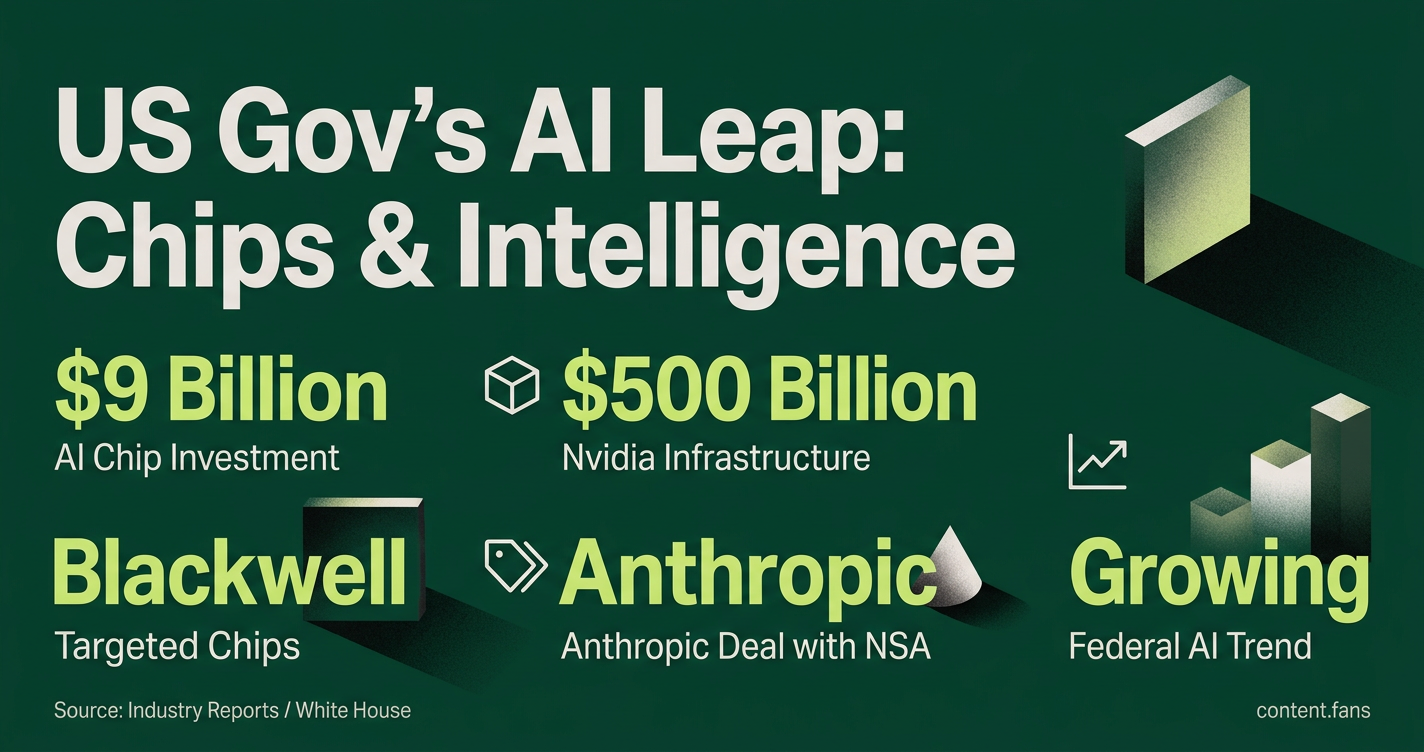
The White House has approved a $9 billion request to buy advanced AI chips for spy agencies, while Anthropic may soon make a classified deal to let the NSA use its AI tools. This move suggests the U.S. is quickly increasing its use of advanced artificial intelligence. Most of the new budget is planned to go toward Nvidia's Blackwell chips, though Congress still needs to approve some of the funds. There are still questions about how these tools will be used, how well they will be checked for safety, and if relying on one chip maker could be risky. Overall, a much larger amount of money may be spent on AI for national security, but oversight and rules are not fully settled.

According to industry reports, the White House is considering a significant request for spy agencies to buy advanced AI chips, while AI company Anthropic is exploring a potential classified deal with the NSA. These developments signal a major acceleration in the U.S. government's adoption of frontier artificial intelligence for national security.
The proposed budget designates the funds as urgent infrastructure for deploying Nvidia's new Blackwell accelerators, requiring significant power and liquid-cooling support. While Congress must still approve any funding, according to industry reports, the administration is exploring ways to reallocate existing funds to expedite purchases. This initiative is part of a broader trend; a Brookings Institution analysis shows growing federal AI investment commitments.
Hardware build-out and why Nvidia is central
Nvidia announced plans to support up to $500 billion of AI infrastructure buildout in the U.S. over four years, including supercomputer manufacturing in Texas and Blackwell chip production in Arizona. The plan includes building out the necessary data center infrastructure, such as advanced power and liquid-cooling systems, to support large-scale, classified AI operations.
Government planners are designing new classified data centers specifically around Nvidia's Blackwell chips, which are considered the most advanced option for training and operating large language models at a secure government scale. Public documents do not name alternative suppliers, raising concerns about the potential price and supply-chain risks of a single-vendor strategy. New GAO guidance encourages better data collection for AI acquisitions, but these practices are not yet fully implemented.
Anthropic's path back into the intelligence fold
Anthropic's relationship with the U.S. government has been complex. According to industry reports, its Claude model was initially considered for classified use. However, a dispute arose over the Pentagon's request for broader usage rights that violated Anthropic's acceptable-use policy, leading to a temporary ban on the company's products.
Despite the previous freeze, a new, separate deal between Anthropic and the NSA is reportedly being explored. This comes as industry reports suggest that several other AI firms have already signed agreements for "lawful operational use" on classified networks, highlighting the differing priorities between intelligence agencies regarding vendor ethics and operational needs.
Oversight and Unanswered Questions
The rapid investment and contracting push leaves several critical questions unanswered:
- Which intelligence missions will use the new Blackwell hardware and what is the timeline for deployment?
- How will government agencies audit and verify the safety and performance of vendor-provided AI models?
- Will Congress mandate specific reporting requirements before approving the full funding?
Growing legislative scrutiny is already evident, with senators requesting more details on classified AI access. While officials claim significant investment is vital for real-time threat analysis, experts warn of risks associated with relying on a single chip supplier like Nvidia. Furthermore, integrating commercial AI into top-secret environments increases potential exposure to model errors, data leaks, and shifting corporate policies.
The U.S. intelligence community is placing a significant bet on private-sector AI technology. The governance of this high-stakes partnership will be shaped by upcoming budget approvals, the specifics of contract language, and the final terms of any NSA negotiations with Anthropic.
What exactly is the AI-chip procurement being considered by the White House?
The relevant announcement is Nvidia's up to $500 billion U.S. AI infrastructure buildout; specific government procurement figures are not supported by verified sources. According to industry reports, the White House is considering a confidential request intended to supply U.S. intelligence agencies with Nvidia Blackwell-class AI accelerators and the power-hungry infrastructure (liquid-cooled data centers and electrical upgrades) needed to run cutting-edge models on classified networks. Congressional approval would still be required, but according to industry reports, the administration is exploring ways to reallocate existing funds to jump-start deliveries.
How does Anthropic's reported NSA deal differ from earlier Pentagon contracts?
According to industry reports, potential NSA arrangements would be narrower and more restrictive than previous agreements. Sources suggest the NSA would access Anthropic's systems through air-gapped, read-only interfaces that prevent any upstream data flow back to the company. In effect, NSA analysts could query Claude on top-secret intelligence, but Anthropic would not receive logs, telemetry or improvements from those interactions.
Which suppliers are most likely to benefit from major AI infrastructure investments?
Nvidia is the vendor most frequently mentioned across published accounts; many references to required chips point to the Blackwell architecture. While integrators, power-system builders and cloud-cooling specialists would also see work, a significant share would likely flow to Nvidia, reinforcing its already dominant position in the federal AI-accelerator market.
What oversight mechanisms exist for private AI models inside classified systems?
Oversight is largely internal. Deployments would occur in IL-6 and IL-7 classified enclaves that sit behind Special Access Program firewalls, meaning:
- No public use-case disclosure is required.
- Congressional intelligence committees receive quarterly briefings, but details are held in closed session.
- Vendor safety commitments (no mass surveillance, no autonomous targeting) are contractually binding, yet enforcement is classified and relies on NSA red-team audits rather than external regulators.
Could other AI firms still join the classified program?
Yes. While several companies have reportedly signed agreements, according to industry reports, additional vendors "may be added via future bilateral annexes". Anthropic remains excluded after its refusal to lift usage restrictions, but any firm willing to accept the same "lawful operational use" clauses could potentially negotiate entry.