
WEF 2026 Report: Workforce Readiness, Not AI, Drives Value
Serge Bulaev
The WEF 2026 report suggests that workforce readiness, not just AI technology, may be what helps organizations get the most value from AI. Workers now look for employers who support ongoing learning and can adapt to change, rather than promising jobs that never change. Reports show that many employees want clear information about how AI will impact their roles and value employers who offer skill development and transparent benefits. There appears to be a growing demand for flexibility, reskilling, and openness, especially among younger workers. Companies that focus on continuous learning and clear job support may be better positioned to attract and keep talent.

A World Economic Forum analysis for 2026 explores human behavior and workforce adoption in AI value creation. This shifts the definition of job security from lifetime tenure to an employer's proven ability to reskill its people, adapt to change, and operate with transparency.
Employee expectations pivot toward flexibility and skills growth
Employees increasingly expect employers to provide clear roadmaps for AI integration. This includes proactive skills training, transparent communication about how roles will evolve, and guardrails to manage the impact on daily tasks. The focus is on partnership in navigating technological change, not just implementing new tools.
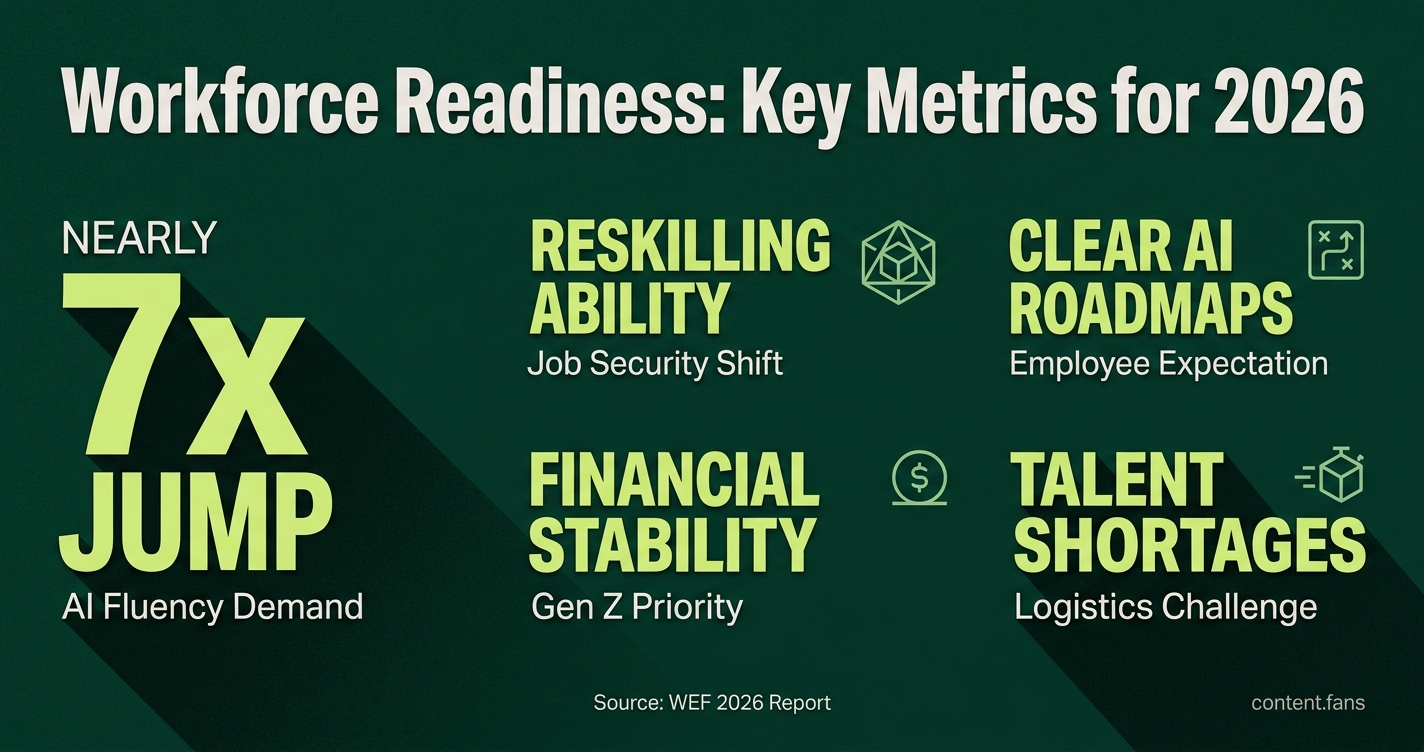
Recent data confirms this shift. McKinsey sources indicate that demand for AI fluency has jumped nearly sevenfold and that organizations should build AI capability broadly, while modeling suggests automation will shift demand toward some occupations and away from others. Industry reports suggest that many HR leaders see AI-driven efficiency, while employees demand clarity on how their roles will change. This desire for transparency is a core trust factor, according to industry commentary, and research suggests clear communication can boost AI adoption, as many users already report productivity gains.
Financial health messaging that resonates with Gen Z
For younger generations like Gen Z, financial stability is paramount. Industry reports indicate that competitive pay and transparent benefits are foundational proof of a secure employer. To attract this demographic, companies are advised to replace vague culture statements in job postings with concrete evidence of their financial health and employee support. Effective postings include:
- A clear salary range and a summary of total rewards
- Details on mental health resources and financial planning support
- A defined path for career mobility and skill development
- Specifics on hybrid or on-site work expectations
Further reports from Mercer and Forbes suggest that using Gen Z ambassadors for benefits communication and offering financial wellness workshops can significantly strengthen the perception of long-term employer stability.
Operational resilience and talent strategy intersect in logistics
In the logistics sector, talent strategy and operational resilience are now inextricably linked. Industry commentary shows that talent shortages create significant resilience gaps, a problem exacerbated by retirements and the demand for new AI skills. The connection is clear: industry research indicates that organizations adept at digital upskilling are far more able to handle disruptions and demonstrate significantly improved adaptability. According to SupplyChainDive, critical functions like supplier diversification depend on specialists skilled in automation, ERP, and risk management.
The demand for specific credentials in WMS and sustainability is growing, as reported by DSJ Global, making faster training cycles a strategic imperative, according to Infor. This reality reinforces that a modern job security narrative - one based on continuous learning - meets both employee expectations and business needs.
The implementation of AI yields mixed results that underscore the need for transparency. Industry data shows productivity lifts while also revealing workload shifts and changes in focused time. This reinforces why employees value clear communication on how technology will alter their work and how the company will balance efficiency with employee wellbeing.
Ultimately, as ISM observes, supply chain performance is now judged on revenue protection and brand trust, not just cost. Employers who can prove they have a credible plan for reskilling their workforce for critical analytics, sustainability, and risk management roles are the ones who can authentically offer security in an era of constant change.