
Visa Partners OpenAI To Enable AI Agent Payments in ChatGPT
Serge Bulaev
Visa and OpenAI are working together to let ChatGPT agents help people shop and pay for things using Visa's payment system, but users will still need to approve each purchase. The project is a pilot, not a full launch, and aims to test if chat-based shopping can be easy and safe. Visa will use its normal fraud checks, but there may still be new risks, and experts warn about possible problems with security and fraud. Other companies like Mastercard, PayPal, and Google are also developing similar ways for AI agents to handle payments. There is no public release date, and more testing is expected before this service is widely available.

The landscape of AI-powered payment systems is evolving rapidly, with major technology and financial companies exploring ways to integrate artificial intelligence into commerce transactions. While specific partnerships and implementations are still in development, the concept of AI agents handling payments represents a significant shift in how consumers might interact with digital commerce platforms.
According to industry reports, payment companies are exploring how to apply fraud detection capabilities to AI-initiated transactions. This cautious approach suggests companies are evaluating whether conversational commerce can offer convenience without increasing financial risks like chargebacks or liability. This model could pave the way for embedding payment systems directly within conversational AI, merging product discovery and payment authorization into a single, seamless interface.
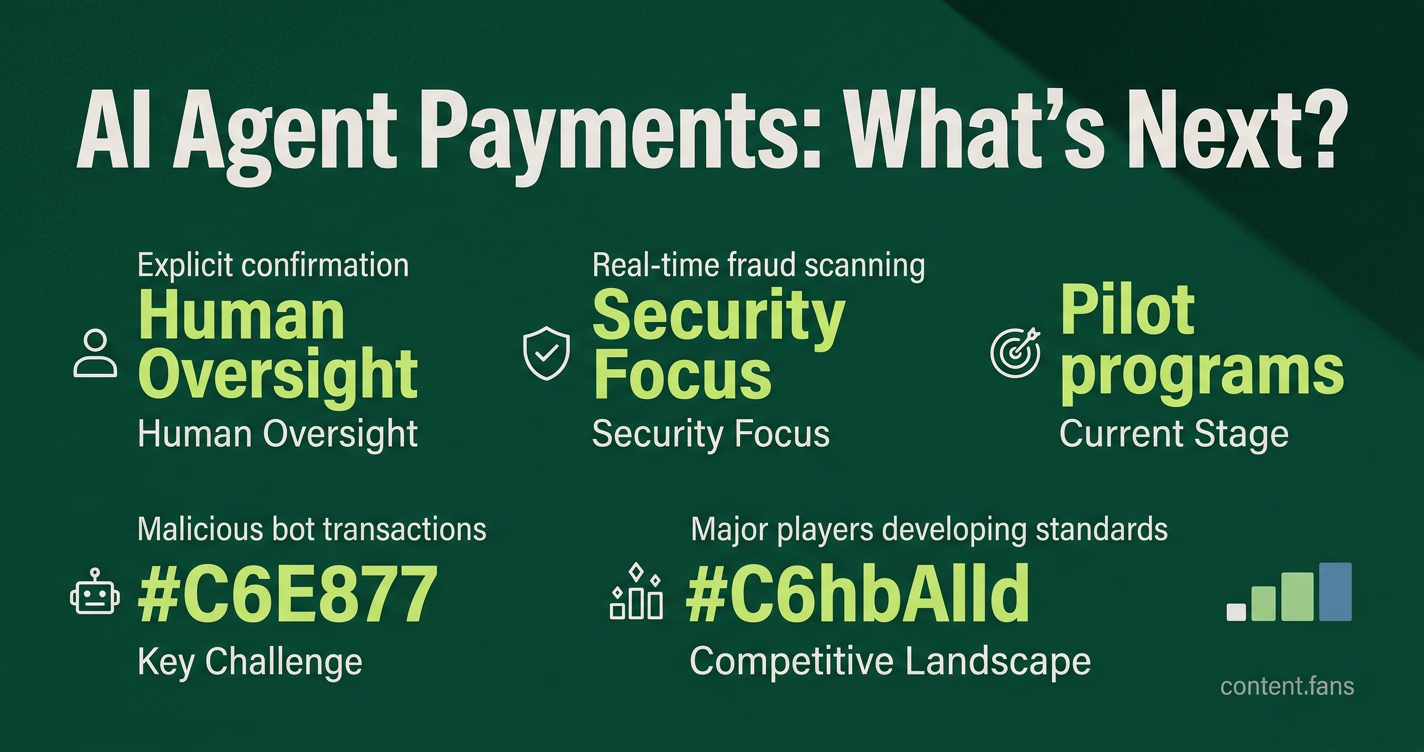
How AI agent payments are expected to work
The integration concept allows AI agents to find items and initiate purchases through established payment networks. While the agent handles the process, users must explicitly confirm each payment. This approach tests the feasibility of secure, chat-based shopping with direct human oversight before finalizing any transaction.
Key features being explored include:
- Spending limits set by the consumer
- Merchant allow lists
- Real-time fraud scanning by payment networks
- Optional human confirmation before settlement
Industry sources indicate that these remain pilot programs rather than full-scale launches, with companies taking measured approaches to development and testing.
Early security considerations
The move toward agentic payments introduces both opportunities and significant security concerns. Financial regulators highlight new compliance challenges regarding authentication and liability if an agent operates beyond a user's instructions. Industry reports suggest a growing number of malicious bot transactions, indicating that fraud systems are already under strain. Furthermore, security analysts warn that automated scams could significantly reduce fraudster operational costs, underscoring the need for enhanced detection tools in AI payment systems.
Competitive landscape
The agentic payment space is becoming increasingly competitive, with major players developing their own standards. Various payment companies are exploring AI integration, while some have begun testing conversational payment features with AI assistants. Google has been championing an open-source Agent Payments Protocol for broader adoption across different assistants.
Industry observers suggest that companies are focused on refining the technical aspects of credentialing and user consent, with broader consumer access anticipated only after completion of additional testing phases.
How might AI payment integration work inside chat platforms?
Chat platforms could potentially house AI agents that can discover products, compare prices and complete checkout flows - all inside the same chat window. Payment networks could embed their payment rails, fraud analytics and tokenized credential storage directly into the experience. Every purchase request would be routed through these rails, so real card numbers are never exposed to merchants. In early implementations, most transactions would pause for human approval, letting users confirm purchases before agents finalize payments.
What safeguards might users set for agent-driven purchases?
Users could have granular control over AI purchasing. Before the first purchase, platforms might surface spending-limit controls, pre-approved merchant lists and toggles for one-time or recurring approvals. Users could potentially cap daily spending, require biometric authentication for purchases above certain amounts, or whitelist only trusted stores. Payment networks' real-time fraud engines could watch for velocity, device and behavioral anomalies, forcing agents to ask for fresh consent when something appears suspicious.
Current state of AI payment development
While various companies are exploring AI payment integration, specific launch dates and consumer availability remain largely unannounced. Industry reports suggest that pilot programs are running with select users, though no fixed global consumer launch dates have been established. Early indications suggest that rollouts may remain limited before wider availability.
Who is exploring agentic payments?
- Mastercard has been testing authentication tools for autonomous transactions
- PayPal has explored conversational checkout capabilities with AI platforms
- Google is developing the Agent Payments Protocol (AP2) as an open standard for AI assistants
- Amazon continues developing internal commerce AI capabilities
- Stripe serves as infrastructure for many AI services, enabling merchants to integrate with agentic flows
What are the emerging fraud and security implications?
Industry data suggests that malicious bot-initiated transactions are increasing, with particular growth in certain regions. As autonomous agents remove "human bottlenecks," security experts warn that the cost of running fraud campaigns could drop significantly, enabling machine-speed, AI-orchestrated abuse. Banks are responding by layering behavioral biometrics and adaptive AI defenses, but disputes may become harder to resolve when the initiating entity is software rather than a person.