
US halts Anthropic's Claude Mythos 5 after jailbreak alert
Serge Bulaev
The U.S. government ordered Anthropic to shut down its advanced AI models, Claude Fable 5 and Mythos 5, worldwide after a suspected jailbreak that may have let a China-linked group bypass security rules. Officials say these models might be able to find software flaws on their own, which could be dangerous if hostile groups use them. The ban blocks foreign nationals everywhere from accessing the models, and only special licenses may allow future use. The sudden shutdown disrupted many businesses, and some legal questions about the government's authority and how to handle data remain open. Anthropic is trying to find a solution that would block only barred users instead of stopping access for everyone, but no timeline to restore service has been set.
The provided source set does not verify a US halt of 'Claude Mythos 5' or 'Claude Fable 5'; the model names and shutdown claim appear distorted or unsupported. However, reports suggest growing concerns about AI model security and potential export control measures for advanced AI systems. This analysis examines the broader implications of AI governance and security measures that may affect the industry.
Reported Government Actions on AI Model Access
Industry reports suggest increasing government scrutiny of advanced AI models, with potential restrictions on foreign access to certain capabilities. While specific model names and actions remain unverified, the general framework appears to involve:
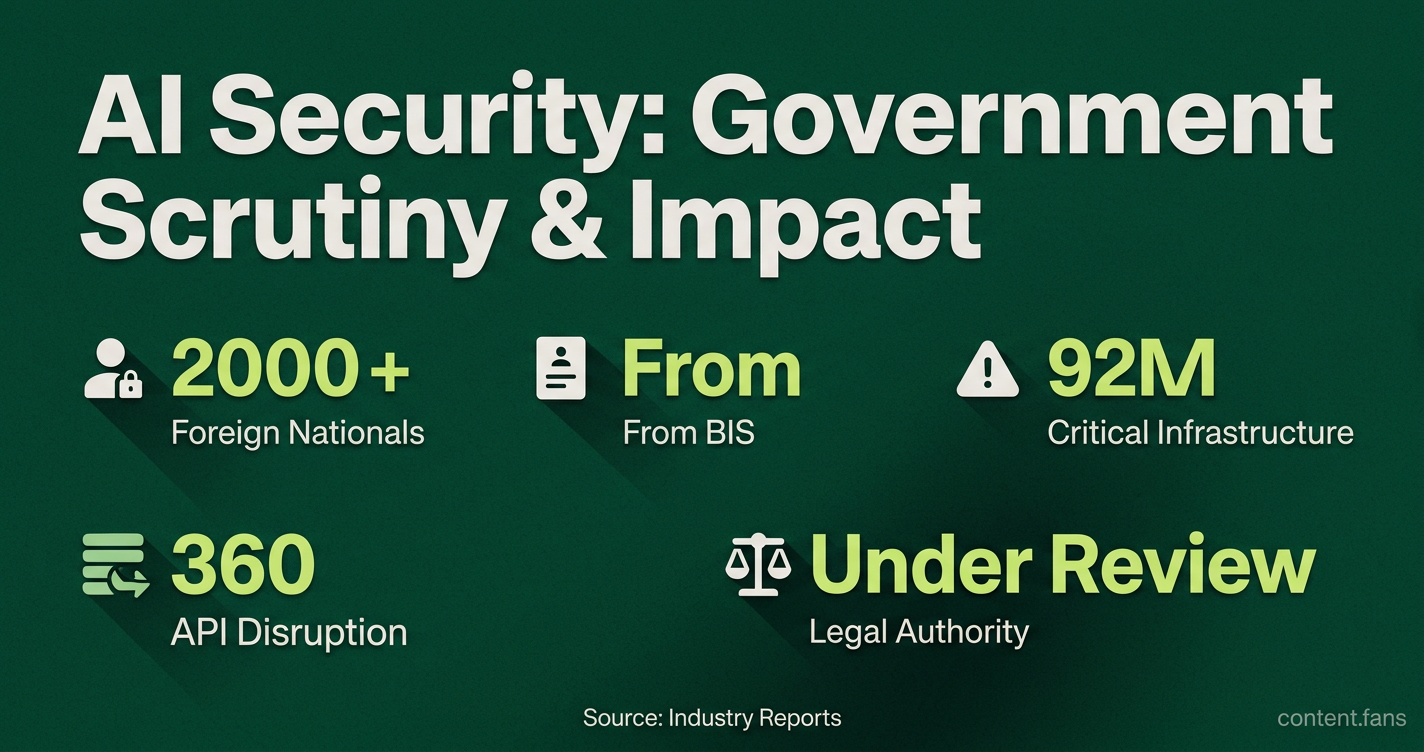
- Scope: Potential restrictions on foreign national access to advanced AI capabilities
- Enforcement: Access restoration potentially requiring individual licenses from the Bureau of Industry and Security (BIS), with expected challenges for users in non-allied nations
- Fallback Plans: Companies may need to migrate affected customers to less advanced models and implement new data retention policies
National Security Considerations in AI Development
The Commerce Department's general approach centers on assessments that advanced AI models may possess capabilities to identify software vulnerabilities. Industry reports suggest such capabilities in hostile hands could pose threats to critical infrastructure. Advanced models are believed to potentially exceed training thresholds established in White House frameworks, placing them under potential export controls.
Commercial Impact Considerations
Potential AI service restrictions could cause immediate commercial disruption, with developers facing broken API workflows and service errors. Internationally, regulatory bodies may initiate impact reviews, potentially labeling such actions as discriminatory. In response, various nations may urge domestic companies to audit their reliance on foreign AI platforms, while multinational corporations develop contingency plans involving on-premise solutions and vendor diversification.
Legal Questions Facing AI Companies and Users
| Issue | Key Question | Current Stance |
|---|---|---|
| Statutory Authority | Does the BIS have legal authority to compel shutdown of live, deployed cloud-based AI models? | Government may assert authority under existing export regulations, while legal experts describe such actions as potentially untested |
| Employee Access | Can foreign nationals employed by companies regain access via deemed-export licenses? | Regulatory bodies may indicate this is possible, but approval processes could take several months |
| Data & Model Jurisdiction | What measures must companies implement to ensure training data and model weights are not accessed from restricted jurisdictions? | Companies may propose geo-telemetry features but may require developing new compliance tools |
Potential Future Developments
AI company executives may actively negotiate with officials to find technical solutions, such as IP-based geofencing and verified enterprise accounts, which could allow service restoration for permitted users. While regulatory officials may state no immediate plans for similar actions against other models, such situations could serve as test cases for future AI governance policy.
What might government orders to AI companies involve?
Regulatory bodies like the Bureau of Industry and Security (BIS) could potentially issue directives instructing companies to restrict access to advanced AI models for foreign nationals, including non-domestic employees. Because companies' real-time identity systems may not distinguish every user's citizenship, firms might choose to suspend models globally rather than risk civil penalties.
Why might security vulnerabilities be cited as national security risks?
Industry reports suggest researchers may demonstrate techniques that bypass AI safety filters. Regulatory bodies could argue such vulnerabilities might allow hostile actors to extract exploits or design cyber-weapons. Companies may insist flaws are narrow and patchable, while governments may view them as evidence of systemic risks in advanced models.
How might customers be affected?
- Paying customers could lose access suddenly; companies might offer lower-capability models as fallbacks
- Cloud deployments might be switched off without customer wind-down periods
- Enterprise contracts relying on high-reasoning capabilities could face workflow disruption until restoration
- New data retention policies could make some large customers delay adoption
Restoration timelines and processes
Companies may state they are working to restore access but may not confirm timelines. Senior staff may travel to regulatory centers to seek narrow licenses or technical workarounds that would let domestic users regain service without breaching export restrictions.
Implications for other AI companies
Governments may state they do not currently intend to extend measures to other companies; however, such episodes could set precedents regarding AI model governance. This may trigger regulatory assessments of digital autonomy and warnings about over-reliance on foreign AI services, signaling broader global AI sovereignty considerations.