
US Businesses Urge Congress: Increase Visas, Fix Shortages
Serge Bulaev
US business leaders are asking Congress to raise the number of work visas and make it easier for temporary workers to stay, saying this might help with worker shortages and keep the economy strong. The National Immigration Forum suggests that current visa limits and backlogs leave companies struggling to find enough workers, especially as fewer people are joining the workforce. Some experts estimate that lower immigration could slow economic growth and reduce consumer spending. Surveys suggest most business leaders view skilled immigrants as helpful, and many think delays in the current system already cause problems. The Forum also says helping workers' families join them may help keep employees and reduce sudden project delays.

Leading U.S. businesses are urging Congress to increase work visas, identifying immigration reform as a crucial tool for fixing widespread labor shortages and safeguarding economic competitiveness. As the domestic labor pool shrinks, the National Immigration Forum reports that current visa caps and extensive backlogs are leaving employers unable to fill critical roles.
The Economic Case for Expanding Legal Immigration
Businesses advocate for more employment visas to combat severe labor shortages that threaten economic stability and growth. The National Immigration Forum stresses that outdated visa caps prevent companies from retaining essential talent, while analysis from Brookings confirms restrictive immigration could significantly slow GDP growth and consumer spending.
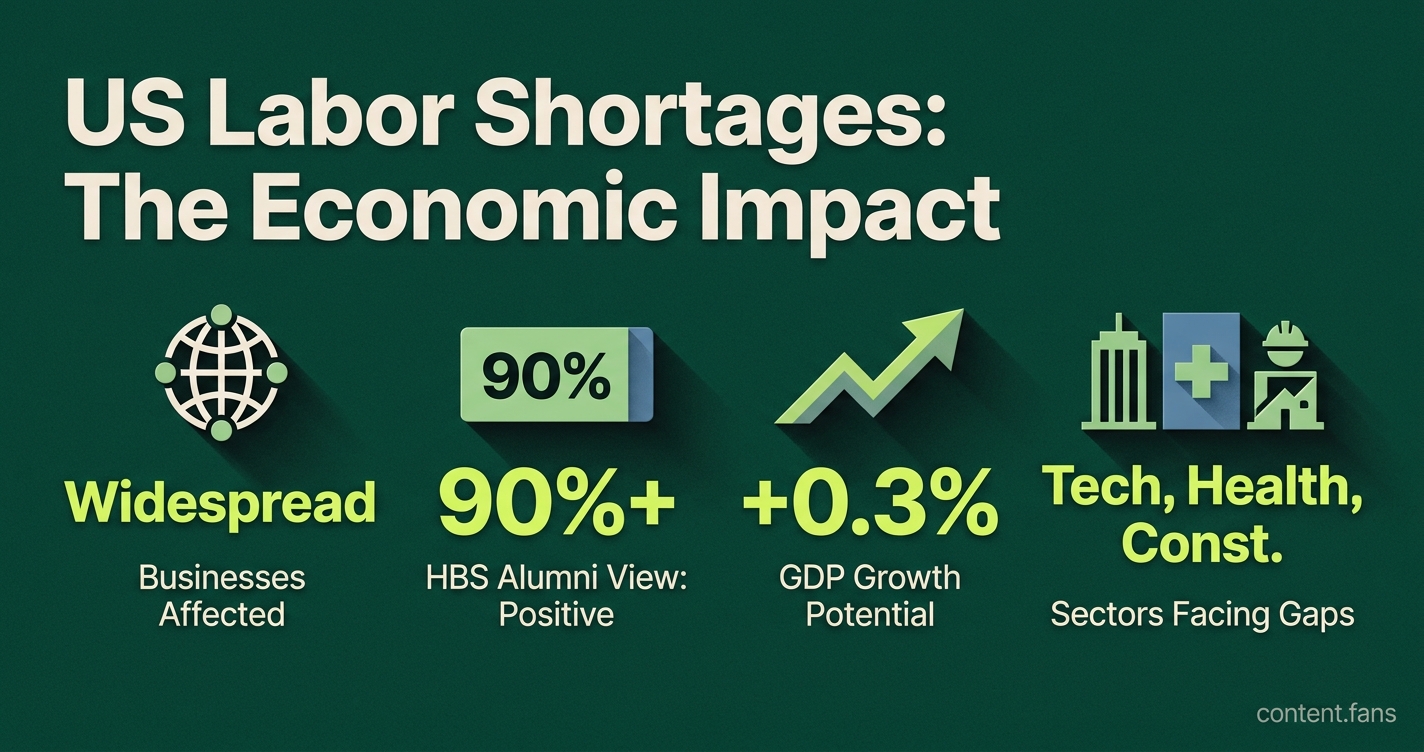
The call for reform is rooted in clear economic data. With labor constraints intensifying, a recent Harvard Business School survey found that over 90% of alumni view skilled immigrants as a positive economic force, with a majority reporting that current system delays are already hurting projects. Economic projections underscore these concerns. According to Brookings analysis, real GDP growth is projected to rise from 1.9% in 2025 to 2.2% in 2026, a 0.3 percentage-point increase between those years (Brookings analysis). This growth potential could translate to stronger job creation and significant gains in consumer spending.
Key Sectors Facing Critical Labor Gaps
Chronic labor shortages are not evenly distributed, with several industries facing acute challenges. Higher denial rates for legal visa applicants have exacerbated gaps in these fields:
- Technology: Delays in H-1B processing and approvals are stalling innovation and projects.
- Healthcare: An ongoing need for physicians and other medical professionals is strained by visa limitations, such as the potential expiration of the Conrad 30 program.
- Construction and Agriculture: These sectors rely on a steady flow of labor, and frozen caps on seasonal worker visas threaten to push operations and investment overseas.
What Legislative Solutions Are Employers Proposing?
To address these shortages, business coalitions and policy groups advocate for specific, targeted legislative fixes. According to the National Immigration Forum's BBB Business Principles, employers need a flexible visa system that responds to economic demand. Key proposals include:
- Raising Visa Caps: Adjusting or lifting static caps on employment-based green cards to align supply with real-world labor demand.
- Pathways to Permanence: Creating a clear process for essential temporary workers to gain permanent status, which would reduce costly employee turnover.
- Modernizing Rules: Updating PERM recruitment regulations and providing grace periods for visa holders who change jobs.
- Creating New Visa Categories: Authorizing new year-round visas for industries with documented chronic shortages, as proposed in the Essential Workers for Economic Advancement Act.
The High Cost of Inaction and Instability
Delays in immigration reform carry significant costs. Beyond the macroeconomic impact on GDP and consumer spending, instability in the visa system directly harms business operations. A significant number of executives report that the current immigration climate harms their ability to attract top foreign talent.
The National Immigration Forum also highlights that workforce stability is closely linked to family stability. Long waits for spouses and children to secure legal status can lead to sudden employee departures, disrupting projects and team cohesion. This is especially true for small, family-owned businesses that often rely on multi-generational participation.
Resources for Business Leaders
For business leaders seeking to engage on this issue or understand its impact on hiring, several resources provide data-driven guidance:
- National Immigration Forum: The Forum's BBB Business Principles offer talking points for engaging with lawmakers.
- Regulatory Agendas: Tracking regulatory developments from USCIS and the Department of Labor provides insight into rule changes affecting PERM, H-1B caps, and processing timelines.