
Unilever Expands Influencer Program to 300,000 Creators, Boosts Ad Spend
Serge Bulaev
Unilever may grow its influencer program to 300,000 creators by the end of 2025, moving about half of its ad budget into social content. The company says it uses AI tools to help with finding and managing creators, but people still make creative decisions and keep relationships strong. Early signs suggest this shift might have helped brands like Dove grow, and Unilever plans to try new ideas like sharing sales with creators in some countries. The company appears to believe that keeping some decisions in human hands protects authenticity as it works with more creators. Future plans include stronger tracking, content credentials, and more ways to work with creators across all its main brands.
Unilever is expanding its influencer program to 300,000 creators, a landmark initiative that redirects half its digital advertising budget to social content by 2025. This creator-first strategy reshapes the company's media mix, treating influencers as pivotal co-authors of brand narratives rather than simple distribution channels.
Scaling to 300,000 Creators: A Three-Pillar Strategy
Unilever's mass expansion to 300,000 creators is built on a strategy of reallocating half its digital ad budget from traditional TV to always-on social programming. The growth is managed with a combination of AI for operational workflow and human teams who retain control over creative direction and relationships.
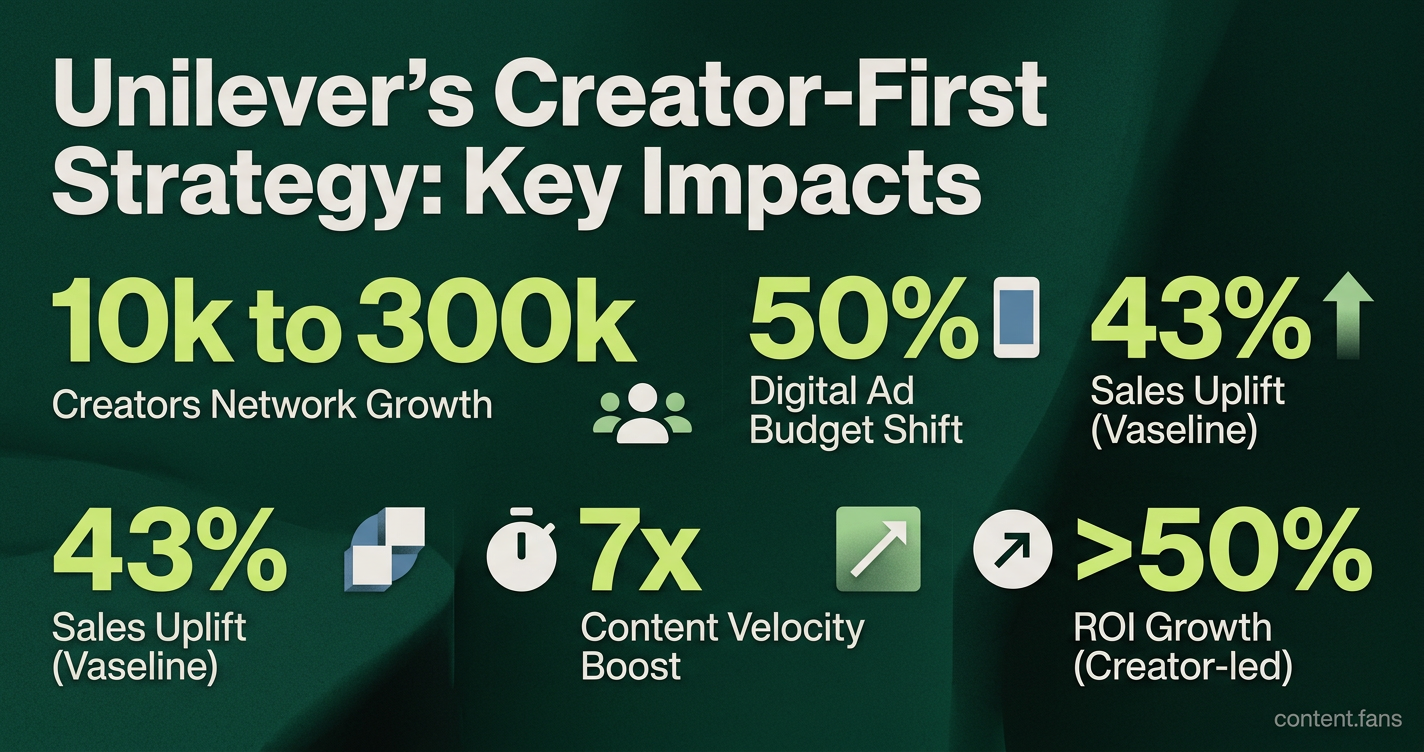
The company's creator network expanded from about 10,000 in 2023 to nearly 300,000 by December 2025, according to a briefing cited by LinkedIn analyst Emma Yu. CEO Fernando Fernández confirmed this "influencer-first" strategy involves dedicating 50% of the digital ad budget to social and creator content, with approximately $4.5 billion shifted from traditional channels, as reported by eMarketer.
The expansion is guided by three core pillars:
* Budget Reallocation: Moving funds from traditional television to always-on social programming.
* AI Infrastructure: Leveraging artificial intelligence for creator discovery, vetting, and project management.
* Human Stewardship: Retaining human oversight for creative direction and relationship management.
The Role of AI vs. Human Oversight
Unilever's proprietary "Sketch Pro" platform uses AI tools like Adobe Firefly and Google Veo to convert concepts into testable assets in approximately two hours, boosting content velocity by seven times. The AI also handles operational tasks such as vetting creators for brand safety, flagging fake followers, and drafting project briefs.
However, final creative authority remains with human teams. Managers oversee the tone and cultural relevance of content, maintain direct relationships with top creators, and mediate creative decisions to ensure authenticity is preserved as the program scales.
Initial Results and Commercial Impact
Early results indicate the strategy is working. The 'Vaseline Verified' creator-led model delivered a 43% sales uplift, and creator-led content drove more than 50% year-on-year ROI growth across core brands. To manage the rapid four-day lifecycle of social videos, the company uses automated tools for near real-time campaign adjustments.
Future Initiatives: Revenue Sharing and Co-Creation
Unilever is also testing new partnership models, including revenue sharing. A key pilot program, "Vaseline Originals," will pair product developers with established "hack" creators to co-develop new products. These creators are expected to earn a significant portion of sales from the items they help create. Initial trials are focused on India and Brazil, with a goal of engaging at least one influencer per postal code.
Competitive Landscape and Unilever's Edge
While competitors like TikTok and Meta offer similar AI-driven creator platforms, Unilever emphasizes its hybrid model as a key differentiator. According to industry reports, AI-assisted programs can yield strong returns on investment. However, Unilever executives believe that retaining human control over creative decisions is crucial for protecting brand authenticity and avoiding potential consumer backlash against unlabeled generative content.
The Roadmap Ahead
Unilever's roadmap includes further operational upgrades focused on building persistent creator relationships, implementing C2PA content credentials for transparency, and expanding affiliate tracking capabilities. The company is actively working to integrate these features across its Power Brands in the coming years.
Frequently Asked Questions
How large is Unilever's creator network, and how quickly did it grow?
Unilever expanded its creator program significantly - from approximately 10,000 creators to 300,000 creators globally. This massive scaling was achieved between 2024 and December 2025, representing one of the most aggressive creator network expansions in the consumer goods industry. The company's CEO Fernando Fernández announced this "influencer-first" strategy in March 2025, with the goal of achieving "one influencer per zip code/municipality" in key markets like India and Brazil.
What role does AI play in managing 300,000 creators?
AI serves as the operational backbone for discovery, vetting, and workflow automation - but not for creative decisions. Unilever deploys AI to streamline onboarding, approvals, and talent management at scale. The company's Sketch Pro platform (built with Adobe Firefly and Google Veo 3) transforms concepts into testable material in just 2 hours, supporting 7x content velocity. However, Unilever explicitly retains human control over creative judgment and relationship management to preserve brand authenticity.
How much is Unilever investing in this creator-first strategy?
Unilever has committed 50% of its digital advertising budget to social media and creator content - up from 30% previously. This represents approximately $4.5 billion shifted from traditional TV and display advertising, bringing Unilever's total social investment to roughly $5 billion. This represents the largest reallocation of marketing dollars from broadcast to social by any consumer goods company to date.
Why does Unilever keep humans involved if AI can handle operations?
The strategy addresses what industry experts call the "authenticity paradox": while AI optimization can boost engagement and purchase intent significantly, consumers increasingly distrust purely synthetic content. According to industry reports, preference for AI-generated content has declined substantially in recent years. Unilever's human oversight ensures brand-specific creative judgment and maintains the personal relationships that drive authentic creator partnerships - what the company calls "said by others" peer validation versus corporate broadcasting.
What results has Unilever seen from this approach?
Early indicators show strong performance: The 'Vaseline Verified' creator-led model delivered a 43% sales uplift, and creator-led content drove more than 50% year-on-year ROI growth across core brands. The company's "Desire at Scale" initiative is now a significant driver of volume growth for Unilever's Power Brands. Looking ahead, Unilever is planning substantial creator deployments for major events and will launch "Vaseline Originals" where creators earn a significant portion of sales from co-developed products.