
AI shifts GRC frameworks toward continuous, real-time risk intelligence
Serge Bulaev
AI may be shifting GRC frameworks from periodic reviews to continuous, real-time risk monitoring. Research suggests that organizations should treat risk intelligence as a live feed, and traditional manual controls may not keep up with AI-driven risks. Experts believe real-time oversight creates new challenges, such as the need for independent teams to check AI decisions. Studies indicate rising demand for unified GRC platforms, and best practice now starts with a clear inventory of AI models and data. Continuous monitoring and automated workflows may help detect and fix issues quickly, while human checks remain important for critical decisions.

The adoption of artificial intelligence shifts GRC frameworks from periodic audits to continuous, real-time risk intelligence. As AI accelerates the velocity of operational risk, legacy quarterly reviews are no longer sufficient. Boards now demand immediate insight when controls fail, requiring a new GRC operating model built on live data feeds, not static reports.
Real-Time Shift in GRC Frameworks
AI is forcing Governance, Risk, and Compliance frameworks to evolve from periodic, audit-based cycles into predictive, continuous systems. This transition moves GRC from a reactive function focused on manual evidence collection to a proactive one that leverages real-time data for instant violation flagging and threat detection.
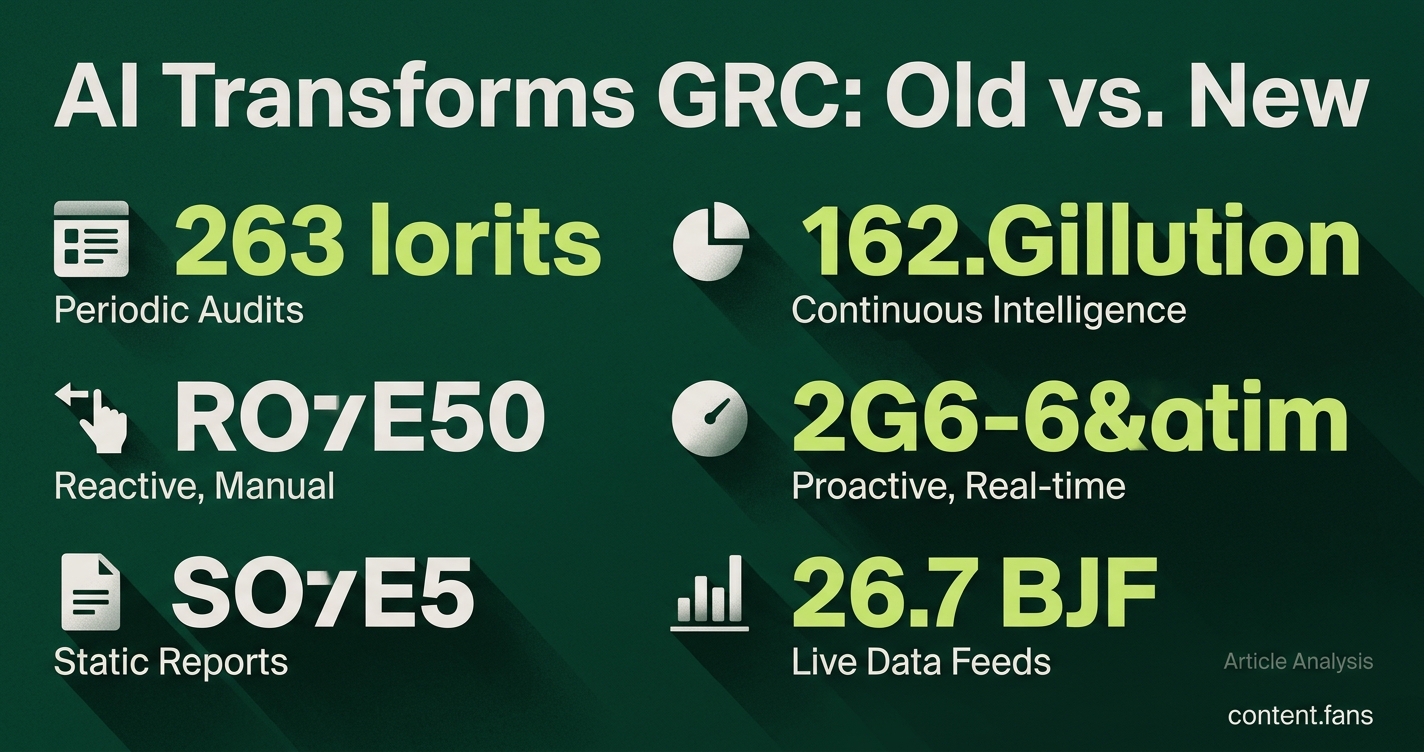
Industry experts suggest that boards are increasingly recognizing the need to institutionalize AI governance as a core competency to manage dynamic threats, as noted by Governance-Intelligence. Traditional manual evidence collection cannot keep pace with AI-driven operations. Modern GRC leverages Continuous Controls Monitoring (CCM) to flag policy violations instantly and uses machine learning to identify vendor risks before a contract is even signed.
However, this live oversight introduces new challenges. An incorrectly configured automated threshold can trigger flawed remediation, raising the classic "who audits the auditor" problem and highlighting the need for independent teams to validate AI decision logic.
Demand for Unified GRC Platforms
Reflecting this shift, analyses from Forrester and Gartner show a rising demand for unified GRC platforms that consolidate cyber, operational, and third-party risk data into a single workspace. According to recent evaluations summarized by MetricStream, key market leaders include:
- MetricStream: Positioned as an AI-first platform for highly regulated industries.
- Diligent: Excels in board-level integration and offers robust FedRAMP coverage.
- ServiceNow GRC: A strong contender for organizations already invested in the broader ServiceNow ecosystem.
Implementation timelines and costs vary significantly based on scale, with enterprise suites typically requiring longer deployment periods and higher investment levels compared to mid-market solutions.
Vendors are differentiating their offerings with advanced AI agents, risk quantification models, and enhanced security for the public sector. For example, Diligent has received recognition for its AI capabilities in recent analyst evaluations.
Rethinking Detection and Remediation Processes
Adopting an AI-driven GRC model requires rethinking detection and remediation. Best practice begins with creating a complete inventory of all AI models and data assets, providing a clear foundation for governance. Aligning with frameworks like the NIST AI Risk Management Framework establishes a common language for managing bias, explainability, and model drift.
Continuous monitoring systems are essential for tracking model performance and bias in real time. When key risk indicators (KRIs) are breached, automated workflows can instantly freeze deployments or trigger secondary authentication, bypassing manual ticketing delays. However, human-in-the-loop reviews remain mandatory for high-stakes decisions, such as those involving credit or payroll.
Security controls are now embedded directly into the Software Development Life Cycle (SDLC), with code scanning at commit, automated gates in CI/CD pipelines, and runtime monitoring. This "shift-left" approach is complemented by robust vendor oversight, where contracts mandate AI transparency, bias audits, and clear data lineage to prevent unvetted "shadow AI" from entering the production environment.
The result is a transformative governance environment where risk metrics update by the minute, remediation occurs in near real time, and compliance professionals are elevated from administrative tasks to strategic oversight roles.
How is AI forcing GRC programs to change?
AI compresses risk lifecycles from weeks to minutes. Organizations are increasingly adopting continuous controls monitoring to replace traditional quarterly audits and predictive models to flag violations before they happen. Boards now expect real-time risk dashboards rather than static PDF reports, making the old "audit-era model" obsolete.
What does a "unified GRC platform" actually unify?
It binds enterprise risk, cyber risk, audit, compliance and third-party data into one data layer. Leaders like MetricStream and Diligent correlate these signals with AI agents so that a policy change, a vendor breach or a model drift alert surface in the same pane. The result: one source of truth instead of five siloed tools.
Which vendors lead the unified GRC market right now?
According to recent analyst reports, vendors like Diligent and MetricStream are recognized for their AI capabilities and board integration features. Both platforms deliver FedRAMP/DoD IL5 options for defense-grade workloads.
How can AI improve risk detection without creating new blind spots?
Start with comprehensive asset discovery: inventory every model, dataset and API. Layer on real-time drift detection plus human-in-the-loop reviews for high-stakes decisions. Finally, embed controls inside the SDLC - scan at IDE, gate merges in CI/CD and monitor runtime behavior - so automated remediation is always traceable.
What ROI can organizations expect from AI-enabled GRC?
Industry reports suggest that organizations implementing AI-enabled GRC solutions can achieve significant returns on investment through reducing manual audit hours, cutting false-positive alerts and avoiding regulatory penalties through earlier issue detection.