
UK Regulator Opens Antitrust Probe Into Microsoft's Business Software
Serge Bulaev
The UK's Competition and Markets Authority (CMA) has opened an investigation into whether Microsoft's bundling of products like Windows, Word, Excel, Teams, and Copilot may hurt competition. The CMA said that Microsoft's cloud licensing and product integrations might limit customer choice and make it hard for other tools to work with Microsoft's software. The investigation will look at both technical and contract issues, including how embedding Copilot may give Microsoft an early advantage in AI tools. The case may lead to new rules for Microsoft, but the outcomes could focus on changing behaviors rather than breaking up the company. The fact-finding will continue into late 2026, with decisions expected by early 2027.

The UK's Competition and Markets Authority (CMA) has opened an antitrust probe into Microsoft's business software, signaling a major investigation into the tech giant's market dominance. The inquiry will scrutinize whether Microsoft's bundling of products like Teams and Copilot within its ecosystem stifles competition. This move stems from the CMA's earlier cloud market review and its findings on anti-competitive practices CMA package of actions.
The regulator is concerned that Microsoft's default product integrations and restrictive licensing terms for Azure may unfairly limit customer choice. According to industry reports, the probe will collect evidence from competitors and customers to see if Microsoft's ecosystem creates technical or financial barriers for rivals.
Why cloud licensing sits at the centre
The investigation focuses on whether Microsoft's bundling of software and restrictive cloud licensing terms create an unfair competitive advantage. The CMA is assessing if these practices prevent customers from choosing alternative products and make it difficult or costly for rival services to compete effectively within the Microsoft ecosystem.
Building on its cloud market findings, the CMA is targeting restrictive licensing and high data-egress fees that increase costs for customers wanting to switch providers. If market dominance is confirmed, the regulator could use its new Strategic Market Status (SMS) powers to impose specific conduct rules, such as mandating interoperability or restricting product bundling. In response, Microsoft has stated it will "implement all these changes promptly," focusing on improving interoperability and easing the switching process.
Copilot and the AI dimension
The probe specifically includes Microsoft Copilot, reflecting concerns about the burgeoning market for AI productivity tools. The investigation will assess if embedding Copilot directly into Microsoft's software suite provides an insurmountable advantage over standalone AI assistants. The investigation will examine both contractual and technical barriers, such as whether rivals are offered equal API access to ensure their tools can integrate as smoothly as Microsoft's own.
Possible outcomes and timeline
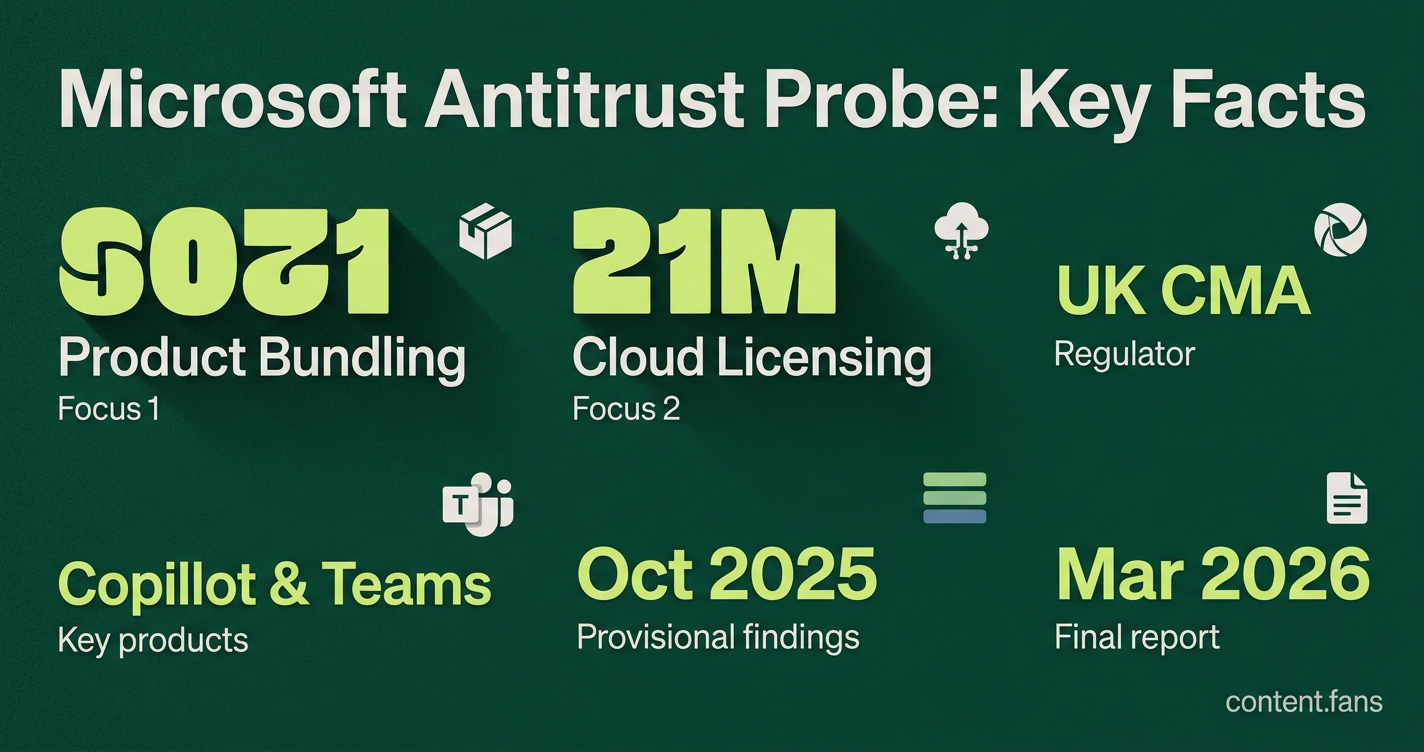
The CMA's provisional findings were published on 15 October 2025, and the final report was published on 24 March 2026. If anti-competitive practices are found, potential remedies will likely be behavioural rather than structural. These could include:
- Mandatory choice screens allowing users to select alternatives to bundled apps like Teams.
- Requirements for fair cloud licensing terms and interoperability to reduce vendor lock-in.
Precedents from European antitrust actions suggest a focus on mandating interoperability and preventing self-preferencing. A final ruling could impose binding conduct requirements on Microsoft's UK operations, significantly impacting businesses that rely on its software suite and are exploring multi-cloud or alternative collaboration tools.
What exactly is the CMA investigating about Microsoft's business software?
The UK Competition and Markets Authority (CMA) published provisional findings on 15 October 2025 and a final report on 24 March 2026. The probe will examine whether Microsoft abuses dominance by bundling Windows, Word, Excel, Teams, Copilot and related services in ways that reduce customer choice and rival access. It also covers cloud licensing practices that the CMA previously found can "reduce competition in cloud" and any interoperability barriers that make it harder for third-party tools to integrate.
How could Microsoft's bundling and integration hurt competitors?
Investigators are looking at three main effects:
- Bundling may make Microsoft products work "more seamlessly together" than best-in-class alternatives, nudging buyers to stay inside the ecosystem.
- Cloud licensing rules can raise costs for rivals such as AWS, Google Cloud or smaller UK providers who try to host Microsoft workloads.
- Copilot integration may extend Microsoft's dominance into AI, locking customers into a single AI companion across productivity apps.
A significant number of commercial users across the UK rely on the Microsoft ecosystem.
What remedies could the CMA impose if it finds anti-competitive behaviour?
Past UK and EU cases point to behavioural rather than structural fixes:
- Choice screens at installation so users can opt out of certain bundled apps.
- Interoperability mandates that open APIs and data formats for rival tools.
- Non-discrimination commitments ensuring Microsoft treats third-party services the same as its own.
- Cloud licensing reforms that lower fees for moving Microsoft workloads to competitive clouds.
Based on the available timeline, provisional findings were published in October 2025 with a final report in March 2026.
What has Microsoft said so far?
Microsoft's official response, published minutes after the CMA announcement, promises "constructive cooperation". Brad Smith confirmed the company will implement changes promptly in areas covering data egress, switching and interoperability within the UK market. Whether these voluntary commitments will be enough to avert tougher legal remedies remains to be seen.
How might this probe affect everyday UK businesses?
Short-term effects are mostly expectation-driven:
- Procurement teams may pause multi-year renewals, waiting to see if rival suites become easier to adopt.
- IT vendors could accelerate interoperability road-maps to capitalise on any CMA-ordered openness.
- Cloud buyers may negotiate harder with Microsoft over egress fees, citing the regulator's concerns.
A final SMS designation would give the CMA powers to write tailored conduct rules, potentially lowering switching costs and widening vendor choice for many UK organisations.