
UK Government Consults on Mandatory Pay Transparency in Job Adverts
Serge Bulaev
The UK government is asking for public views on whether all employers should show salary ranges in job adverts. This consultation will finish on 27 October 2026, and no new laws are in place yet. Many people support clearer pay information because it may help reduce unfair pay differences and make hiring more open. Some business groups worry that early or wide pay bands could create problems, and there are still questions about how details like bonuses should be shown. The government will decide next steps after reviewing feedback, but it is not certain when or exactly how any new rules will start.

The UK government is consulting on mandatory pay transparency in job adverts, a significant move in recruitment practices since 2017's gender pay gap reporting. The consultation is open for 15 weeks following its launch in mid-2026, exploring whether all employers must disclose salary and conditions in job listings. While legislation is not yet in force, these proposed changes could fundamentally reshape how UK companies attract talent and approach compensation.
Why the government is looking again at pay disclosure
The renewed focus on pay disclosure stems from a 2025 call for evidence on equality law. Officials found widespread public support for making salary ranges visible and restricting the use of salary history questions to promote fairness and reduce pay gaps linked to gender or ethnicity.
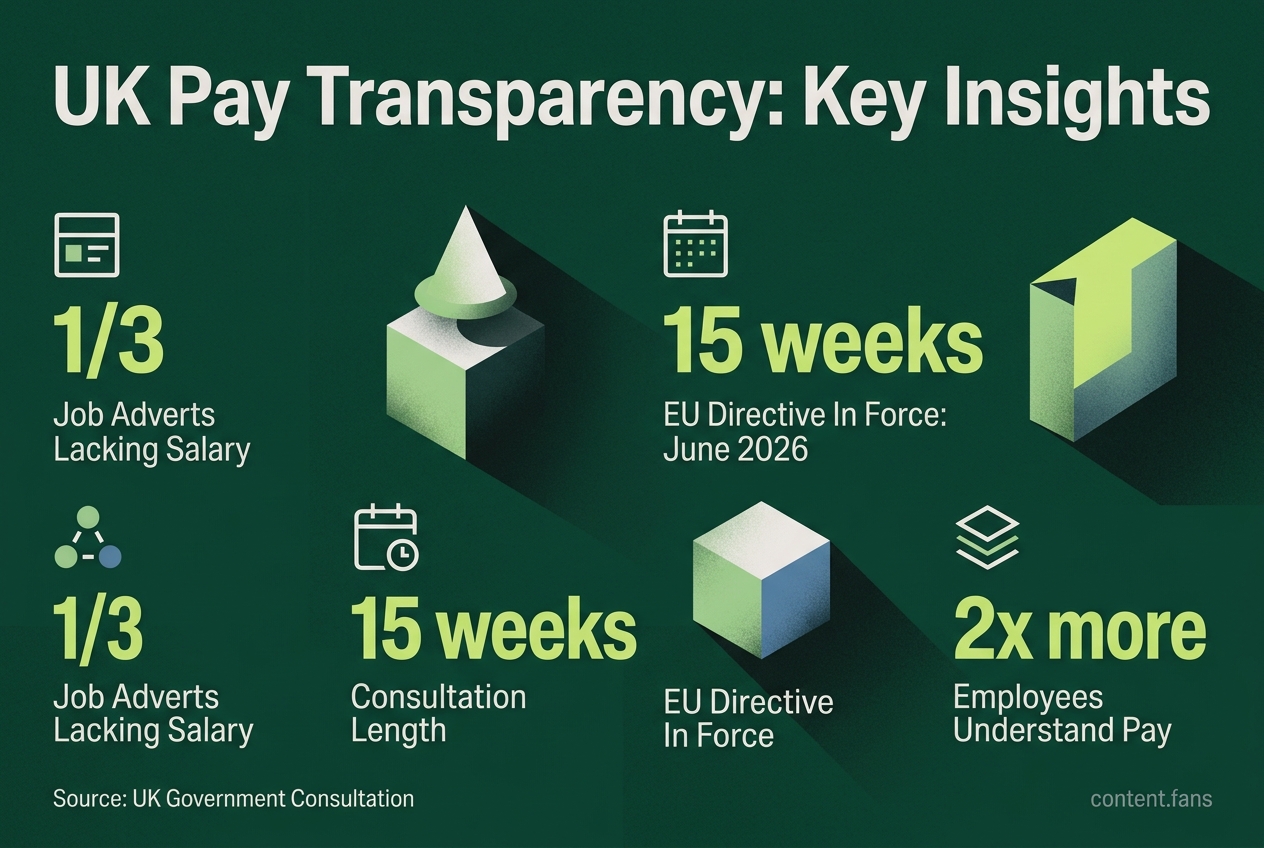
This initiative follows that evidence, which revealed strong support for measures that increase pay visibility. Proponents believe transparency helps reduce pay disparities tied to gender, ethnicity, or disability. The government aims to address the finding that roughly one-third of UK job adverts currently lack salary details Salary information to be shown on job ads under new laws. The commercial pressure for change is already evident, with industry reports indicating that many candidates will not apply for roles that conceal pay information.
Immediate reality for employers
Currently, no UK employer faces legal penalties for not disclosing salary in job adverts. The proposed legislation would apply to England, Wales, and Scotland, while Northern Ireland maintains its own governance. Key details, such as the requirement to itemise bonuses, are still under review. The government anticipates a long implementation process following parliamentary debate. Meanwhile, many UK-based multinationals may voluntarily adopt transparency ahead of any mandate, influenced by the stricter EU Pay Transparency Directive, which comes into force by June 2026.
Potential branding effects cited in the evidence
Evidence submitted during the consultation demonstrates a strong link between pay transparency and employer reputation. Organisations that publish clear, realistic salary bands report attracting larger, more diverse applicant pools and experiencing shorter hiring cycles as candidates can self-filter. Transparency also builds internal trust; CIPD polling indicates that employees who perceive their pay as fair are twice as likely to understand their company's compensation structure. Conversely, a lack of openness can damage a brand, with industry reports showing that a significant portion of young women now vet a company's gender pay gap report before applying.
Cautions raised by business groups
Business groups have raised several potential challenges. A key concern is the risk of wage compression, where companies might benchmark against each other and align on lower pay scales for entry-level positions. Start-ups and other businesses that rely on equity or variable compensation also express concerns about reduced flexibility. Furthermore, consultancies warn that posting overly wide pay bands can be perceived as disingenuous and damage credibility. To prepare, HR advisors recommend that companies begin drafting and stress-testing provisional pay bands against their budgets now.
What comes next on the policy timetable
Following the consultation's closure, the government will analyse the feedback, publish a summary, and present draft legislation. A lengthy lead time is expected before any new rules are enforced, providing employers with an opportunity to refine their pay structures and communication strategies. In the interim, the trend of voluntary pay transparency is set to continue, driven by market pressures and existing requirements. While the exact scope and pace are not yet defined, this consultation marks a clear shift towards greater pay disclosure in the UK.