
Status Expands to Podcast, YouTube, Events for Growth
Serge Bulaev
Status began as a newsletter and has expanded to include a podcast, YouTube channel, and live events, which may help it reach audiences in more places. Each week, the team creates one main story that gets adapted for email, podcast, and video, and audience feedback from emails appears to shape later content. The company is planning an in-person Summit and may track which channels drive ticket sales, which could inform its future revenue strategies. Early results suggest Status has doubled its subscribers in 2024 and having multiple formats might help it stay stable even if one revenue source drops. Experts believe this mix may help support the team without relying on a single platform.

Status is driving growth by expanding from its original newsletter into a multi-platform media brand with a podcast, YouTube channel, and live events. This strategy shows how a single email product like the Status newsletter can evolve into a full newsroom that reaches audiences across multiple formats. In just two years, the publisher has built a significant YouTube following, launched its Power Lines podcast, and is now planning an in-person Summit. This analysis explores how Status coordinates its content, data, and revenue across platforms.
A shared editorial spine keeps formats aligned
Status unifies its content strategy by producing one core story weekly, which is then adapted for its newsletter, podcast, and YouTube channel. This ensures brand consistency while repurposing a single reporting effort to serve distinct audiences on each platform, maximizing editorial resources and reach.
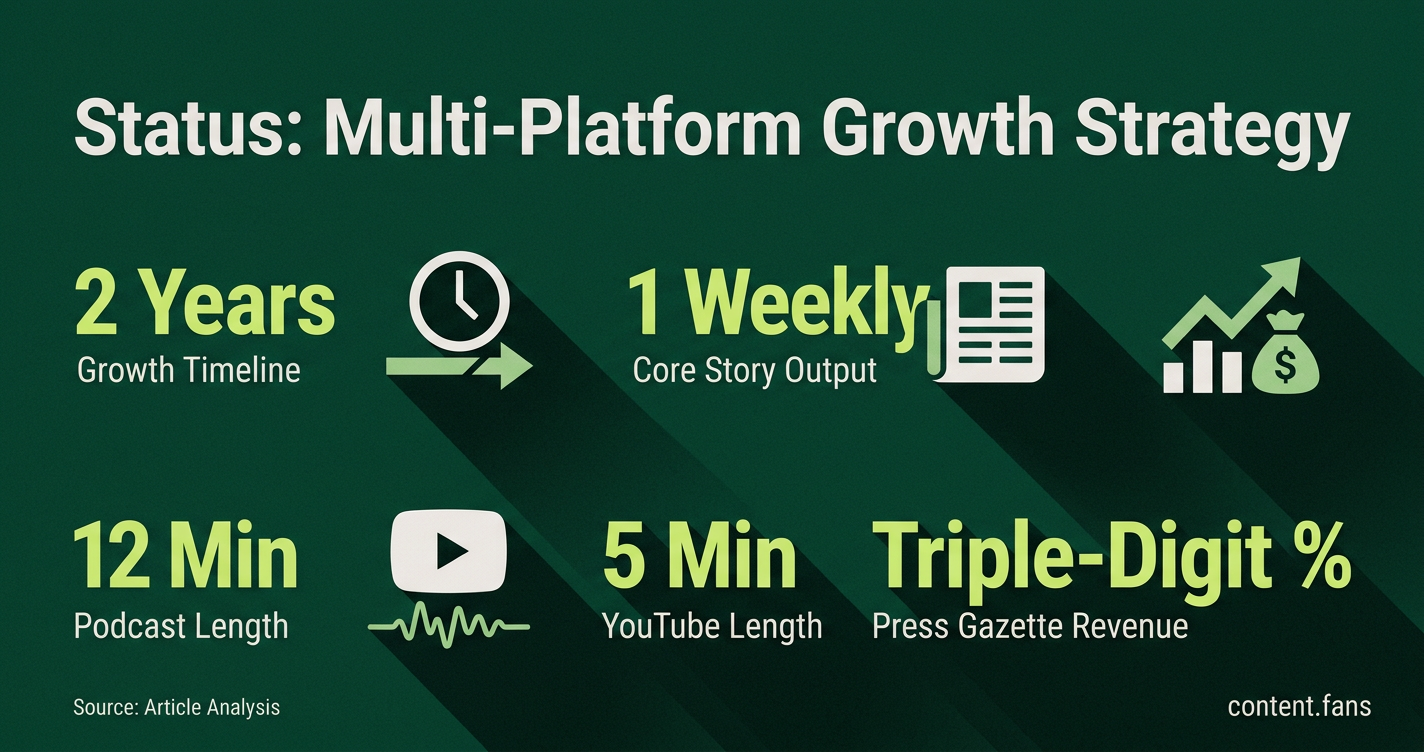
The workflow begins with a long-form article for the newsletter, which is then repurposed into a 12-minute podcast and a five-minute YouTube video. This approach prioritizes the newsletter as the primary owned channel for collecting first-party data and audience feedback. By using email surveys to guide content decisions, Status uses reader preference data to optimize video thumbnails and podcast topics, a strategy that aligns with industry reports showing many publishers rely on newsletters as their primary loyalty channel.
Events turn digital engagement into higher-margin revenue
Live events convert digital engagement into a high-margin revenue stream. The success of Press Gazette, which achieved triple-digit revenue growth and now earns most of its income from events, provides a model for Status. With its upcoming Summit, Status aims to tap into this trend, as industry analysis indicates live experiences can represent a significant portion of a publisher's revenue.
To optimize conversions, Status will leverage its own first-party data, such as email open rates, to identify readers likely to attend. By using unique UTM links for ticket sales across its newsletter, podcast, and YouTube channel, the team can analyze which platform drives the highest-value sales and use that data to shape future sponsorship deals.
Cross-promotion accelerates discovery
Status amplifies its reach by using its podcast hosts and guests as distribution channels, encouraging them to share episode clips with their followers. This "host-led growth" tactic creates a content loop: high-performing YouTube episodes are edited into short vertical videos for the weekend newsletter, driving new subscribers back to the YouTube channel. This strategy is similar to models used by Semafor, where live journalism now drives a substantial portion of revenue, according to industry reports.
Early results hint at resilience
Early results demonstrate the resilience of this diversified model. Status has experienced significant subscriber growth in 2024, a period marked by social media referral declines for many publishers. By operating across four formats - newsletter, podcast, YouTube, and events - the brand creates a hedge against market volatility. If one revenue stream like podcast advertising weakens, income from event sponsorships and YouTube ads provides stability. Experts suggest this multi-platform approach is key to sustaining newsroom operations without depending on a single channel.