
UK Bans Social Media for Under-16s, Adds Gaming Limits
Serge Bulaev
The UK may ban children under 16 from using most social media and set limits on livestreaming and chatting in games, but some services like WhatsApp and YouTube Kids are not included. The plan shifts responsibility to tech companies and is called "Australia-plus" because it adds extra rules compared to Australia. Experts warn it might be hard to check ages without risking privacy or accidentally locking out some users. Research suggests blocking social media may not give big mental health benefits, and many young people do not feel safer with age bans. The rules are still being debated in parliament, and enforcement might not start until 2027.

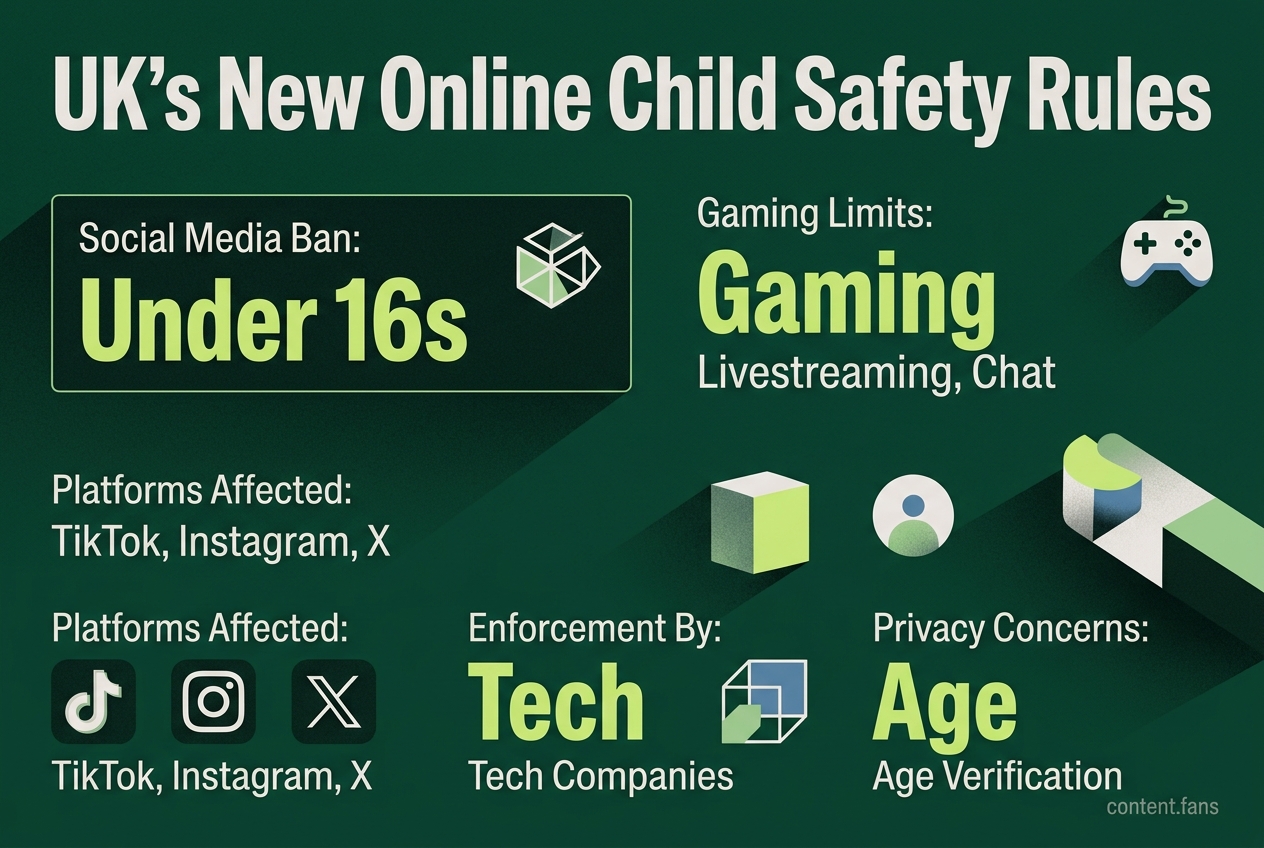
The UK government has proposed a landmark ban on social media for children under 16, alongside new limits on in-game chat and livestreaming. According to an NPR report, the plan aims to shift the burden of protection onto tech companies. If passed, the legislation would prohibit under-16s from using platforms like TikTok, Instagram, and X, while exempting services like WhatsApp and YouTube Kids.
Dubbed the "Australia-plus" approach, the policy builds upon Australia's age verification model. The "plus" signifies additional UK-specific restrictions, such as disabling livestreaming and direct messaging with strangers on gaming platforms for minors, as detailed in a GOV.UK fact sheet.
Enforcement headaches dominate the debate
The proposed UK legislation would ban social media access for all children under 16 on major platforms like TikTok and Instagram. It also introduces restrictions on gaming features, such as disabling livestreaming and stranger messaging. Responsibility for age verification and enforcement would fall directly on the tech companies.
Experts and digital rights advocates immediately raised concerns about enforcement. Methods like facial scans or ID checks could compromise user privacy or inaccurately block legitimate users. The Open Rights Group highlights doubts about the reliability of any single age verification technology at scale. Key challenges include:
- Verifying age without creating new privacy risks from large-scale data collection.
- Countering workarounds like VPNs and shared accounts.
- Defining which services qualify as "social media."
- Regulating global platforms that can rapidly alter their features.
Major platforms have also voiced opposition according to industry reports. Some warn that a blanket ban could drive young users to less secure platforms, while advocacy groups caution that a rushed implementation without robust enforcement could undermine the policy's effectiveness. Regulator Ofcom is assessing its capabilities for implementation.
Research evidence offers a mixed picture on child wellbeing
The evidence supporting the mental health benefits of such a ban is not conclusive. While government reviews link heavy social media use to poor adolescent mental health, academic studies find limited average benefits from removing access. An expert reaction from the University of Cambridge suggests policymakers should "not expect substantial boosts to well-being" from broad age restrictions alone.
Ongoing research, including the large-scale IRL trial in Bradford, is currently tracking 4,000 pupils to measure impacts on sleep, anxiety, and social behavior, but results are not yet available. Meanwhile, surveys from LSE's EU Kids Online project indicate that many young people are skeptical about whether age blocks would make them feel safer.
"Australia-plus" and the gaming question
The "plus" in the "Australia-plus" model specifically targets gaming. While mainstream games will remain accessible to under-16s, the legislation would disable features that enable contact with strangers. This includes turning off live chat and personal broadcasting functions, a key distinction from Australia's original policy.
The draft bill is expected to exempt several service categories, including educational apps, e-commerce platforms, and music streaming. Encrypted messaging services like WhatsApp and Signal are also likely to fall outside the ban's scope, though final definitions will be confirmed later.
Parliamentary trajectory and next steps
The proposal has received initial backing from the House of Lords but faces resistance in the House of Commons, where some MPs have raised concerns about government overreach. Ministers are currently consulting with Ofcom on the feasibility of policing global platforms. Implementation timelines and technical standards are still being developed as the government works through the complex regulatory challenges.