
S&P 500 AI mentions surge, but productivity gains remain elusive
Serge Bulaev
Mentions of AI by S&P 500 companies have reached record highs, but clear productivity gains have not yet appeared. Executives often express hope about doing more work with the same number of staff, but hard data is still limited, so predictions rely mostly on outside studies. Some reports suggest AI might affect millions of jobs, but opinions about whether jobs will be gained or lost are not settled. There is strong demand for AI skills and retraining, while routine jobs may shrink. Whether recent talk about AI will lead to real cost savings is still uncertain and will be clearer after more data comes in.
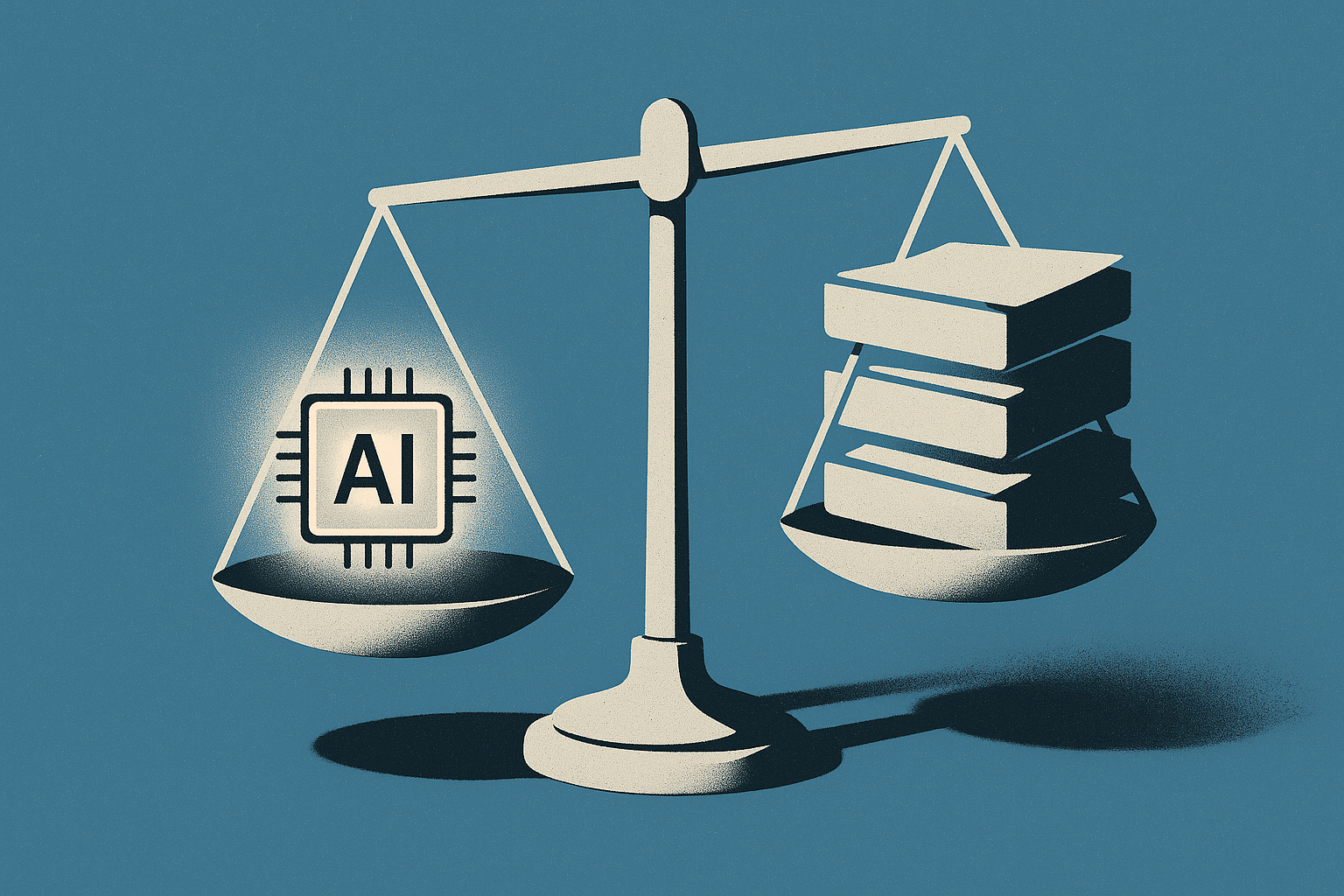
While S&P 500 AI mentions have reached record highs, the promised productivity gains remain largely unverified. Corporate leaders frequently signal optimism about AI's potential to boost efficiency, but the hard data proving a return on investment is still missing, leaving a gap between executive commentary and tangible financial results.
To understand the labor market impact of AI, analysts are closely tracking executive reports on hiring, automation, and productivity. S&P 500 companies cited "AI" on 292 earnings calls in Q2-2025, a record that climbed to 306 calls by Q3-2025, according to FactSet Insight. A Yahoo Finance review noted that firms mentioning AI have outperformed peers by roughly 8 percentage points since late 2024.
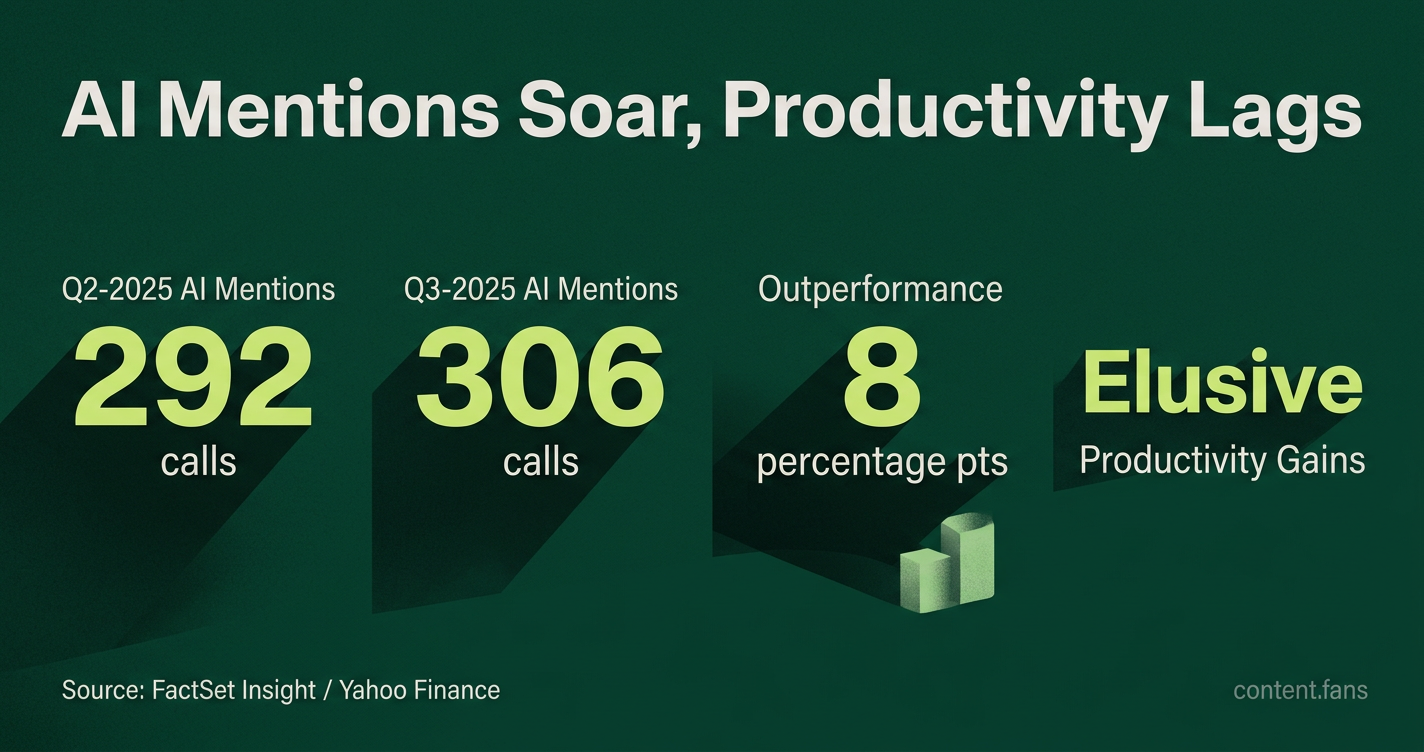
Despite this market enthusiasm, executives' promises of doing "more with the same head-count" are not yet backed by concrete productivity figures. This discrepancy suggests investors are rewarding optimistic forecasts before verifiable cost savings materialize, making workforce predictions reliant on external studies rather than corporate results.
Labor Impact: Scenarios and Early Indicators
Despite a record number of S&P 500 companies discussing AI, concrete data showing widespread productivity gains or cost savings is scarce. Executives express optimism about future efficiency, but current financial reports have yet to reflect these benefits, leaving investors to rely on external forecasts.
Forecasts on AI's labor impact vary widely. Industry reports suggest generative AI could affect a significant portion of jobs globally. Other projections indicate potential net job creation, though these outlooks diverge significantly. Both identify key trends: soaring demand for AI engineers, a decline in routine clerical tasks, and the emergence of hybrid roles that blend domain expertise with AI oversight.
Early evidence supports this shift. Industry reports indicate substantial increases in AI literacy course enrollments in recent years. Data also highlights growing demand for skills in AI, big data, and cybersecurity, while skills related to manual or routine tasks are in decline.
The Growing Importance of AI Governance
As companies integrate AI, robust governance becomes critical. Key frameworks like the OECD AI Principles, NIST Risk Management Framework, and ISO/IEC 42001 provide a roadmap for ensuring transparency, accountability, and safety. Effective implementation requires establishing a cross-functional council, automating policy enforcement, and conducting continuous monitoring.
For leaders tracking talent shifts, key actions include:
- Monitoring AI mentions on earnings calls to gauge adoption speed.
- Mapping job roles against governance frameworks like NIST to identify new compliance and auditing needs.
- Tracking training data to forecast the internal supply of talent for hybrid AI roles.
From Talk to Results: Tracking Near-Term Signals
The ultimate economic impact remains uncertain. Industry reports present scenarios ranging from optimistic productivity gains that fund worker retraining to more disruptive outcomes where automation affects a significant portion of jobs.
Early financial data points to caution. An analysis of SaaS company transcripts revealed CFOs discussing "margin pressure, not expansion," despite confident AI narratives. This indicates that cost savings from automation have not yet appeared on financial statements. The true test will be whether the record 331 AI mentions in Q4-2025 translate into lower labor expense ratios in 2026, which would provide the first clear evidence of AI's bottom-line impact.
Are S&P 500 firms actually seeing productivity gains from AI?
Not yet in any verifiable way.
In the four quarters from Q1 2025 to Q4 2025, AI mentions on earnings calls jumped from 210 to an all-time-high 331, yet earnings transcripts offer no aggregate metrics on head-count-per-dollar of revenue, output-per-hour, or ROI tied to AI spend. Analyst notes from FactSet confirm the same gap: "companies cite AI more than ever, but disclosed productivity data remain scarce."
The takeaway for leaders: treat glowing AI anecdotes as strategic signaling, not proof of bottom-line impact.
Why are so many earnings calls now scripted by generative AI?
A significant portion of S&P 500 scripts are now drafted by large-language-model tools, according to industry reports. CFOs feed prior transcripts and analyst sentiment data into the model to surface "optimistic but defensible" phrasing. The side effect is language inflation: every firm now has "a multi-year AI roadmap," "a unique data moat," and "secular tailwinds," even when margins are flat. Investors should read the numbers, not the narrative.
Which job families are most exposed to displacement this year?
Industry reports suggest AI could automate a substantial portion of work tasks in the U.S. and Europe, with clerical, data-entry, and first-line customer roles facing the highest near-term risk. In contrast, machine-learning specialists, data-infrastructure engineers, and FinTech compliance analysts are seeing double-digit growth in vacancy postings. Boards should map each role against a "task-automation score" rather than relying on broad occupational titles.
How can companies balance cost savings with talent retention while they scale AI?
- Create a cross-functional AI governance council (legal, HR, data science, risk) that pre-approves any automation expected to affect >10 employees.
- Publish a reskilling budget line tied to AI opex; industry best practices suggest earmarking a significant portion of annual AI spend for internal education.
- Offer "AI-augmented" career paths (e.g., auditor → AI-risk analyst) before external hiring, which can substantially reduce churn according to industry pilot programs.
- Embed transparency rules: employees must know why an algorithm flagged their task for automation and what new skills will be valued.
What governance checkpoints should leaders insist on before green-lighting an AI rollout?
Following the NIST AI Risk Management Framework, which recommends context assessment and risk categorization based on deployment impact like safety and bias in high-stakes decisions, insist on:
- A documented risk tier (low, moderate, high) based on impact to employment, privacy, and safety considerations.
- Bias testing results across gender, age, and ethnicity before production release.
- An audit trail that logs every model version, data source refresh, and human override.
- A sunset clause: if promised productivity or cost-saving KPIs are not met within 18 months, the system must be re-evaluated or shut down.