
FMI, NielsenIQ: 94% of US Shoppers Blend Online, In-Store Grocery Buys
Serge Bulaev
A report from FMI and NielsenIQ suggests that about 94% of U.S. grocery shoppers may use both online and in-store methods to buy groceries, leading to most sales coming from these blended shoppers. Most people want the same prices and offers whether they shop online or in person, and differences in prices or images might make them trust a store less. To meet these needs, stores may need to make sure their product details and prices are the same everywhere and update them quickly. Simple technology steps and regular checks might help stores keep things matched and avoid confusing customers. Following these practices may help stores build trust and possibly increase how loyal shoppers are.

With a growing number of US shoppers now blending online and in-store grocery buys, consistent omnichannel messaging has become a critical factor in how consumers judge price fairness, brand trust, and promotional value. Retailers who fail to sync prices, promotions, and product details across all channels risk eroding customer loyalty.
This playbook provides a framework for retailers to identify content gaps, synchronize data in near real-time, and establish governance over future updates.
Consistent Omnichannel Messaging and Shopper Expectations
The modern grocery journey is a hybrid experience, with shoppers using both digital apps and physical stores to complete their purchases. This omnichannel behavior means customers expect identical pricing, promotions, and product information across every touchpoint, from their smartphone to the shelf tag in the aisle.
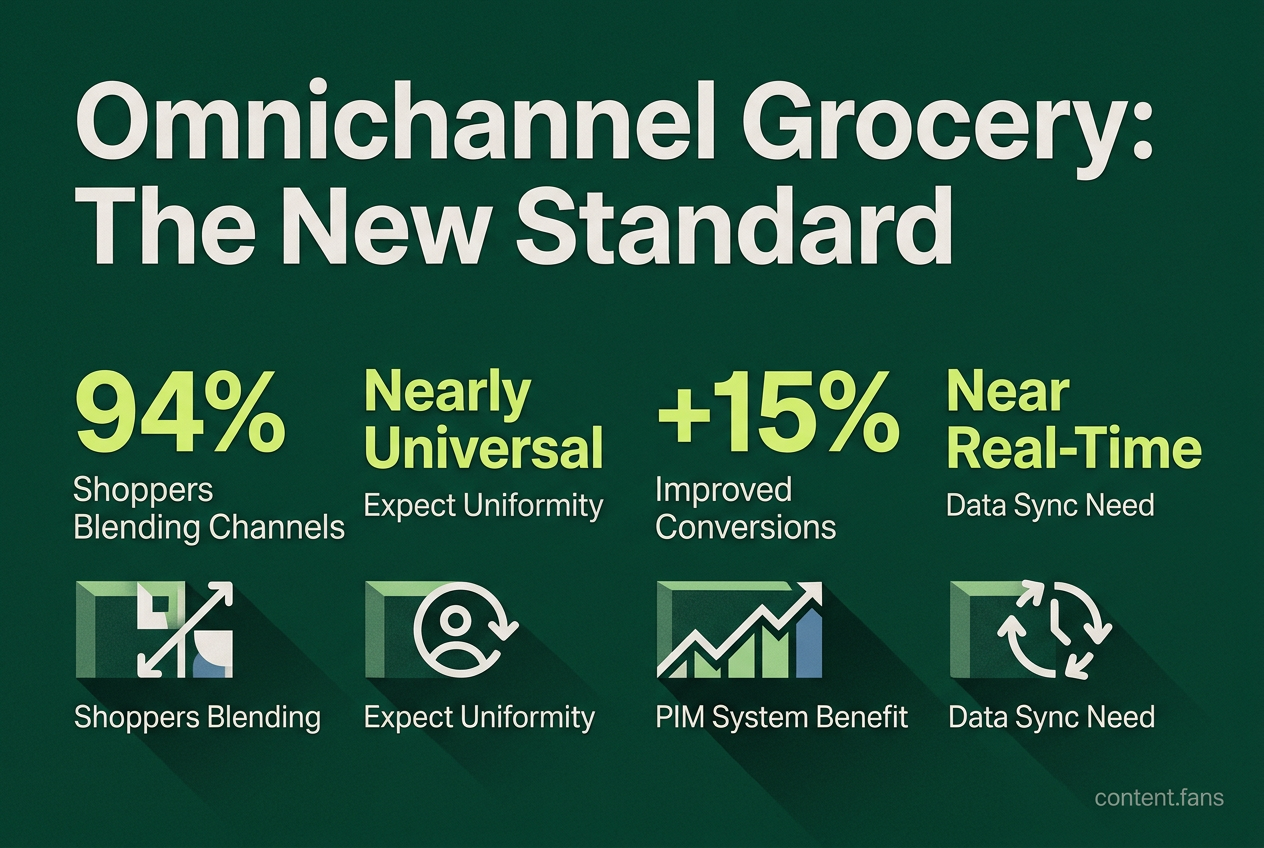
The shift to omnichannel grocery shopping is the established norm. A landmark FMI and NielsenIQ report reveals that 94% of grocery shoppers in 2025 purchased both online and in-store. This expectation for uniformity is nearly universal; a Simple Bundles blog trend brief found that many shoppers demand the same experience and offers regardless of the channel. Any discrepancy - whether a different price on an app versus a shelf tag or an outdated product image - can signal poor value and quickly erode brand trust.
To meet these high expectations, retailers must move beyond manual spreadsheets and implement synchronized systems capable of pushing a single, unified dataset across point-of-sale, ecommerce, and third-party platforms in near real-time.
Building the Cross-Channel Playbook
- Establish a Product Information Management (PIM) system as the single source of truth for all product data. According to industry reports, retailers using PIM can see significant improvements in online conversion rates and reduced returns by ensuring spec and image accuracy.
- Audit every customer touchpoint where pricing, promotions, or descriptions appear. Documenting specifications like SKUs, image ratios, and update cadences will reveal lingering manual processes that create inconsistencies.
- Implement real-time price and inventory APIs. Best practices advise shifting from slow batch updates to an event-driven architecture, ensuring stock changes and price adjustments propagate across all channels rapidly, as detailed in a Real-Time Inventory Synchronization paper.
- Standardize promotional rules. Define a core discount engine and layer channel-specific mechanics only when mandated by platform policy. This approach maintains a consistent headline offer, even if redemption methods differ.
- Actively monitor third-party listings. Use automated crawlers or establish partner scorecards to proactively flag mismatched copy, outdated images, or price deviations on marketplaces and delivery platforms.
A weekly governance routine cements progress:
- Review reports on oversell incidents and price drift to identify system weaknesses.
- Audit new item setups to ensure all required data attributes are complete.
- Perform a weekly cross-channel audit of at least one high-velocity product category for complete consistency.
Governance Metrics Every Week
| Metric | Target | Why it Matters |
|---|---|---|
| Price Parity Variance | Minimal variance across SKUs | Prevents shopper confusion and builds price trust. |
| Image Version Age | Under 90 days | Ensures digital content matches physical packaging. |
| Inventory Sync Latency | Rapid synchronization | Crucial for Buy-Online-Pickup-In-Store (BOPIS) accuracy. |
| Oversell Incidents | Zero | Protects customer experience and prevents lost trust. |
Retailers who implement these controls can achieve significant gains in customer loyalty. For example, according to industry reports, truly omnichannel customers can deliver substantial increases in lifetime value. While specific outcomes will vary, the evidence confirms that disciplined content and data alignment is a direct path to unlocking revenue growth and improving operational efficiency.