
Slack AI expands to all Enterprise Grid, adds multi-language drafting
Serge Bulaev
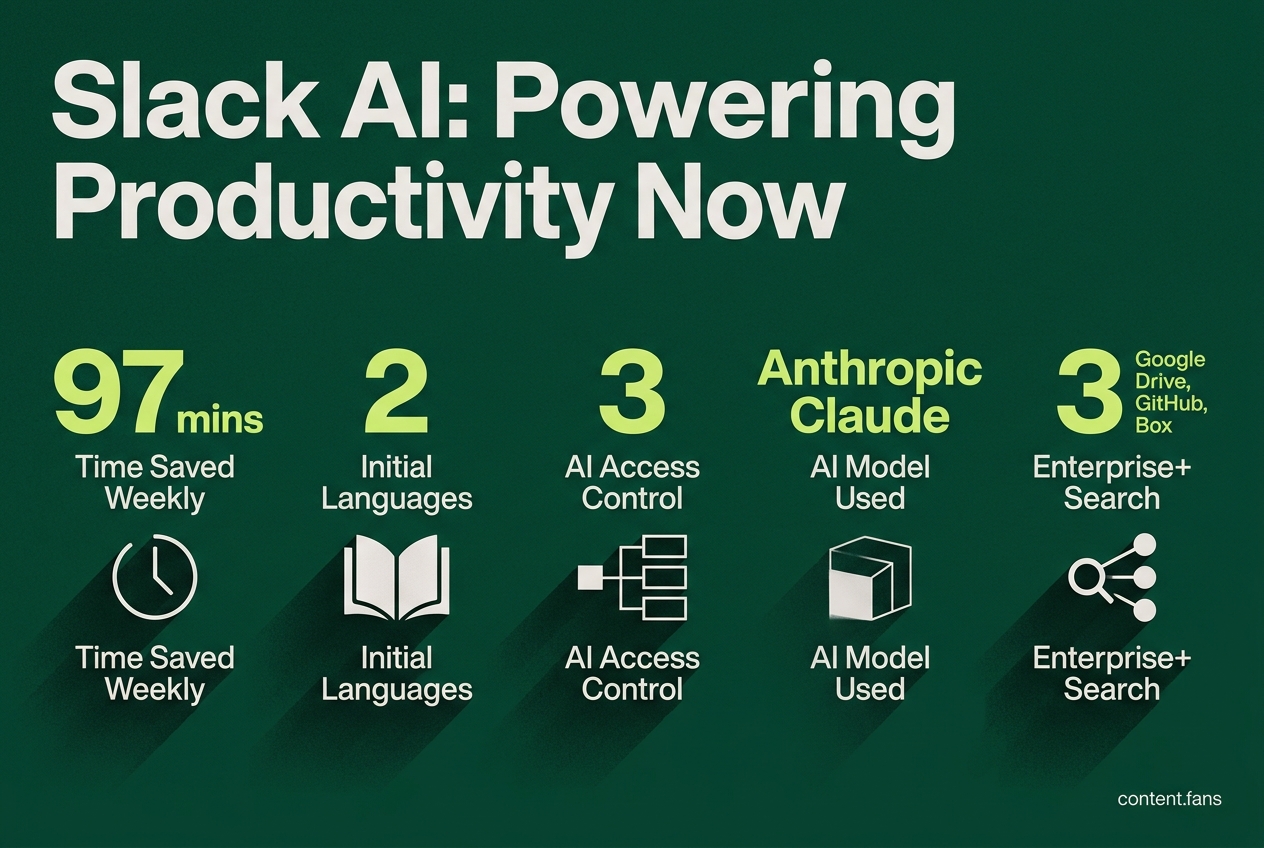
Slack AI is now available to all Enterprise Grid customers, adding features like multi-language summaries and drafting. Early pilots suggest users may save about 97 minutes per week by letting the AI summarize threads and create announcements. Admins can control who uses the tool and which channels are off-limits, which may help balance productivity and data rules. New language support includes Japanese and Spanish, and more could be added soon. Some early feedback suggests faster decision making, but it is not clear if these gains will be seen across all companies.

Slack AI's expansion to all Enterprise Grid customers introduces powerful multi-language summarization and drafting tools directly into the workspace. According to the 'Slack AI has arrived' post, an internal pilot found users saved an average of 97 minutes weekly by using AI to find answers, distill knowledge, and spark ideas.
This rollout is significant for Enterprise Grid, which includes many of Slack's largest clients, meaning workflow changes can impact thousands of employees. Administrators get new controls to manage access to the paid add-on and exclude specific channels, balancing productivity with data governance.
What users get today
The expansion provides users with one-click access to conversation summaries, file digests, and AI-powered drafting for agendas or project updates. It also adds robust multi-language support, starting with Japanese and Spanish, and includes a built-in translator to facilitate communication for globally distributed teams.
Key features like conversation summaries, file digests, huddle notes, and draft generation are now available from the overflow menu. According to industry reports, Japanese and Spanish support has been introduced, with Slack's help center indicating more languages are "coming" soon. A Stanford UIT overview confirms AI can draft agendas, FAQs, and project updates directly from Slack messages. The built-in translator also helps global teams by rendering posts in each user's preferred language.
- Conversation and file summaries
- Draft generation for announcements or agendas
- AI translations for cross-border teams
- Daily or custom recaps of unread channels
- Message explanations that decode acronyms or jargon
Under-the-hood governance
A new Feature Access setting empowers organization owners to grant AI permissions to everyone, specific groups, or no one. Enterprise+ customers get enhanced control, allowing them to exclude sensitive channels from AI processing to prevent data from feeding the model. Slack's Help guide covers notification settings and content flagging for reporting, but does not describe an 'exclusion flag' visible to members for transparency. Additionally, Canvas AI analytics help finance teams monitor usage and anticipate costs.
This year also brings changes to audit log retention. According to industry reports, organizations may need to manage log retention policies more actively, requiring security teams to export records for longer retention. Since native spending alerts are not included, companies must use third-party dashboards to track AI-related costs.
How Slack positions itself against rivals
Slack executives are positioning this rollout as a key part of their agentic work OS strategy, which uses Anthropic's Claude model for its large context window. According to industry reports, Enterprise+ users can search across multiple platforms like Google Drive, GitHub, and Box, whereas Microsoft Teams limits its Copilot features to the Microsoft 365 ecosystem. Analysts believe Slack's open API will attract specialized AI partners, but broad adoption depends on whether administrators find the access controls sufficiently granular.
Adoption indicators to watch
While Slack marketing materials highlight pilot customers like SpotOn, Uber, and Wayfair, concrete usage data is not yet public. Internal surveys from these pilots reportedly indicate faster decision-making and smoother onboarding for new hires using AI summaries. However, achieving widespread enterprise ROI will depend on continued expansion of language support, transparent billing, and robust data safeguards.