
Sierra AI unveils Ghostwriter, an automated agent platform for enterprises
Serge Bulaev
Sierra AI has launched Ghostwriter, a smart tool that helps big companies automate customer support in over 30 languages. Ghostwriter is great at handling complex tasks like refunds and prescription refills with fewer people needing to step in, especially in strict fields like healthcare and finance. It checks its own answers with several AIs to keep mistakes low, but it can be slow during long chats and is pretty expensive, costing about $200,000 a year. While other tools are faster and cheaper to set up, Ghostwriter stands out by building strong, ready-to-use agents without extra work. If a company needs accuracy and follows strict rules, Ghostwriter might be worth the cost, but easier tools are better for small teams or quick fixes.

Seen by analysts as a key development in enterprise AI, Sierra AI's Ghostwriter is an automated agent platform that transforms documents and simple text prompts into production-ready customer service agents. These agents function across voice, chat, and email in over 30 languages. The system leverages a unique constellation architecture, using multiple large language models to validate responses and reduce errors, a capability noted in recent G2 reviews.
Adoption snapshots
Sierra AI's Ghostwriter is an advanced platform for creating AI customer service agents without coding. According to industry reports, it is designed for enterprises that require high accuracy and compliance for complex workflows.
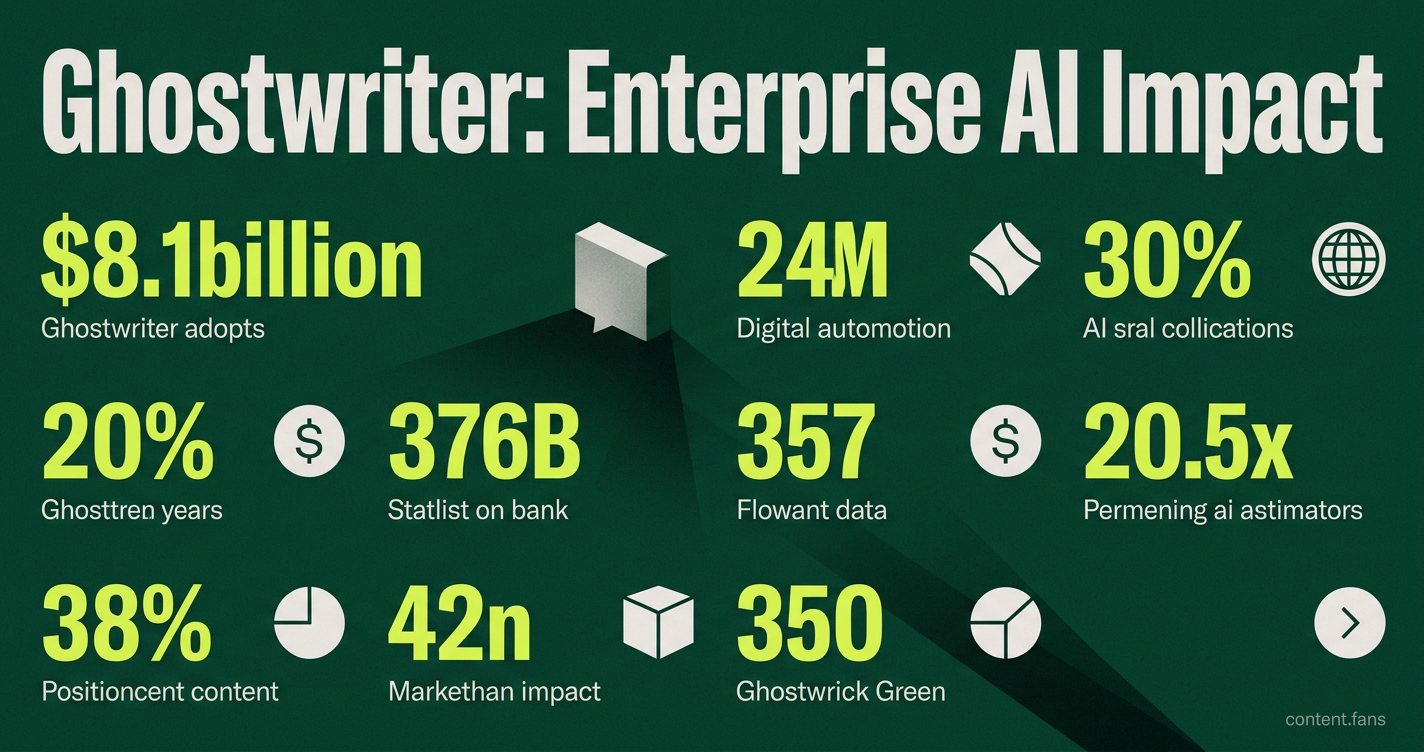
The platform is seeing growing demand in heavily regulated sectors like healthcare and finance, where precise audit trails and accuracy are paramount. Users report that Ghostwriter successfully manages complex tasks such as refunds, prescription refills, and multi-step order modifications, reducing human escalations compared to older chatbots. However, some users note increased latency in conversations exceeding 20 turns.
A significant consideration is the cost. With substantial deployment costs and implementation times, as noted in a Fin AI comparative study, it represents a major investment. This leads many smaller teams to opt for simpler, faster alternatives like My AskAI.
• Key strengths reported by users:
- Enhanced answer accuracy through multi-model validation
- A dedicated sandbox environment for safe pre-deployment testing
- Integrated guardrails to ensure regulatory compliance
- Native empathy tuning to align with a specific brand voice
Competitive cross-winds
The market for no-code agent builders is increasingly competitive, with platforms like Kore.ai, Quiq, and Cognigy offering rapid drag-and-drop deployment and clear pricing. Ghostwriter's primary differentiator is its autonomy; it autonomously generates, configures, and deploys complete agent stacks, eliminating the need for manual flowcharting.
However, this autonomy involves trade-offs. Deep customization requires using Sierra's proprietary Agent OS and TypeScript SDK, raising concerns about potential vendor lock-in. Furthermore, some critics note performance issues such as higher latency due to multi-step reasoning and occasional context loss during extended conversations.
Metrics that matter
• AI resolves 45-65% of queries in many cases; up to 80% for routine tasks projected by 2026.
• Contact volumes are expected to grow significantly as consumers use personal assistants for brand interactions.
• Companies combining human agents with virtual ones report substantial annual staffing savings.
For business leaders evaluating Ghostwriter, the decision depends on specific needs. Organizations with complex, compliance-driven support operations may find Sierra's multi-agent orchestration justifies the investment. In contrast, teams prioritizing rapid deployment and faster time-to-value may prefer to start with more lightweight platforms before scaling up to a solution like Ghostwriter.
The coming year will be critical in determining if Sierra can enhance its deployment process and expand channel support while maintaining the high accuracy its initial customers praise.
What is Sierra Ghostwriter and how does it work?
Sierra Ghostwriter is a self-service, no-code platform that converts business documents (like SOPs and transcripts) or simple English prompts into production-grade customer service agents. These agents operate across voice, chat, and email in over 30 languages. The system automatically equips each agent with the necessary tools, memory, and compliance guardrails in a private sandbox, enabling teams to build, test, and deploy without coding.
How is user adoption trending since launch?
Early adoption is concentrated in regulated fields such as healthcare, fintech, and retail. While verified G2 reviews praise its ability to provide empathetic, on-brand responses 24/7, the lengthy onboarding process and substantial contracts are significant barriers for smaller organizations. Although official user numbers are unavailable, competitor marketing suggests large enterprises are the primary users, while mid-market companies seek other options.
What separates Ghostwriter from other no-code agent builders?
Ghostwriter's key differentiator is its autonomy. While most no-code builders require users to manually create conversation flows, Ghostwriter autonomously generates dialogue journeys. It also validates every response using a constellation of LLMs to ensure accuracy. Competitors like My AskAI offer faster setup and transparent pricing; Kore.ai provides comparable or broader automation but may require more setup. Sierra prioritizes deep customization and policy enforcement over plug-and-play simplicity.
Where does the platform struggle today?
Users and reviewers have identified three main challenges:
1. Context Loss: The platform can lose context during lengthy, multi-turn conversations, resulting in repetitive or irrelevant replies.
2. Latency Spikes: The multi-model cross-validation process, while beneficial for accuracy, can cause noticeable delays in response time.
3. Closed Ecosystem: The proprietary Agent OS can lead to data silos, often requiring a complete "rip-and-replace" approach for integration rather than layering with existing systems.
Additionally, performance can degrade under high concurrent loads, potentially compromising guardrails in high-volume chat environments if not properly managed.
What wider industry shift does Ghostwriter signal?
Ghostwriter exemplifies the industry's shift toward "agent-as-infrastructure," enabling non-technical users to deploy sophisticated AI. This trend points to a future where a significant portion of routine customer interactions could be automated, potentially cutting operational costs substantially and improving response times. However, with many AI projects facing challenges due to integration issues and poor data, success depends on a governed, strategic implementation rather than treating the platform as a turnkey solution.