
Nadella: AI needs "emergency brake" and deterministic safeguards
Serge Bulaev
Satya Nadella warns that advanced AI systems are like black boxes and may need strong safety controls, such as an "emergency brake" and detailed logs. He suggests companies should not blindly trust AI models and should always have rules and human oversight before using them in important business areas. Microsoft's rules recommend things like role-based access, constant monitoring, and the ability to stop or pause AI agents at any time. Reports indicate this careful approach appears to be part of a wider industry trend. Nadella also says a human should always have the final say over what AI can do.
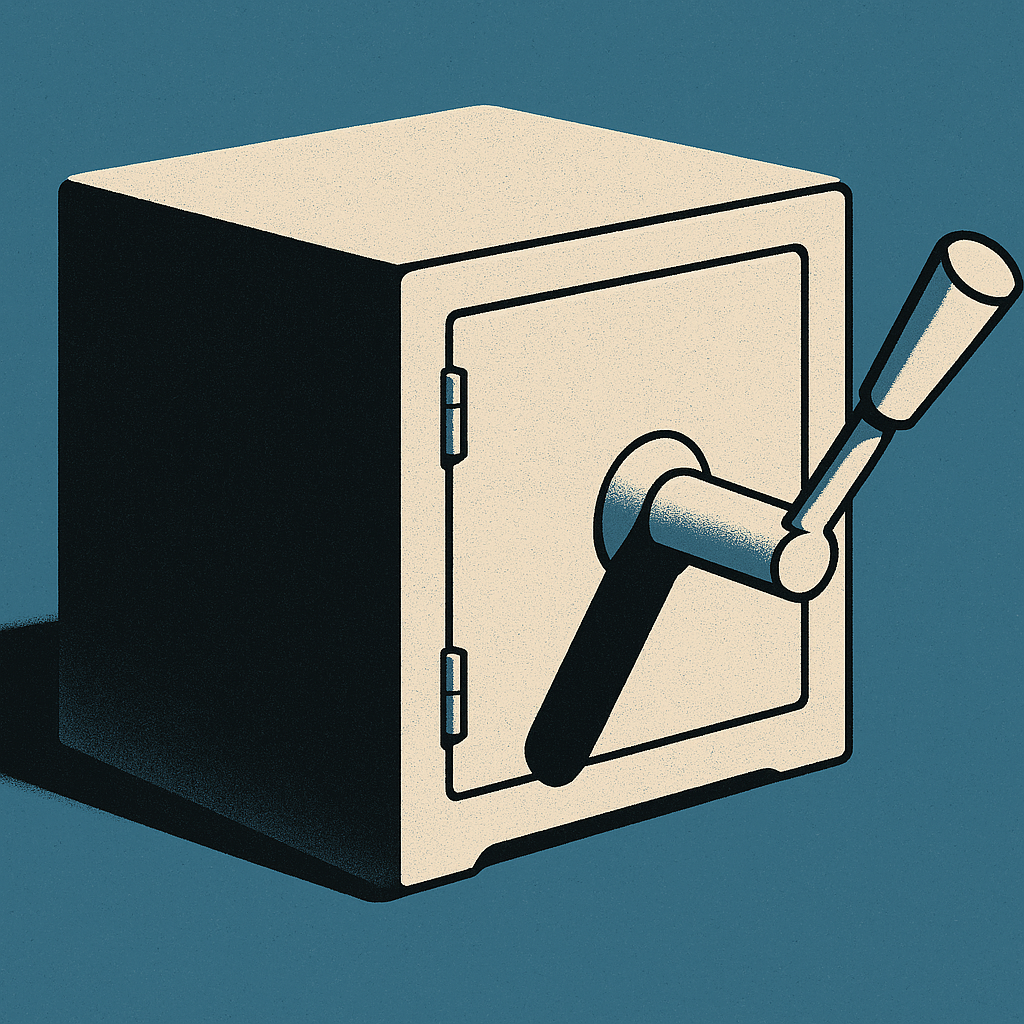
Microsoft CEO Satya Nadella is calling for an AI "emergency brake" and deterministic safeguards, warning that superintelligent systems are "black boxes" that pose an "insider risk" to organizations. He argues that firms must surround AI with rules, logs, and human oversight before integrating it into critical workflows.
The statement sets a governance agenda: surround any non-deterministic model with rules, logs, and a human-operated brake before letting it near business workflows.
Satya Nadella warns 'super intelligence systems' are black boxes
Satya Nadella warns that advanced "super intelligence systems" are opaque black boxes that cannot be trusted on faith. He argues against simple approval workflows, instead calling for external control layers that allow operators to monitor, pause, or shut down an AI agent at any time during its task.
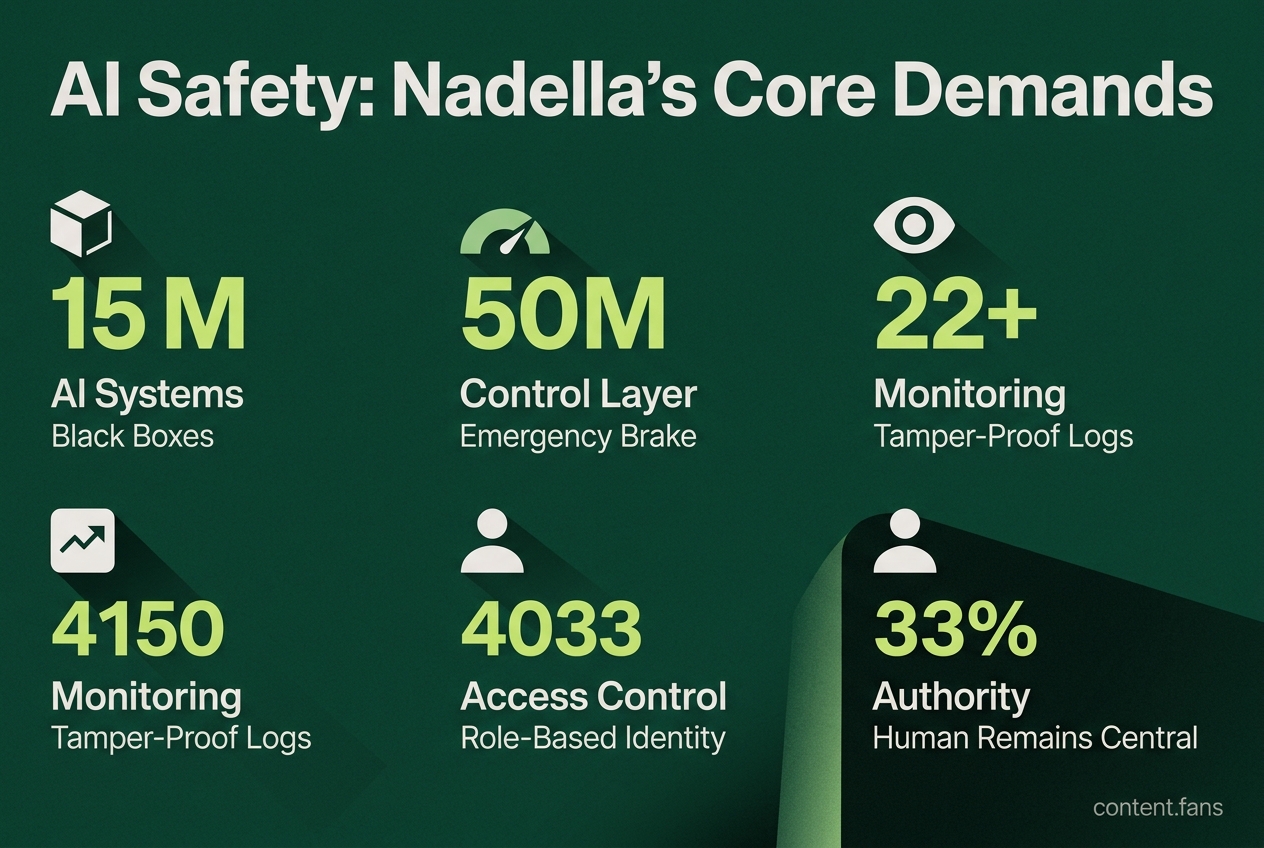
Nadella argues that simple approve-or-reject buttons are an unsafe way to manage AI. He urges separating the model from "the harness that orchestrates its work," ensuring an authorized operator can pause or shut down the agent at any time. He calls this control layer an "emergency brake" and demands tamper-proof logs for every significant model action. Nadella believes the most trustworthy AI is one that requires the least trust. Safety, he contends, must come from deterministic policies, identity-based access, and robust monitoring tools.
What a deterministic control layer looks like
Microsoft's own governance guidance reflects this message, detailing a live policy engine that enforces authentication, quotas, and permissions before every model call. Detailed logs capture the prompt, model version, and resulting action to ensure full auditability.
Microsoft guidance lists minimum runtime controls for business-critical agents:
- Role-based access tied to corporate identity
- Central registry of agent configurations
- Real-time policy checks and quota enforcement
- Continuous monitoring with alerting and failover plans
According to the guidance, these controls must operate even when cloud connectivity drops, implying local isolation zones for high-risk deployments.
Industry momentum on explainability and guardrails
Nadella's stance reflects a broader industry trend toward AI safety. Experts are championing runtime "guardrails" to block policy violations, while regulators are demanding decision logs to trace the data behind AI recommendations. Industry surveys indicate that lack of explainability "challenges auditability and compliance," pushing firms toward model cards, data provenance tracking, and human review checkpoints.
Human authority remains central
A central theme across all commentary is that ultimate authority must remain with humans. Nadella compares an unchecked AI to a privileged employee, insisting that supervisors must have the ability to intervene instantly. This principle is reflected in Microsoft's internal policy, which requires manual override capabilities for deployed AI agents.
These facts illustrate how leaders, standards bodies, and platform providers are converging on a shared design principle: powerful AI can advise and act, yet deterministic systems, logs, and human brakes must govern its reach.
What did Satya Nadella actually say about "super intelligence"?
In public statements, Nadella warned that we cannot treat super intelligence as a set of nested black boxes and simply accept or reject its recommendations. He argued that organizations must instead build contained systems whose behavior we can observe, limits we can test, and actions we can always contain. His core message: trust the model least and surround non-deterministic AI with strong, deterministic controls.
Why does Nadella compare advanced AI to "insider risks"?
Nadella explicitly framed AI models as insider risks - threats that originate from within an organization's own systems. This analogy matters because insider risks require continuous monitoring, permission boundaries, and the ability to revoke access instantly. Just as companies don't give employees unlimited, unmonitored authority, AI systems need human oversight, observability, containment, and an emergency shutoff for model actions.
What does "deterministic safeguards" mean in practice?
Nadella outlined several concrete elements:
| Element | What It Means |
|---|---|
| Separate model from control layer | The AI model sits apart from the "harness that orchestrates its work" |
| Emergency brake | An authorized person can pause or shut down a model mid-task |
| Tamper-proof logging | Every meaningful model action produces human-readable evidence |
| Independent audits | External review of controls, containment mechanisms, and incident disclosure |
These are engineering controls, not policy documents - fixed software rules that determine permissions, access, logging, and shutdown behavior regardless of what the AI model might decide.
How does this connect to broader industry concerns?
Nadella's position reinforces growing consensus across safety-critical industries. Organizations are increasingly demanding explainability (showing what the system did and why), auditability (reconstructing decisions from logs), and runtime guardrails (blocking unsafe outputs before they reach users). Industry reports emphasize that lack of explainability challenges auditability and regulatory compliance - making deterministic controls essential for high-stakes applications.
Is Microsoft implementing these principles internally?
Microsoft describes operational controls including centralized registries for AI agents, runtime policy enforcement, automated lifecycle management, and backup/failover for Azure AI model endpoints. The company mandates identity and access controls, continuous monitoring dashboards, and "secure by default" architectures for business-critical AI deployments. Nadella's public stance aligns with Microsoft's internal framework: AI responsibility cannot be outsourced to the model itself or to another AI monitoring it.