
Report: Consumers Want AI Copilots, Brands Still Struggle With Execution
Serge Bulaev
Surveys suggest that most shoppers want help from AI when shopping, especially for finding products and deals. Many consumers appear comfortable using AI as a helper, but still want to make final choices themselves. Brands are adding AI features, yet often face problems like messy data and not enough skilled staff, which may slow down the results. Some brands have seen benefits from using AI, but many consumers do not feel that their experiences are improving yet. Overall, shoppers seem ready for AI, but brands might need better execution to meet these expectations.

Recent reports show that while consumers embrace AI copilots, many brands still struggle with execution, creating a significant gap in the market. Survey after survey confirms this trend: a significant portion of shoppers want AI assistance, according to industry reports. Similarly, Adobe consumer research found that many AI users frequently rely on it for advice. This data highlights a split reality: customers are eager for AI-driven convenience, while marketers are still working to deploy the necessary technology.
Shoppers treat AI as a helpful copilot
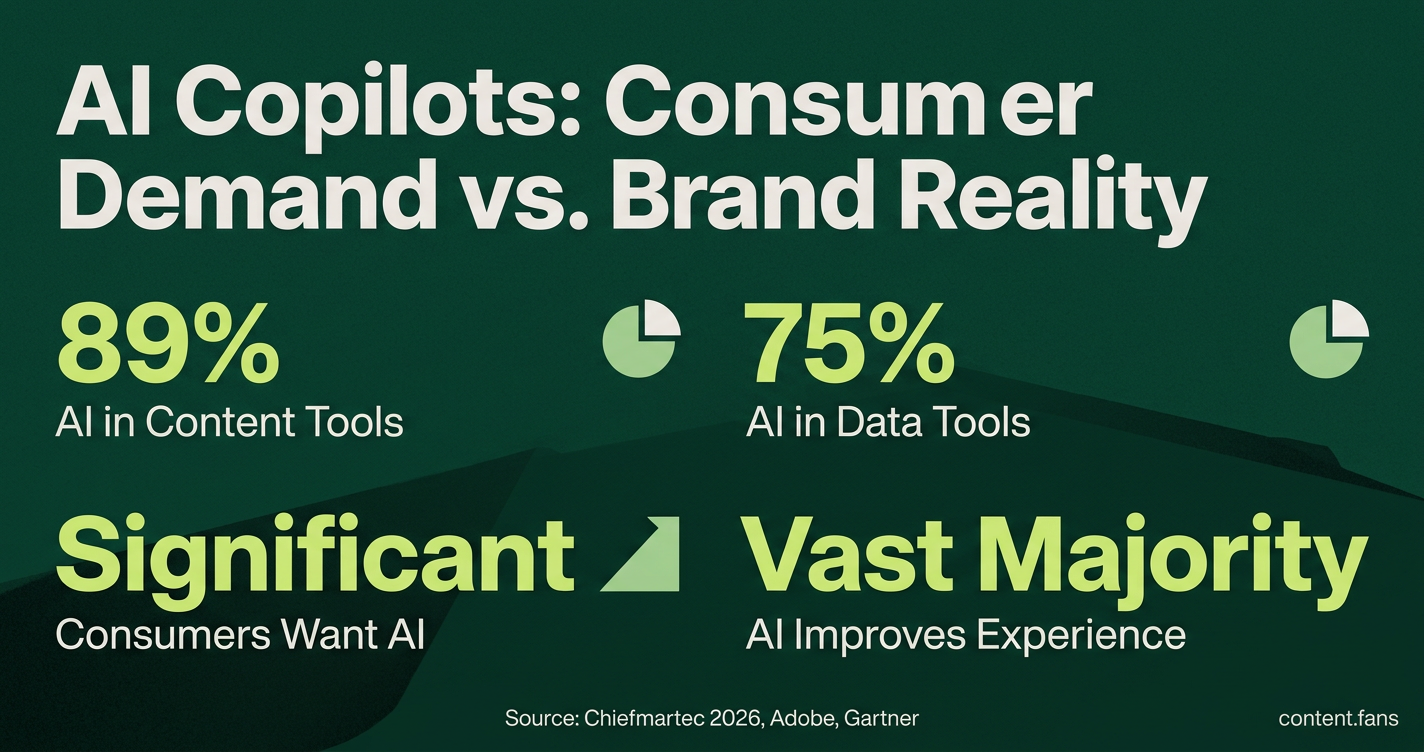
Consumers clearly view AI as a helpful assistant, not a replacement for their own judgment. Industry studies found that a substantial number of non-users want AI for product research. While Gartner survey data revealed that few consumers would let AI make a final purchase, many are comfortable with it narrowing their options. This "copilot" model is further supported by industry reports, where the vast majority of users felt AI improved or didn't harm their experience, indicating that expectations are normalizing around assistance-based roles.
Consumers readily welcome AI as a copilot for tasks like product discovery, deal hunting, and initial research. However, they remain hesitant to cede final purchasing authority. This preference for assistance over automation defines current expectations, highlighting where brands should focus their AI-driven customer experience efforts.
Brands add AI features yet struggle with execution
While brands are rapidly adopting AI tools, significant execution challenges remain. According to Chiefmartec's 2026 data, AI penetration in Content & Experience tools reached 89%, with Data tools at 75% (CMSWire summary). Despite this, marketers consistently report major hurdles that prevent effective, large-scale deployment, including:
- Siloed and fragmented data systems.
- A shortage of skilled staff capable of AI-driven experimentation.
- Outdated internal workflows that delay model training and implementation.
Account-based marketing (ABM) platforms highlight this contrast between potential and practice. While vendors embed AI to identify buying groups and intent signals, success stories reveal the importance of integration. For example, Snowflake achieved significant increases in meetings with AI-assisted targeting, and BioCatch substantially grew its pipeline by combining intent scoring with coordinated outreach. Similarly, AffiniPay reduced ABM launch costs considerably using AI-generated content. These successes demonstrate that AI delivers returns when data, content, and delivery channels are fully aligned. However, the broader picture is mixed. Industry research found that while most professionals have AI goals for customer experience, few consumers see any improvement. This disconnect points to implementation maturity, not consumer demand, as the primary bottleneck.
What the current evidence shows
The evidence is clear: consumers have already defined AI's role as a trusted partner for discovery and comparison. While brands are increasing AI adoption within their marketing technology, the quality of execution often fails to meet consumer expectations. Successful case studies prove that significant returns are achievable, but only when data infrastructure, personalization strategies, and channel orchestration work in concert. This gap between high consumer readiness and inconsistent brand delivery is the defining challenge for the AI-in-commerce landscape.