
Patreon Blocks AI Scrapers Using Cloudflare's New Crawl Control
Serge Bulaev
On July 9, 2026, Patreon began blocking known AI training bots from scraping content using Cloudflare's Crawl Control system. This change means AI bots now cannot access creators' posts unless allowed, while search engines like Google are still permitted. The move may help creators get credit, compensation, and consent before their work is used for AI training. Analysts suggest that blocking AI scrapers could lower costs for creators but might also reduce the amount of real-world data available for AI models. The full impact on the industry may depend on future legal decisions and the rollout of new tools to control bot access.

Patreon now blocks AI scrapers using Cloudflare's new Crawl Control system, a policy that went live recently. This move actively prevents known AI training bots from accessing creator content, signaling a major shift toward permission-based data access across the creator economy. While AI bots are blocked, standard search engine crawlers like Google are still permitted to ensure creator discoverability.
From Polite Requests to Network-Level Blocks
Patreon activated Cloudflare's Crawl Control system across its platform. This network-level filter identifies and blocks known AI training bots using advanced behavioral analysis, preventing them from accessing creator content for model training while still permitting search engine crawlers like Google to operate.
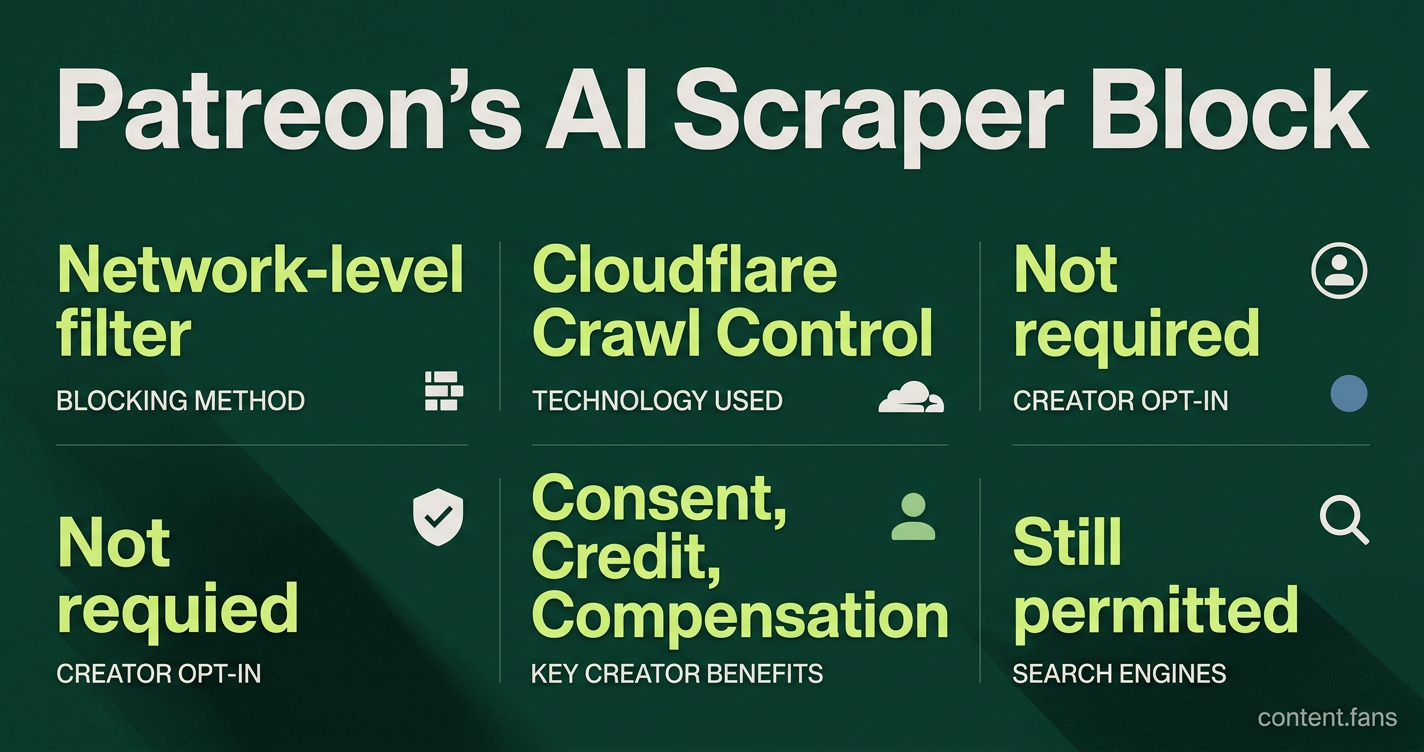
Patreon CEO Jack Conte announced the new filter is "live and happening at the network level on all posts" and requires no opt-in from creators. A 404 Media report quotes him stating that creators "deserve credit, compensation, and consent" before their work is used for model training. Drew Rowny, Patreon's SVP of Product, emphasized the change gives creators "control over how their work is used" while helping them grow their audiences.
How Cloudflare's Crawl Control Technology Works
Cloudflare's Crawl Control identifies bot traffic by profiling requests using technical signatures like JA4 fingerprints, HTTP version quirks, and cryptographic analysis. During testing, the system identified significant numbers of scraping requests, many of which were missed by older bot detection scores. As Cloudflare protects a substantial portion of websites globally, its default settings can significantly influence the data available to large language models.
Part of Cloudflare's "Content Independence Day"
Patreon's adoption of this tool aligns with Cloudflare's "Content Independence Day" initiative. According to Intelligibberish, the initiative denies AI crawlers by default on new domains and set deadlines for blocking mixed-use bots on other sites. Existing free customers who had not configured their bot settings also had this default applied.
Creator Benefits: Consent, Credit, and Compensation
The move to block scrapers provides creators with several key advantages:
- Consent: Ensures content is not used for AI training without permission.
- Credit: Helps creators get proper attribution for their work.
- Compensation: Creates leverage for platforms to negotiate licensing deals rather than managing individual takedown notices.
This proactive blocking strategy also addresses growing legal pressures. Recent court rulings have established a "market-harm" test, exposing AI firms to liability if their output competes with the original works they scraped. This blanket block helps shield the platform and its creators from such risks.
Economic and Industry-Wide Ripple Effects
Blocking AI scrapers can have significant economic benefits. Publishers note that AI bots generate high server traffic with minimal clicks, hurting ad-based revenue models and increasing bandwidth costs. By filtering this non-monetizing traffic, Cloudflare can lower operational expenses for Patreon and its creators. However, analysts caution that restricting access to real-world data may tighten the supply of high-quality training sets, pushing AI developers toward licensed or synthetic data sources.
The Future of AI Crawling and Content Access
Looking ahead, Cloudflare is developing tools that could refine this new paradigm, including a cryptographic authentication system to whitelist specific bots. A "Pay Per Crawl" API is also being tested, which could give platforms the leverage to charge AI companies for access. The ultimate impact of these tools will depend on the outcome of ongoing legal battles and the full enforcement of Cloudflare's new policies.