
OpenAI redesigns ChatGPT into 'superapp' with coding tools, AI agents
Serge Bulaev
OpenAI is planning to redesign ChatGPT into a 'superapp' that may include coding tools, AI agents, and access to other services inside one desktop application. Reports suggest this update could appear first on ChatGPT's website and mobile apps in the coming weeks, but the timing might change as testing continues. The new app is expected to handle tasks like running code, searching the web, creating images, and connecting to outside platforms such as Spotify or Booking.com. Some analysts say this move may help OpenAI earn more money from business users, but it also raises possible concerns about privacy and competition laws.

Recent reports indicate that OpenAI redesigns ChatGPT into a 'superapp,' a significant strategic shift from a simple chat interface to an all-in-one desktop platform. This ambitious overhaul aims to integrate coding tools, autonomous AI agents, web browsing, and third-party services, fundamentally changing how users interact with the AI. While the move signals a push towards enterprise monetization, it also introduces new questions about data privacy and market competition.
From Chatbot to All-in-One Workspace: What's Changing?
OpenAI is transforming ChatGPT into a desktop 'superapp' by merging its chat interface with the Codex coding environment, a new browser, and third-party services. This unified platform will enable complex task automation, code execution, and in-app access to partner platforms, with initial updates expected within weeks.
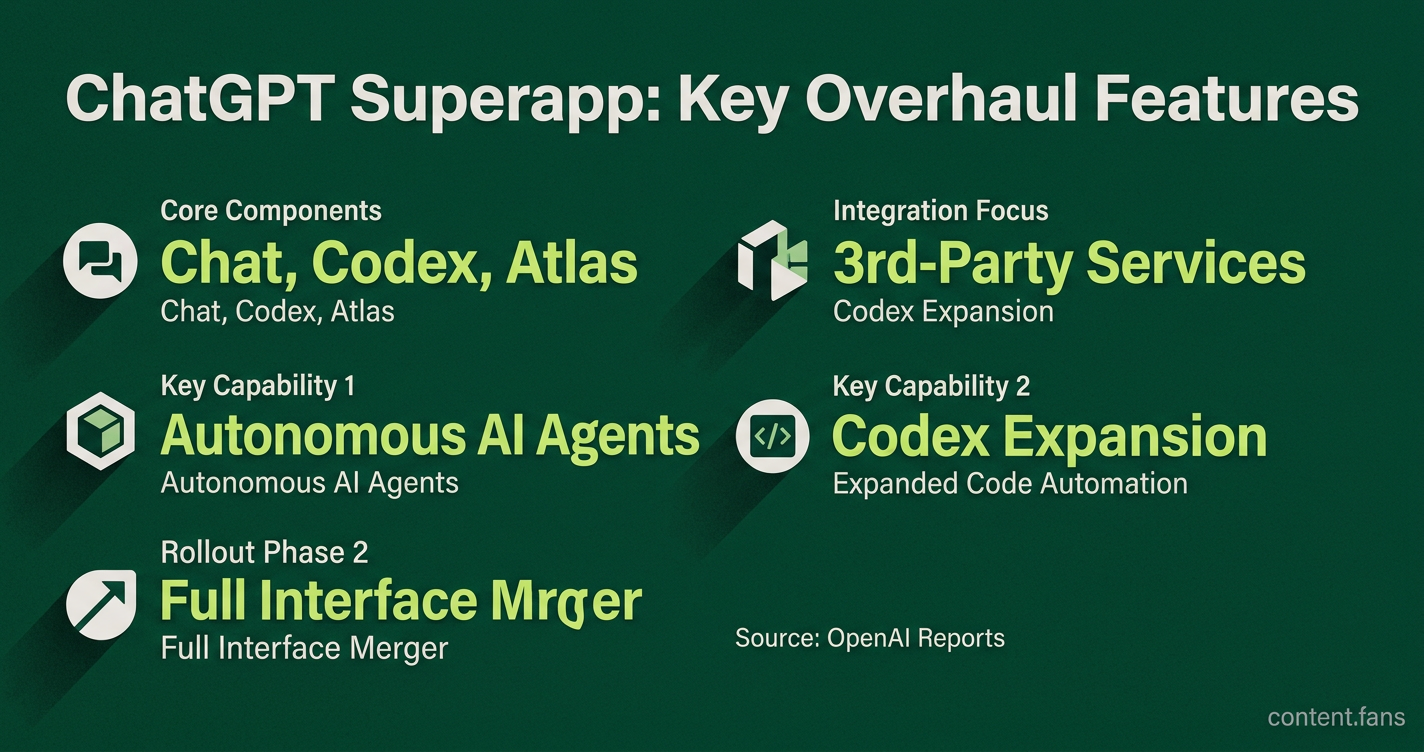
According to coverage in the Wall Street Journal, OpenAI plans to merge its current ChatGPT client with the Codex coding environment and an experimental browser known as Atlas into a single desktop application Wall Street Journal. Leaked partner documentation reviewed by TechTimes suggests the final product will manage multi-step tasks, run code, browse the web, and integrate external services like Canva and Booking.com TechTimes.
Key capabilities will include:
- Expanded Code and Task Automation: The Codex module will evolve from simple code suggestions to handling broader, more complex automation workflows.
- Autonomous AI Agents: The app will feature "agents" capable of independently selecting tools, retrieving data, and completing tasks with minimal user guidance.
- Integrated Multimedia: Image generation will be a native feature, appearing alongside text and code outputs.
- Third-Party App Ecosystem: Direct in-app access to platforms like Expedia, Figma, and Spotify will open new avenues for functionality and revenue.
Rollout Timeline and Strategic Implications
The transition is expected to be gradual. A report from CNBC in March 2026 indicated that Phase 1 will focus on expanding the Codex environment before a full interface merger CNBC. Phase 2 will reportedly involve folding the ChatGPT and Atlas browser components into the desktop shell, leaving the mobile client as a separate application.
Although initial elements may surface "in the coming weeks," as noted by TechCrunch, the timeline remains flexible pending internal testing. Industry analysts suggest this consolidation is a strategic move to grow enterprise revenue and increase user engagement ahead of a potential IPO. By creating a unified ecosystem, OpenAI aims to establish "workflow ownership," shifting the competitive focus from model performance to platform integration to challenge rivals like Google and Anthropic. However, this strategy also raises significant antitrust and privacy concerns that are already attracting regulatory attention.
What is changing with ChatGPT and when is the update?
OpenAI is transforming ChatGPT from a chat application into a unified desktop "superapp" integrating its Codex coding tools, a new 'Atlas' browser, and partner apps. The mobile app will not change. According to reports from The Wall Street Journal and CNBC, the release will be phased:
- Phase 1: Expand Codex to handle more non-coding tasks.
- Phase 2: Merge the ChatGPT and Atlas browser into the desktop app.
- Timing: While unofficial, sources suggest initial updates could arrive in the coming weeks, with the full consolidation taking several months.
What new tools will the superapp include?
The platform will be organized around four primary toolsets:
- Advanced Coding & Automation: An evolution of the Codex environment, designed for broader productivity workflows beyond just coding.
- Autonomous Agents: AI agents that can independently manage multi-step tasks by running code, accessing the web, or using other services.
- Native Image Generation: Tools for creating images directly within the main interface.
- Partner Integrations: In-app access to services from partners like Canva, Booking.com, Expedia, Figma, and Spotify.
What is the strategy behind this redesign?
This pivot appears driven by three core business objectives:
- Commercial Growth: Diversify revenue streams and strengthen the company's financial position ahead of a potential IPO, as noted by Reuters.
- Competitive Moat: Create a "sticky" ecosystem for developers and professionals to defend against competitors like Anthropic and Google.
- Market Share: Counter declining mobile app engagement by establishing a dominant, indispensable desktop product.
What about privacy, security, and data?
Official details are not yet available, but the integrated architecture raises critical questions that users and enterprises should monitor:
- Data Governance: How will data be shared between different tools (e.g., coding and third-party apps), and what consent controls will users have?
- Third-Party Security: TechTimes reporting suggests connections may use a Model-Context-Protocol (MCP) with payments handled by Stripe, but security specifics are unknown.
- Enterprise Controls: Businesses will require robust admin dashboards to manage which agents, tools, and data sources their employees can access.
Will the classic chat interface disappear?
No, the chat interface is not being removed. An internal source quoted by the Financial Times clarified that "chat is dead" was shorthand for the end of a "chat-only" product. The prompt box will remain, but it will become one of several tools in a larger workspace. The mobile app experience is expected to remain unchanged.