
OpenAI offers US government 5% stake worth $42.6B
Serge Bulaev
OpenAI may give the US government a 5% stake in the company, worth about $42.6 billion, as a donation. This idea, suggested by CEO Sam Altman, is meant to let ordinary Americans benefit from the company's success, and might work like Alaska's oil fund, which pays citizens yearly. The plan is still in early talks and would need new laws and approval from Congress. Some people warn it could cause problems, like conflicts between ownership and regulation, while supporters say it could help the government watch over AI safety. No final decisions have been made, and details are still being worked out.

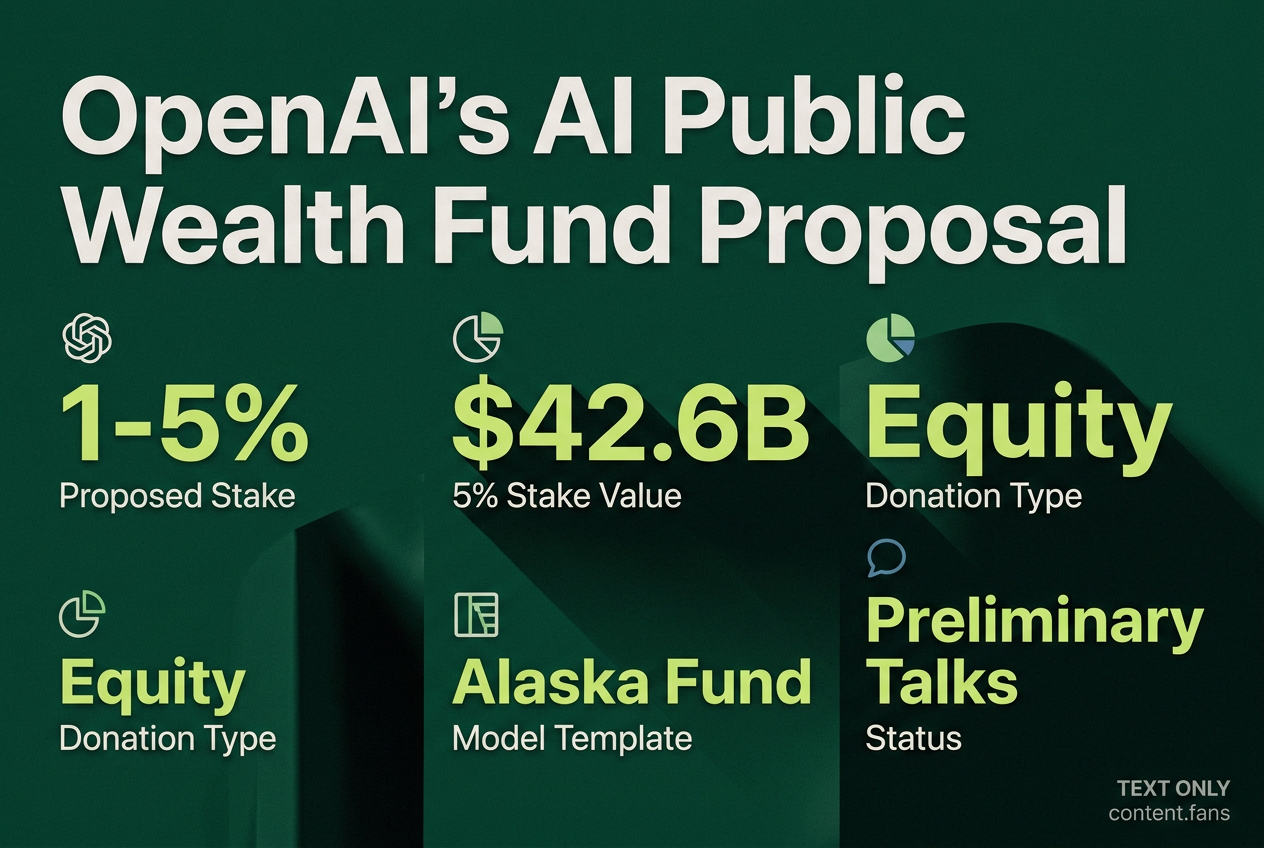
OpenAI is in preliminary negotiations to donate a stake between 1% and 5% to the US government via a 'Public Wealth Fund' intended to distribute AI benefits to Americans. Sources indicate CEO Sam Altman pitched the idea to senior officials to help distribute the economic benefits of AI to all Americans. No finalized agreement exists as of June 2026.
The early talks highlight a fundamental debate over how the U.S. government can balance its dual roles as both a potential shareholder and the primary regulator of the rapidly advancing AI industry.
The proposal on the table
OpenAI is in preliminary negotiations to donate a stake between 1% and 5% to the US government via a 'Public Wealth Fund' intended to distribute AI benefits to Americans. This fund would distribute dividends from the company's profits directly to citizens, mirroring Alaska's Permanent Fund model, without requiring taxpayer investment.
CEO Sam Altman's blueprint details a donation, not a sale, of up to a 5% equity stake to a federal sovereign wealth fund. The Financial Times reported the 5% stake and $42.6B value based on OpenAI's current valuation. OpenAI has reportedly encouraged other major AI labs to make similar contributions, envisioning a larger, sector-wide fund managed by the Treasury Department. However, the proposal remains conceptual, as it would require new legislation and formal approval from Congress.
Alaska's Permanent Fund as the template
The model for this proposal is Alaska's Permanent Fund, which distributes state oil revenues to its citizens. Altman has drawn a parallel between AI models trained on public data and Alaska's state-owned oil reserves. The proposed AI Public Wealth Fund would similarly channel dividends to the public from OpenAI and other contributing companies. Altman believes offering equity to the US government could mitigate political criticism of large tech firms.
Bipartisan interest and rival legislation
The idea of government equity has found surprising bipartisan interest. President Donald Trump has stated the government "may take direct equity stakes in AI giants," a sentiment reportedly discussed in White House meetings with Altman. While key officials like Commerce Secretary Howard Lutnick and Treasury Secretary Scott Bessent have been briefed, their departments have not yet commented on the matter.
Critics warn of conflicts and market distortion
Critics argue the plan creates a significant conflict of interest by blurring the line between regulator and owner. An American Action Forum analysis warns of "regulatory capture," where the government might protect its investments by creating rules that stifle competition. Other analysts note taxpayers would bear the risk of losses if the fund supports underperforming companies. Opponents also suggest government involvement could slow down AI innovation due to political oversight. Conversely, proponents claim direct ownership would give regulators invaluable, real-time insight into AI safety protocols.
What happens next
The proposal is still in the conceptual phase. Before moving forward, lawmakers must address several key questions: how to structure the fund, whether dividends can be distributed tax-free, and how to prevent conflicts with antitrust enforcement. OpenAI has not filed formal paperwork, and its industry rivals have not committed to participating. This debate signals a potential shift in U.S. policy toward public ownership of value created by data and algorithms. The path Congress chooses will likely redefine public benefit from the AI boom.
What exactly is OpenAI proposing to the US government?
OpenAI CEO Sam Altman has proposed donating up to a 5% equity stake in the company to the US federal government - a holding worth approximately $42.6 billion based on current valuations. This would seed a new "Public Wealth Fund" modeled on the Alaska Permanent Fund, which distributes oil revenues as annual dividends to state residents. Altman has suggested rival AI labs including Anthropic, Google, and Meta could contribute similar stakes, effectively creating government ownership across the US AI sector. The discussions remain conceptual and would likely require Congressional approval to implement.
How would the Public Wealth Fund actually work?
The fund would operate as a sovereign wealth vehicle with several key features. First, OpenAI would donate rather than sell the equity, avoiding any direct cash outlay from taxpayers. Returns from the fund would be distributed directly to American citizens as dividends, allowing broad public participation in AI's economic upside regardless of personal wealth or investment access. The fund would invest directly in AI labs and companies deploying the technology. Altman has proposed a 'public wealth fund' to invest in AI firms and pay profits to ordinary Americans.
What are the main concerns about government ownership of AI companies?
The proposal raises significant governance conflicts because it blurs the line between regulator and stakeholder. Critics warn this creates structural incentives for the government to protect its investments rather than enforce regulations impartially - potentially shielding failing firms, creating barriers for disruptive startups, or favoring incumbents in policy decisions. The American Action Forum notes this could lead to "regulatory capture and crony capitalism," where companies leverage government board positions to erect entry barriers. Additionally, taxpayers would be exposed to downside risk if AI valuations decline, creating potential pressure for bailouts.
Where do key political figures stand on this proposal?
The concept has generated rare bipartisan interest spanning populist wings of both parties. President Trump has publicly endorsed government equity stakes in AI companies, stating the administration "may take direct equity stakes in AI giants" and confirming his team is weighing arrangements with frontier labs. Senator Bernie Sanders has proposed a 50% tax on the shares of major AI firms. Altman has reportedly met with both administration officials including Commerce Secretary Howard Lutnick and Senator Sanders to discuss overlapping frameworks.
What happens if OpenAI achieves significant valuation growth?
If OpenAI reaches higher valuations in a future public offering, the government's stake would appreciate accordingly - representing potential gains from current valuations. This potential upside illustrates why the donation structure matters: taxpayers would benefit from appreciation without initial investment. However, the reverse also applies - any valuation decline would hit public wealth directly. OpenAI is a capped-profit company controlled by its nonprofit parent (OpenAI Nonprofit), which maintains full control over the entire entity. The equity proposal represents a specific offer to the US government within this existing structure.