
OpenAI nets nearly $6 billion in Q1 2026, still unprofitable
Serge Bulaev
OpenAI made almost $6 billion in revenue in the first quarter of 2026 but still lost money, with a very negative profit margin. Anthropic, a rival company, made about $4.7 billion that quarter but might reach a profit as soon as the next quarter, while OpenAI remains unprofitable. Even though OpenAI has more users and higher revenue, its costs are very high, and forecasts suggest it could lose $14 billion in 2026. There may be an OpenAI IPO soon, but plans are not certain yet. Both companies' future profits remain unclear and depend on how well they can manage costs and keep growing. forecasts suggest it could lose $14 billion in 2026.

According to industry reports, OpenAI achieved significant revenue growth in Q1 2026, yet the AI leader remains deeply unprofitable due to massive compute costs. While maintaining a competitive position against rival Anthropic in quarterly sales, OpenAI's path to profitability is clouded by substantial losses, highlighting the immense financial hurdles in the race to commercialize advanced AI.
OpenAI Shows Strong Revenue Performance in Q1 2026
According to industry reports, OpenAI generated substantial revenue for Q1 2026, maintaining its competitive position against rival Anthropic. Despite this, the company remains unprofitable, with a deeply negative operating margin. The primary cause is the immense and growing cost of computing power required for training and running its AI models.
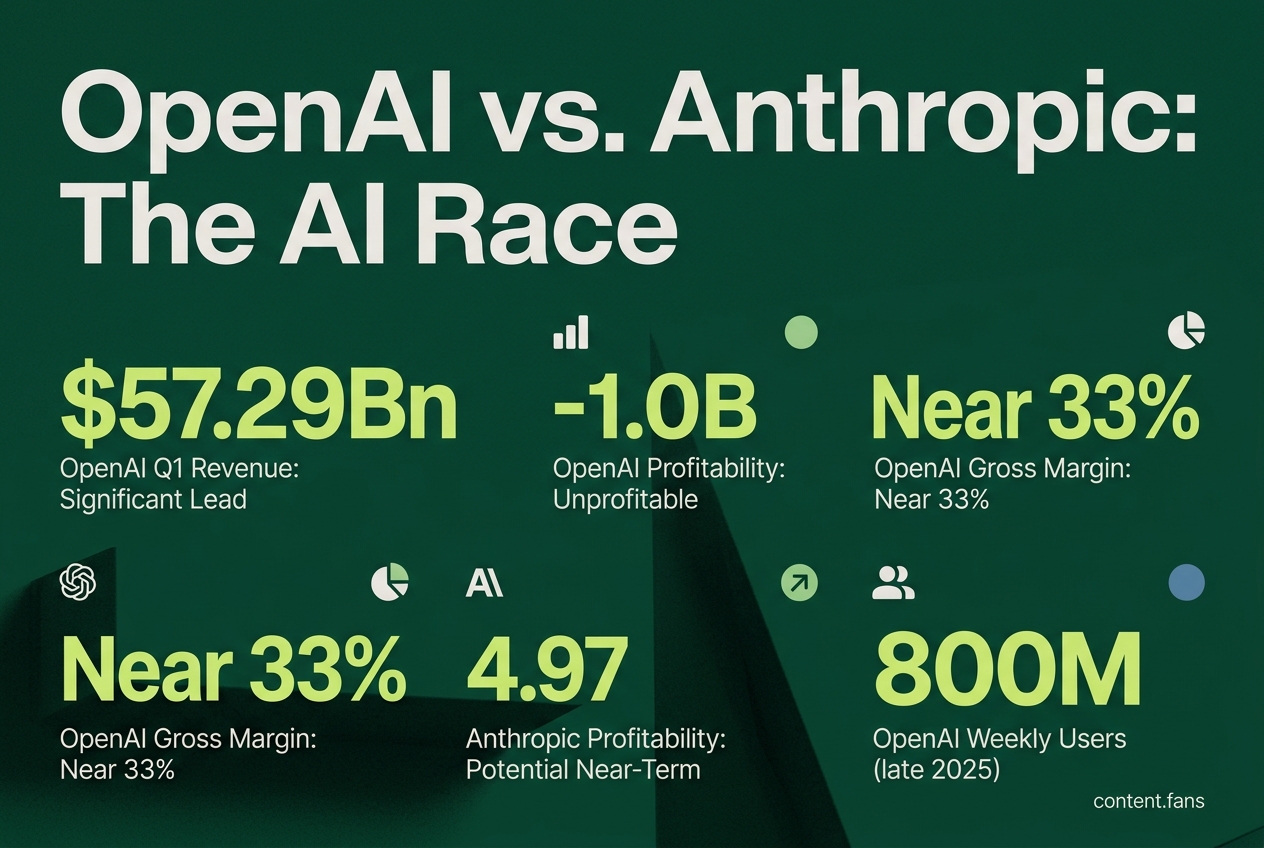
Industry sources suggest the AI giant's revenue for the January-to-March period showed strong growth, establishing a significant lead over its competitor, Anthropic, for the same quarter finance.yahoo.com. However, according to industry reports, the company continues to face substantial operating losses driven by heavy inference spending. Further analysis from Sacra's OpenAI profile indicates a gross margin near 33%, squeezed by escalating infrastructure costs. OpenAI/ChatGPT was reported to have about 800 million weekly active users in late 2025, but a $25B revenue run rate is not established by the sources provided. Nevertheless, industry forecasts suggest the company faces potential significant losses for 2026, underscoring that even strong revenue growth cannot yet cover the high costs of model training and deployment.
Anthropic's Trajectory and Profit Prospects
While OpenAI maintained its revenue leadership position, according to industry reports, Anthropic demonstrated strong growth momentum with a substantial annualized revenue pace. Crucially, some reports suggest Anthropic could potentially achieve operating profitability in the near term, a milestone OpenAI appears far from reaching. This divergence may stem from different cost structures, as Anthropic is noted for its more aggressive licensing of third-party computing resources.
Key Quarterly Comparisons:
* Q1 2026 Revenue: OpenAI maintained a significant lead over Anthropic according to industry sources.
* Annualized Revenue Pace: Both companies showing strong growth trajectories with competitive positioning.
* Adjusted Operating Margin: OpenAI continues to face substantial losses; Anthropic's margins undisclosed but some projections suggest potential near-term profitability.
IPO Signals and Internal Messaging
Speculation about an OpenAI IPO is growing, with reports suggesting a confidential draft prospectus may be filed with the SEC soon. While CEO Sam Altman has told staff that the timing is not fixed, recent legal developments could potentially clear hurdles for a future filing and public listing. Altman maintains that any public offering depends on progress toward creating "safe and broadly beneficial" AGI, though an IPO would provide critical funding for scaling GPU infrastructure and offer liquidity to early investors.
What the Numbers Suggest
OpenAI's Q1 performance paints a clear picture of the current AI landscape: substantial revenue potential tethered to significant operational costs. The company's competitive revenue position underscores its strong market standing, but its substantial losses highlight the challenging economics of building state-of-the-art models. While Anthropic's rapid growth and potential path to profitability suggest an alternative approach, the long-term financial viability of leading AI labs remains an open question. Future financial reports will be critical in determining if revenue can finally outpace the relentless costs of innovation.